 Save
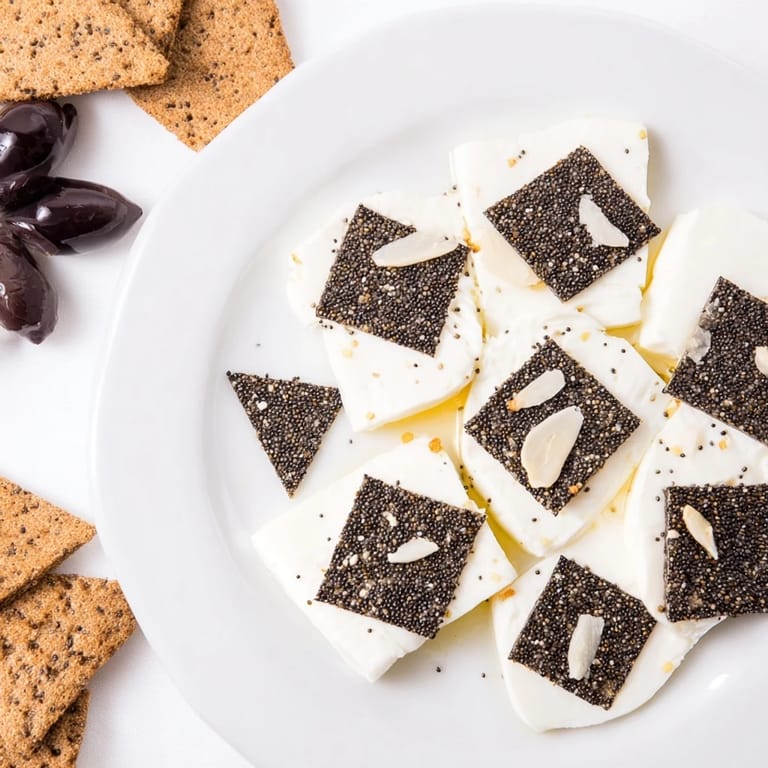
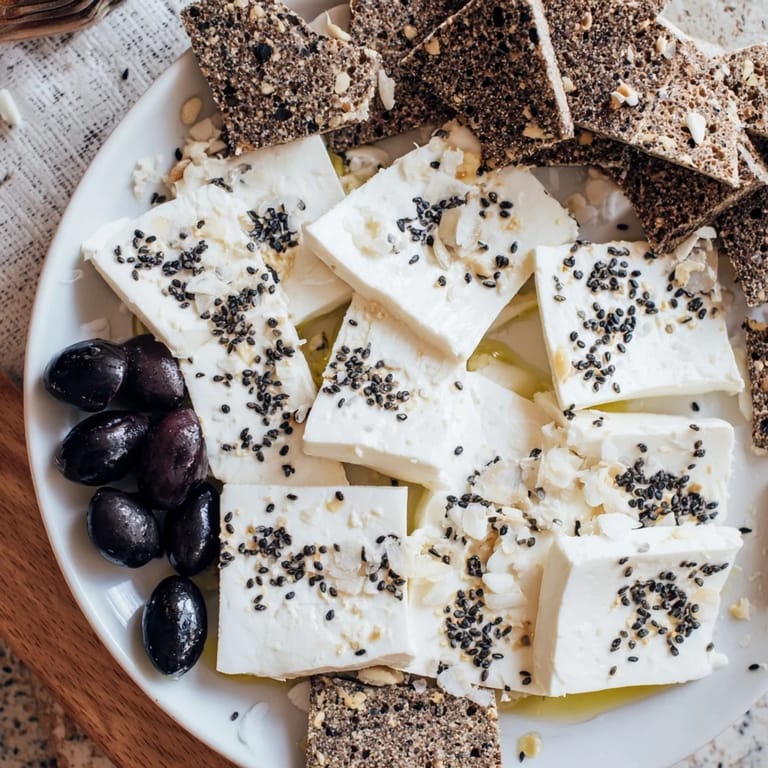
Save I'll never forget the first time I saw a black and white platter command an entire room. It was at my friend's gallery opening, and there it sat on the marble console table—a breathtaking arrangement of onyx olives, creamy white cheese, and perfectly geometric bread, almost too beautiful to touch. That night, I realized appetizers didn't have to be complicated to be memorable. They just had to tell a story through contrast and intention. Now, whenever I need to impress without stress, I reach for this striking platter that speaks volumes without saying a word.
I served this at a dinner party once when a guest mentioned she'd given up complicated recipes. As she watched people circle back to the platter again and again—drawn by its visual elegance—she whispered, 'This is what I needed to remember. Sometimes simple is what people actually want.' That conversation shifted how I think about entertaining altogether.
Ingredients
- Black olives (Kalamata or Niçoise), pitted: Use the good ones here—they're the anchor of your black elements and deserve to be briny and flavorful. Kalamata olives have this deep, almost wine-like complexity that really shines when they're the star
- Dark rye bread: The grounding element that adds earthiness and texture. Cut it into clean geometric shapes—triangles, squares, or thin rectangles—so every piece feels intentional
- Fresh mozzarella balls (bocconcini or ciliegine): These should be perfectly drained before serving, otherwise they'll weep liquid and ruin your clean lines. Pat them dry with a soft cloth if needed
- Fresh mozzarella slices (from a large ball): This is where the real white statement lives. The silky texture against the rye bread creates that sophisticated contrast you're after
- Black sesame seeds: A tiny amount goes a long way. These add visual drama and a subtle nutty note that deepens the black-and-white tension
- White sesame seeds: The counterpoint—sprinkle them over the bread and darker elements to keep the eye moving across the platter
- Blanched almonds: Keep them whole and peeled for that pristine white look. They add a delicate crunch that catches people off guard
- Black mission figs, halved (optional): If you want to add sweetness and soften the stark black-and-white story, these are beautiful. But they're optional—sometimes restraint is the most elegant choice
- Vanilla bean, seeds scraped: This is the secret that makes people pause and ask, 'What is that fragrance?' The vanilla adds an unexpected aromatic whisper without overwhelming anything
- Extra virgin olive oil: A good one matters here since it's one of your few seasonings. A final drizzle ties everything together and adds richness
- Flaky sea salt: Use it sparingly across the cheese and bread. This is the only seasoning that should reach most elements
- Freshly cracked black pepper (optional): For those who want a touch of heat and edge
Tired of Takeout? 🥡
Get 10 meals you can make faster than delivery arrives. Seriously.
One email. No spam. Unsubscribe anytime.
Instructions
- Create your geometric foundation:
- Take that dark rye bread and slice it carefully. Using a sharp knife, cut each slice into clean shapes—thin triangles, small squares, or long rectangles. The precision here is what makes this feel intentional rather than thrown together. Arrange these pieces across your large platter in alternating rows or a pattern that feels balanced. Think of yourself as a designer laying out a floor—there should be rhythm and symmetry
- Build the black and white dialogue:
- Now you're composing. Take your black olives and white mozzarella balls and begin placing them in alternating lines or circles across the platter. Stand back and look. The eye should travel naturally across high contrast, never landing on too much of one color. This is where intuition matters—let your sense of balance guide you
- Introduce the mozzarella slices:
- Arrange your fresh mozzarella slices in geometric clusters or patterns between the olives and bread. You might drape them, fold them slightly, or lay them flat—whatever feels most elegant to you. The important thing is that they catch the light and show off that creamy white color
- Dust with sesame seeds:
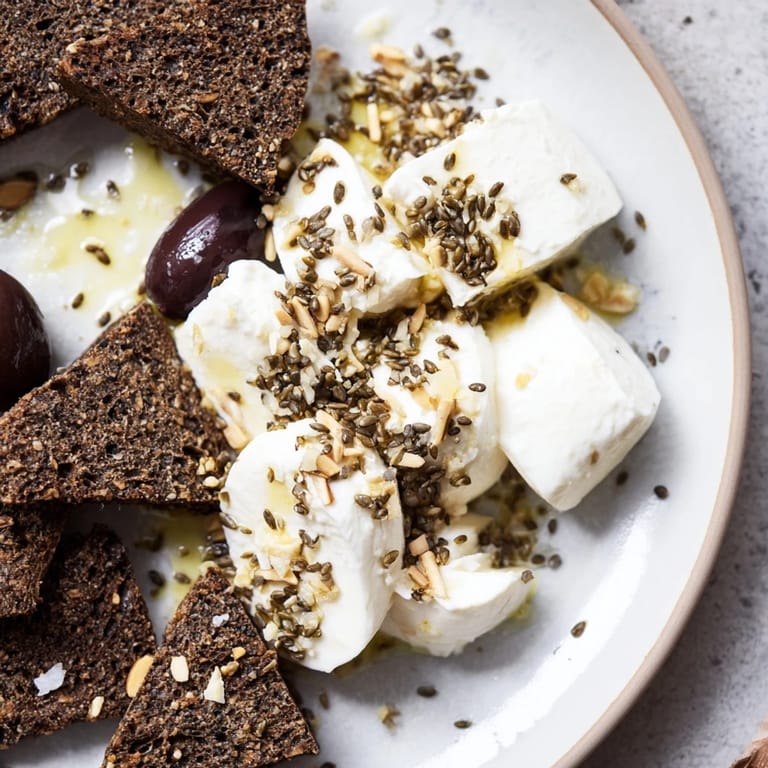
- Here's where texture enters the conversation. Sprinkle black sesame seeds over the white mozzarella areas—they should look like a light dusting of sophistication. Then scatter white sesame seeds over the rye bread and darker elements. Not heavy-handed. Just enough to add visual interest and a subtle crunch
- Add sweetness if you wish:
- If you're using those black mission figs, halve them and place them strategically. They're beautiful punctuation marks—place them where they'll catch the light and offer visual relief from all the geometry
- Anchor with almonds:
- Arrange your blanched almonds in minimalist clusters or delicate lines. These create additional white accents and break up the visual weight. Think of them as the negative space in a painting—what you don't fill in matters as much as what you do
- Season and dress:
- Drizzle your best extra virgin olive oil across the entire platter in a loose pattern—not a grid, but organic lines that suggest intentionality. Sprinkle flaky sea salt over the cheese and bread, tasting as you go. If you want a whisper of heat, add a grind or two of black pepper, but remember: this platter is about elegance, not boldness
- Add the aromatic finale:
- Using the tip of a sharp knife, gently scrape the vanilla seeds from your vanilla bean. These tiny specks should be dotted artistically across some of the mozzarella slices. It's unexpected, it's elegant, and it adds an aromatic surprise that lingers
- Serve with intention:
- If you're serving immediately, bring the platter straight from your hands to the table. If you're preparing ahead (which I recommend), cover it loosely and refrigerate for up to an hour. This keeps everything crisp. When you're ready, remove it from the cold about 10 minutes before serving so the mozzarella can reach its most creamy, perfect texture
 Save
Save There's this moment that always happens when I serve this platter—a slight pause before anyone touches it. Not because they're uncertain, but because they're taking it in. Someone usually says, 'This is too beautiful to eat,' and then someone else always replies, 'We should eat it anyway.' That's when I know I've done something right.
The Power of Constraint
Limiting yourself to only black and white ingredients might sound restrictive, but it's actually liberating. You're no longer distracted by color choices or flavor combinations. Instead, you focus purely on arrangement, contrast, and intention. Every element has to pull its weight visually. That's where real elegance lives—in saying 'no' to what doesn't serve the vision.
Timing and Preparation Strategy
The beauty of this platter is that it requires zero cooking time, which means you can prepare it while still showering and dressing. Here's what I do: cut the bread and store it in an airtight container the night before. Drain and pat dry the mozzarella about an hour before your guests arrive. Then, 30 minutes before they're due, do your full assembly. This way, everything is at its crispest and creamiest when people arrive. If you need more time, you can assemble it completely and refrigerate loosely covered for up to an hour—just remove it from the cold about 10 minutes before serving so the cheese warms slightly and becomes even more luxurious.
Variations That Honor the Vision
The black and white palette doesn't have to be rigid. I've added thinly sliced daikon radish for extra crispness and white notes. I've included black garlic for deeper flavor complexity. For a gluten-free version, swap the rye bread for a good quality gluten-free dark bread, and it stays just as stunning. The vanilla bean can be replaced with a single vanilla pod laid decoratively across the platter if you want the aroma without the seeds. Each of these additions enhances without breaking the disciplined beauty of the original.
- Try a drizzle of aged balsamic reduction for a subtle color and flavor depth—just use it sparingly so it reads as an accent
- If you find black garlic at a specialty market, slice it thin and place it strategically for earthiness and visual interest
- A handful of microgreens in the palest shade you can find adds living texture without breaking the color story
 Save
Save Elegant entertaining doesn't require hours in the kitchen—sometimes it just requires intention and a willingness to let simplicity speak loudly. This platter has taught me that more than anything else.
Recipe FAQs
- → What breads work best for this platter?
Dark rye bread cut into geometric shapes forms a solid base, offering both flavor and sturdy texture for the arrangement.
- → Can this be made gluten-free?
Yes, substitute the rye bread with a gluten-free alternative to keep it accessible for gluten sensitivities.
- → What adds sweetness to the platter?
Optional black mission figs provide subtle natural sweetness that complements the savory elements.
- → How should the platter be assembled for visual appeal?
Arrange ingredients in alternating rows or geometric shapes, using varying textures and colors to enhance contrast.
- → Can this be prepared in advance?
Yes, assemble up to an hour before serving and keep refrigerated to maintain freshness and crispness.