 Save
Save I still remember the first time I arranged a cheese board for my sister's engagement party. I was nervous, wanting everything to look as stunning as it tasted. That evening, as guests gasped at the bold contrast of deep reds against brilliant golds, I realized that a beautiful platter is really about creating a moment—a conversation starter, a feast for the eyes before the first bite. This Crimson & Gold Gala was born from that realization, and it has become my go-to whenever I need to impress without spending hours in the kitchen.
I made this for my best friend's gallery opening last spring, setting it up on a marble table near the entrance. People kept pausing mid-conversation to photograph it, and I loved watching them discover unexpected flavor combinations—the sweetness of the golden raisins against the tangy aged cheddar, the burst of pomegranate seeds next to creamy wine-soaked cheese. That night taught me that a beautiful board isn't just about impressing people; it's about giving them permission to play with their food and enjoy the moment together.
Ingredients
- Fresh sweet cherries: The jewels of your crimson section—look for ones that are deeply colored and still firm, as they hold their shape beautifully on the board and add natural sweetness.
- Wine-soaked cheese (Drunken Goat or Merlot BellaVitano): This is where the elegance lives; the wine infusion adds complexity and a subtle earthiness that makes guests wonder what they're tasting.
- Dried cranberries: Tart little pops of flavor that balance the richness of the cheese and add texture variety.
- Red grapes: Halving them makes them easier to eat and doubles their visual impact on the board.
- Pomegranate seeds: The final flourish of the reds—add them just before serving so they don't lose their jewel-like shine.
- Yellow bell peppers, roasted: Roasting them yourself transforms their flavor into something sweeter and more complex than raw; the charred edges add depth.
- Aged cheddar or gouda: Choose something with real character—a sharp aged cheddar will contrast beautifully with the sweet fruits.
- Gold leaf-topped crackers: If you can't find pre-topped crackers, plain water crackers work perfectly; the gold leaf is about the presentation, not the flavor.
- Golden raisins: Slightly plumper and more tender than regular raisins, they almost dissolve on the tongue.
- Yellow cherry tomatoes: Halved to show off their sunny interior and make them the perfect single-bite addition.
- Edible gold leaf: Purely for glamour, but it transforms simple crackers into something that feels celebratory.
- Fresh basil or microgreens: The living garnish that brings freshness and tells guests this board was made with care.
Tired of Takeout? 🥡
Get 10 meals you can make faster than delivery arrives. Seriously.
One email. No spam. Unsubscribe anytime.
Instructions
- Roast the yellow peppers until they sing:
- Preheat your oven to 220°C (425°F). Lay whole yellow bell peppers directly on a baking sheet and slide them in. You'll hear them crackle and pop as the heat blisters the skin—that's the magic happening. Roast for 10 to 12 minutes, turning them occasionally so they char evenly all over. When the skin is deeply blistered and charred (it should look almost black in spots), pull them out and immediately transfer them to a bowl. Cover the bowl tightly with plastic wrap and let them steam for 5 minutes—this makes the skin practically fall off. Once cooled enough to handle, peel away the papery skin with your fingers, remove the seeds, and slice into strips. Drizzle with olive oil, grind fresh black pepper over them, and let them cool completely.
- Add the golden finishing touch:
- If you're using edible gold leaf, work carefully and follow the package instructions—usually it means using a small brush or your fingertip to transfer delicate sheets onto the surface of your crackers. It's easier than it sounds and makes such an impact.
- Create your color blocks with intention:
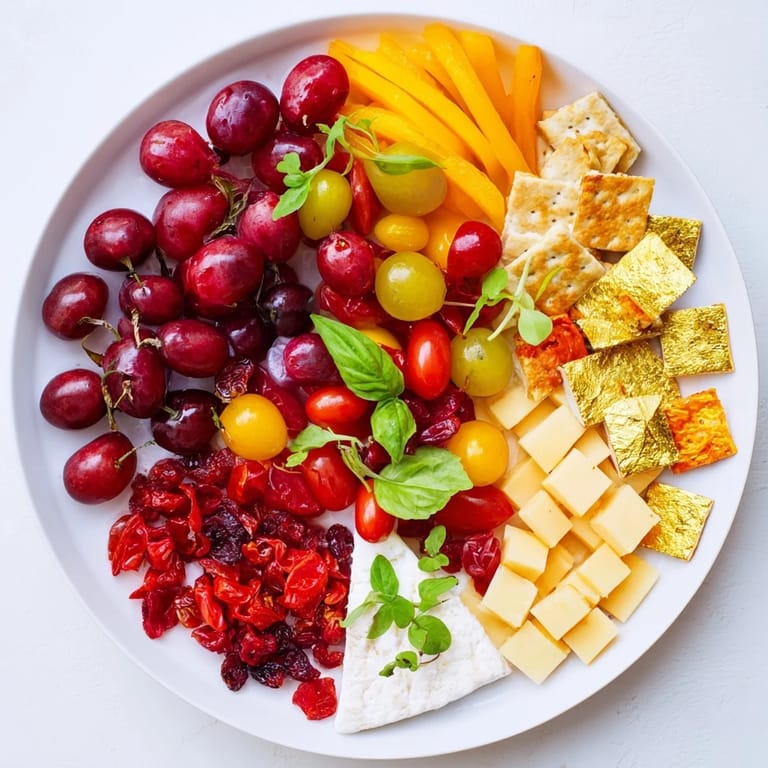
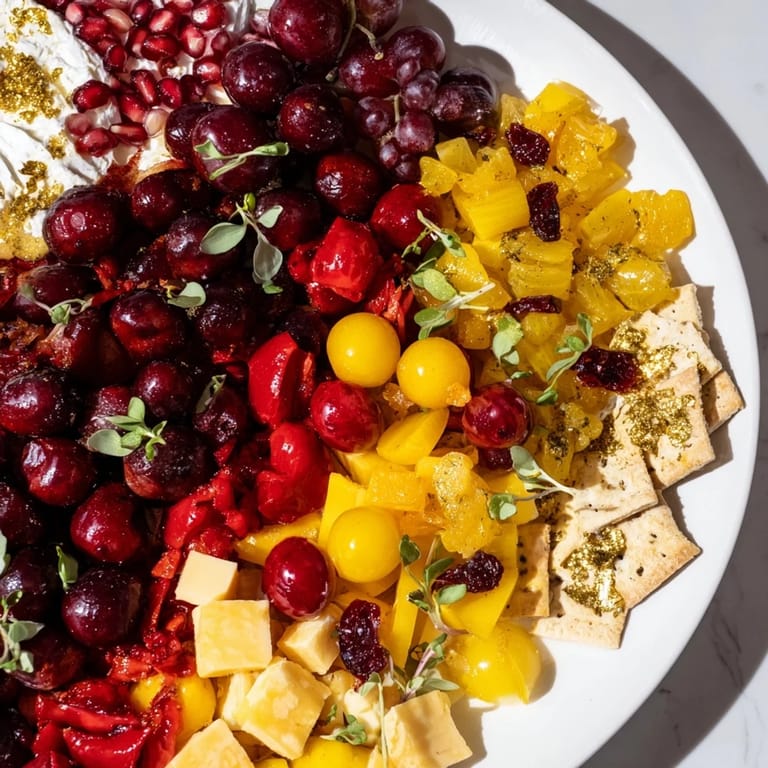
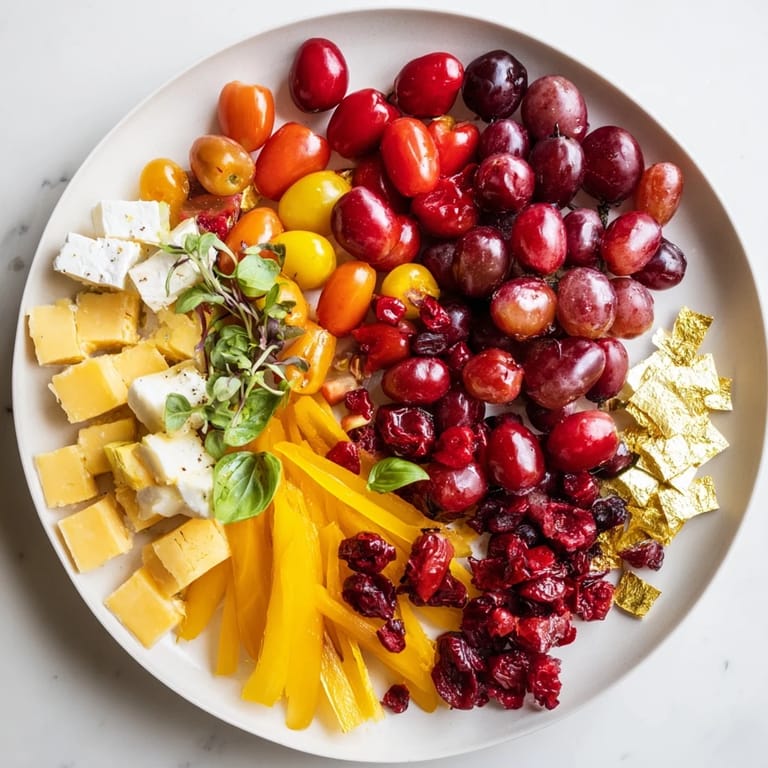
- On a large platter or board, imagine a line down the middle. On one side, arrange all your crimson elements—the cherries, wine-soaked cheese slices, cranberries, halved red grapes, and pomegranate seeds—in a tight cluster. Think of it as a still-life painting where each element has its place but they're comfortable nestled together. On the opposite side, create your gold block: the roasted yellow pepper strips, cubed aged cheese, gold leaf crackers, golden raisins, and halved yellow tomatoes. Let the colors contrast boldly; that's the whole point.
- Finish with living garnish:
- Just before serving, scatter fresh basil leaves or delicate microgreens across both sections. This adds a final breath of freshness and signals to your guests that everything here was made with real attention to detail.
- Bring it to the table with pride:
- Serve immediately while the roasted peppers are still warm (or at room temperature if you prefer) and encourage everyone to mix the sections freely. The beauty of a board is that it invites people to create their own perfect bites.
 Save
Save My favorite memory of this platter is watching my grandmother lean in close, studying the arrangement with her reading glasses, before reaching for a cherry paired with a sliver of wine-soaked cheese. 'This,' she said, 'is what celebration tastes like.' She was right—it's not just about the ingredients, but about the invitation it extends to slow down and savor the moment.
Color Blocking as an Art Form
The magic of this platter is in the visual contrast. The deep crimsons and brilliant golds don't just look beautiful together; they create a psychological effect that makes people feel like they're about to experience something special. When you place opposing colors in tight blocks rather than mixing them randomly, you're tapping into something primal about how humans experience food. The eye travels from one section to the other, creating anticipation and making each flavor feel more distinct. Over time, I've learned that this isn't just about aesthetics—the color blocking actually influences how people taste. A cherry eaten from the red section tastes different than the same cherry eaten later, and somehow the roasted peppers seem more vibrant when they're set apart from everything else.
Cheese Selection as Your Canvas
If there's one place to invest in this recipe, it's the cheese. Wine-soaked cheeses like Drunken Goat are the soul of the crimson section, adding intrigue and conversation. On the gold side, an aged cheddar or smoked gouda brings depth and earthiness that cheap, young cheeses can't replicate. I've made this board with budget cheeses before, and it fell flat—the expensive versions aren't luxury for its own sake, they're actually worth the money because they carry the weight of flavor that everything else on the board needs to shine. If cost is a concern, buy less cheese but make it really good, rather than stretching further with mediocre varieties.
Building Flavor Combinations That Work
The first time I tasted this board, I discovered that wine-soaked cheese with pomegranate seeds creates a taste memory that lingers—the earthiness of the cheese catches the bright tartness of the pomegranate and creates something neither ingredient could accomplish alone. The roasted yellow peppers sweetness meets the aged cheddar's sharpness in a completely different conversation. A good board isn't just a collection of good things; it's about creating unexpected bridges between flavors.
- Try pairing the wine-soaked cheese with pomegranate seeds first—this combination unlocks the full potential of both.
- The roasted peppers are sweet enough to stand beside aged cheese without needing anything else, but a cracker gives your guests a vehicle for the pairing.
- Save the golden raisins for nibbling alone or with the gouda; their concentrated sweetness is a palate cleanser between richer bites.
 Save
Save Every time I make this board, I'm reminded that the best appetizers aren't about complicated techniques—they're about respect for good ingredients and the care you take in presenting them. This platter has taught me that a beautiful table invites people to be their best selves.
Recipe FAQs
- → How should the yellow bell peppers be prepared?
Roast whole yellow bell peppers in a hot oven until skins are blistered, then steam to loosen skins for easy peeling before slicing into strips.
- → What cheeses complement the color theme?
Wine-soaked cheeses like Drunken Goat or Merlot BellaVitano pair well with aged cheddar or gouda to highlight deep reds and bright golds.
- → Can the gold leaf be substituted?
Yes, turmeric or saffron threads can add a vibrant golden hue if gold leaf is unavailable.
- → How can I add freshness to the platter?
Garnish with fresh basil or microgreens to introduce a contrasting pop of green and a fresh flavor note.
- → Is this suitable for vegetarian diets?
Yes, this platter is vegetarian-friendly using plant-based or traditional cheeses and fresh fruits and vegetables.