 Save
Save My neighbor's kitchen smelled like caramelized onions for what felt like an entire afternoon, and I couldn't help myself from knocking on her door. She was making French onion soup the traditional way, and I watched, mesmerized, as those golden-brown onions transformed from raw slices into something almost sweet and deeply savory. That day taught me that the best comfort foods aren't about fancy techniques but about patience and a good Dutch oven. Now whenever I make this soup, I'm transported back to that moment of pure kitchen magic.
I made this for my family on a cold November evening, and my sister took one spoonful and closed her eyes like she'd just eaten something sacred. The cheese had just finished bubbling under the broiler, the baguette was still warm and crispy, and the broth was dark and deeply flavorful in a way that felt like autumn in a bowl. Everyone went quiet, which almost never happens at our table.
Ingredients
- Yellow onions (5 large, thinly sliced): Yellow onions are sweeter than white ones and caramelize beautifully, developing that rich, mahogany color that makes this soup sing. Slice them thin and consistent so they cook evenly.
- Unsalted butter (3 tablespoons) and olive oil (2 tablespoons): The combination gives you butter's richness without burning it, while olive oil raises the smoke point and adds subtle flavor. Never use salted butter for caramelizing because you won't be able to season properly.
- Garlic cloves (2, minced): Add this after the onions soften or it'll burn and turn bitter. Fresh garlic makes all the difference here.
- Sugar (1 teaspoon): This tiny amount doesn't make the soup sweet but helps speed up the caramelization process and deepens the color.
- Beef broth (8 cups): Use good quality broth, preferably homemade or low-sodium, because this soup is all about letting that savory base shine. If you're vegetarian, vegetable broth works beautifully.
- Dry white wine (1/2 cup): Don't skip this or use cheap wine because you'll taste every corner cut. It adds complexity and brightness that balances the richness of the onions.
- Fresh thyme (2 teaspoons) or dried (1 teaspoon): Thyme is the quiet backbone here, lending earthiness without overpowering. Fresh is always preferable, but dried works in a pinch.
- Bay leaves (2): These need to come out before serving because eating one is memorable for all the wrong reasons.
- Worcestershire sauce (1 tablespoon): This adds umami depth that makes you wonder what the secret ingredient is. Vegetarians can use tamari or omit it entirely.
- Gruyère cheese (2 cups, grated): This melts smoothly and has a nutty depth that aged cheddar never quite reaches. Grating it yourself from a block means it melts better than pre-shredded.
- Baguette (1, sliced into 1/2-inch rounds): Look for day-old baguettes at the bakery counter because they toast crispier than fresh ones and won't turn to mush in the soup.
Tired of Takeout? 🥡
Get 10 meals you can make faster than delivery arrives. Seriously.
One email. No spam. Unsubscribe anytime.
Instructions
- Melt your butter and oil:
- Set your Dutch oven to medium heat and let the butter melt into the olive oil, watching it foam slightly. This takes only a minute but that combined fat is your foundation for perfectly caramelized onions.
- Add the onions and begin the slow cook:
- Tumble in your sliced onions and sprinkle the sugar over them, then stir until they're coated in that golden fat. You're going to stir these frequently for 40 to 45 minutes, and yes, it takes that long, but each time you stir you'll see them transform from pale to deeper amber.
- Watch for the perfect caramelization:
- Around minute 30, your kitchen will smell unreal and the onions will start clumping together in darker patches. Keep stirring and scraping the bottom because those browned bits are flavor gold.
- Add garlic and bloom it:
- When the onions are soft and mahogany-colored, add your minced garlic and let it cook for exactly one minute, just until you smell that pungent, fragrant garlic aroma. More than that and it turns harsh.
- Deglaze with wine:
- Pour in your white wine and use a wooden spoon to scrape up every single brown bit stuck to the bottom of the pot. Let it bubble and reduce for 2 to 3 minutes until the harsh alcohol smell mellows out.
- Build the broth base:
- Add your beef broth, thyme, bay leaves, and Worcestershire sauce all at once. Bring it to a simmer and let it bubble gently uncovered for 20 to 30 minutes, which lets the flavors meld and the soup deepen in color.
- Toast your baguette slices:
- While the soup simmers, turn on your broiler and arrange baguette rounds on a baking sheet. Broil for about 1 minute per side until they're golden and crispy, checking often because broilers are temperamental and fast.
- Finish the soup and assemble:
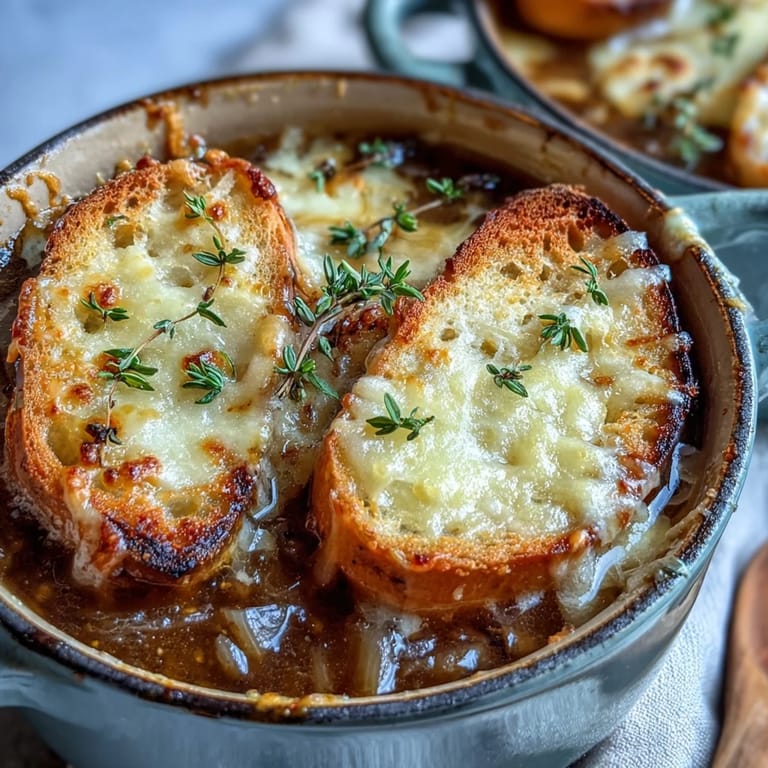
- Taste your soup and season with salt and pepper, then fish out those bay leaves. Ladle soup into your oven-safe bowls, top each with a toasted baguette slice, and heap on the grated Gruyère like you're not worried about calories.
- Broil until melted and bubbling:
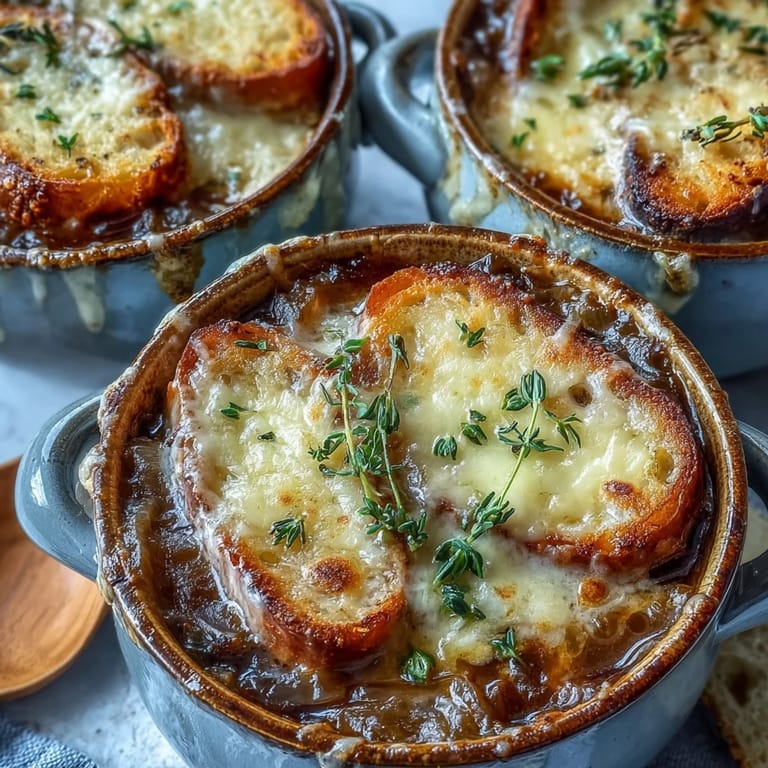
- Place your loaded bowls on a baking sheet and slide them under the broiler for 2 to 4 minutes until the cheese is melted, bubbly, and starting to turn golden at the edges. Keep watching because this happens faster than you'd think.
- Serve immediately:
- Pull them out when they're hot and bubbling, let them cool for just 30 seconds so you don't burn your mouth, then serve with maybe a tiny pinch of fresh thyme on top.
 Save
Save One winter evening, I made this for my partner right after a terrible day at work, and something about that warm bowl, the way the cheese stretched from the spoon, the savory broth hitting everything the soup needed to be. Food doesn't always fix things, but sometimes it reminds you that someone cares enough to spend 90 minutes making something special.
The Science of Caramelization
Caramelization isn't just browning, it's a chemical transformation where the natural sugars in onions break down and recombine, creating hundreds of new flavor compounds that didn't exist before. This is why you taste sweetness, depth, and savory notes all at once. The longer you wait and the more patient you are, the more complex those flavors become. Temperature control matters too, which is why medium heat works better than high, even though it feels painfully slow.
Making It Your Own
This recipe is a foundation, not a prison. I've added a splash of sherry for brightness, swapped in Swiss cheese when Gruyère was impossible to find, even made it entirely vegetarian for friends who don't eat meat. The core technique stays the same, but the personality shifts based on what you have and what you love. Some people crisp their baguette in the oven instead of the broiler, others add a tiny splash of cognac or use red wine for a different flavor profile.
Pairing and Serving Suggestions
French onion soup wants to be the star, but it plays beautifully with others too. A simple green salad with a bright vinaigrette cuts through the richness, while a glass of white Burgundy or even a crisp rosé complements it perfectly. I've served it at dinner parties as a first course and as a standalone winter lunch, and it works both ways because it's satisfying but not heavy in that modern sense.
- Serve it in bowls that can handle high heat because cold bowls meeting hot cheese is a sad waste of good Gruyère.
- Have extra grated cheese on the side for people who think the initial topping wasn't generous enough, which is always someone at the table.
- Don't rush the eating, because this soup is best when you take time between spoonfuls to appreciate what patient cooking created.
 Save
Save This soup is the kind of dish that reminds you why cooking matters, why spending time in the kitchen is never wasted time. Make it, share it, watch people slow down and really taste their food.
Recipe FAQs
- → How do you get onions properly caramelized?
Cook sliced onions slowly over medium heat with butter and olive oil, stirring frequently for 40–45 minutes until they turn deep golden brown and develop natural sweetness. This slow process creates the rich flavor base essential to the dish.
- → Can I make this vegetarian?
Absolutely. Simply substitute vegetable broth for beef broth and either omit Worcestershire sauce or use a vegetarian-friendly alternative. The result remains just as savory and satisfying.
- → What cheese works best for the topping?
Gruyère is traditional for its excellent melting properties and nutty flavor. Swiss or Emmental make fine substitutes. Adding Parmesan creates extra depth and a beautiful golden crust under the broiler.
- → Can this be made ahead of time?
The base actually improves after refrigeration for 1–2 days, allowing flavors to deepen. Store broth and onions separately, then recombine when ready to serve. Add fresh toppings just before broiling.
- → Why use a Dutch oven?
Dutch ovens provide even heat distribution essential for proper caramelization, go from stovetop to oven seamlessly, and their heavy lids help retain moisture during the long simmering process.
- → What wine pairs well with this?
A crisp white Burgundy or Chardonnay complements the rich flavors beautifully. For red wine lovers, a light Pinot Noir works well without overpowering the delicate onion sweetness.