 Save
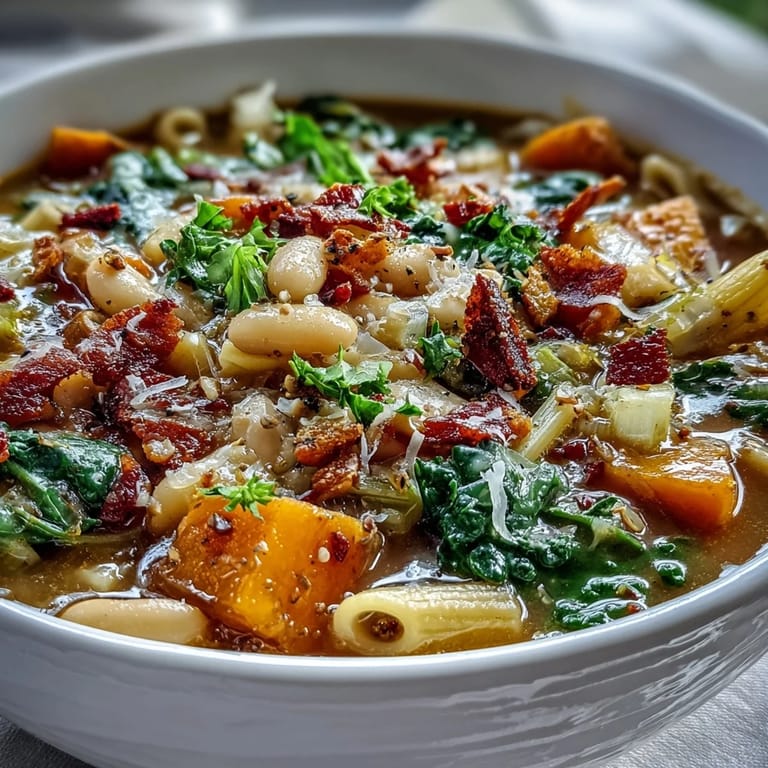
Save October always sneaks up on me, and suddenly I'm craving something warm that tastes like leaves and comfort. My neighbor stopped by one afternoon with a bag of butternut squash from her garden, and instead of the usual roasted side dish, I found myself building this minestrone from memory and instinct. The kitchen filled with that golden, nutty smell, and by the time steam was rising from the pot, I knew I'd stumbled onto something worth making again and again.
I served this to friends who'd helped me move boxes all weekend, and watching them slow down mid-conversation to really taste it felt like winning something. Nobody asked for the recipe that night, but three of them texted me within the week asking how I made it. That's when I realized this soup does the quiet work of making people feel cared for.
Ingredients
- Pancetta, diced: The fat it renders becomes the foundation of everything else, so don't skip it or swap it lightly; it's worth hunting down at a proper butcher counter.
- Yellow onion, carrot, and celery: This trio is the holy foundation—soffritto, if you want to sound Italian about it—and there's no shortcut that makes them unnecessary.
- Butternut squash, cubed: Peel it while it's cool and firm, and cut pieces roughly the size of dice; they'll soften beautifully without turning into mush.
- Garlic cloves, minced: Add it after the softer vegetables so it doesn't burn and turn bitter on you.
- Kale, chopped: Tear out the tough stems first, or you'll end up chewing on them later and regretting it.
- Canned diced tomatoes: The juice matters as much as the tomatoes themselves, so pour everything in without draining.
- White beans, canned: Rinse them well to remove the starchy liquid that can make the soup cloudy and paste-like.
- Ditalini pasta: Small tubes work best because they catch the broth and hold flavors; regular elbow macaroni works too if that's what you have.
- Chicken or vegetable broth: Use good broth if you can; it's the liquid backbone, and thin or oversalted broth shows immediately in the final taste.
- Fresh thyme and bay leaf: These two create a subtle herbal note that ties everything together without announcing themselves.
- Parmesan cheese: Freshly grated makes a difference in how it melts and distributes, though pre-grated works when time is short.
Tired of Takeout? 🥡
Get 10 meals you can make faster than delivery arrives. Seriously.
One email. No spam. Unsubscribe anytime.
Instructions
- Render the pancetta and build your fat base:
- Heat olive oil in your pot, then add the diced pancetta and let it cook slowly until the edges crisp and the fat turns golden. This takes about five minutes, and you'll know it's ready when the kitchen smells faintly smoky and the meat starts to shrink slightly.
- Soften your vegetable foundation:
- Remove the pancetta with a slotted spoon, then add onion, carrots, and celery to the rendered fat. Let them cook for about five minutes, stirring occasionally, until the onion turns translucent and the carrot starts to soften.
- Introduce the squash and garlic:
- Stir in the butternut squash cubes and minced garlic, cooking for two minutes until the whole pot smells warm and fragrant. The garlic should be cooked just enough to lose its raw edge but not so long that it browns.
- Add the liquid base and simmer:
- Pour in the tomatoes with their juice, the rinsed white beans, broth, thyme, bay leaf, salt, and pepper. Bring everything to a gentle simmer, then cover and let it cook for twenty minutes until the squash is tender enough to break apart with a wooden spoon.
- Finish with kale and pasta:
- Stir in the chopped kale and pasta, then simmer uncovered for eight to ten minutes, stirring occasionally so the pasta doesn't stick. The soup is ready when the pasta is soft but still holds its shape, and the kale is dark green and tender.
- Taste and finish:
- Fish out the bay leaf, then taste the soup and adjust salt and pepper to your preference. Some broths are saltier than others, so this step matters more than you might think.
 Save
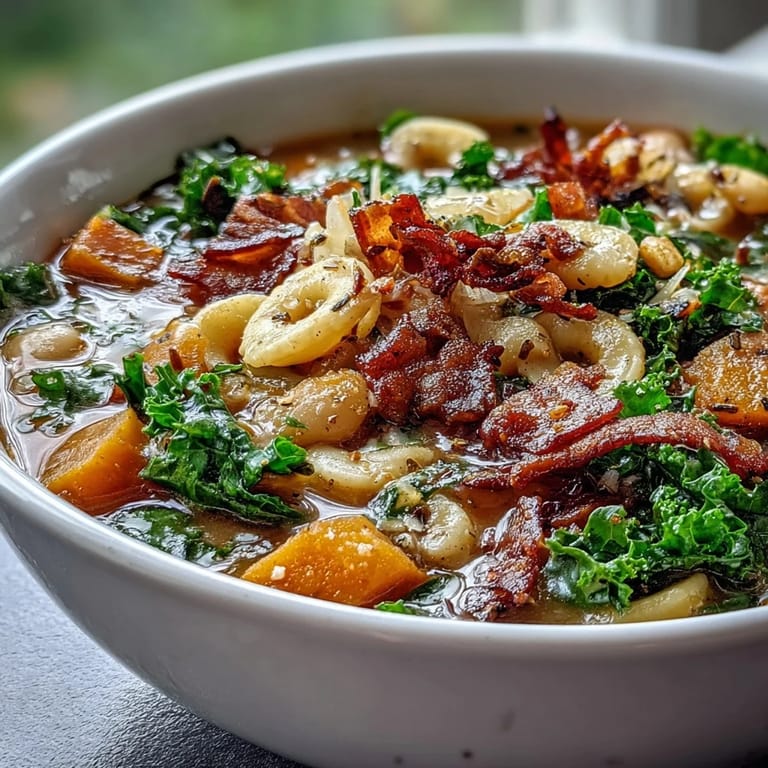
Save One evening, my kid watched me make this and asked why soup could smell like happiness, and I realized they understood something important before I could explain it. There's no magic ingredient here, just vegetables and broth and time, but somehow it becomes more than the sum of those parts.
Why This Soup Works Year-Round
Even though minestrone is an autumn classic, the formula adapts to whatever season offers. Spring calls for zucchini and spinach instead of squash and kale; summer wants fresh basil and green beans; winter deepens with more root vegetables. Once you understand how the soup works, you stop following the recipe and start listening to what the market or your garden is telling you.
The Vegetarian Path
Leaving out the pancetta means losing a layer of smoke and richness, but honest work with smoked paprika and a slightly longer cooking time makes it whole again. Use vegetable broth instead of chicken, add a pinch of red pepper flakes if you want subtle heat, and cook it all together with extra care to let flavors develop and deepen.
Serving and Storing
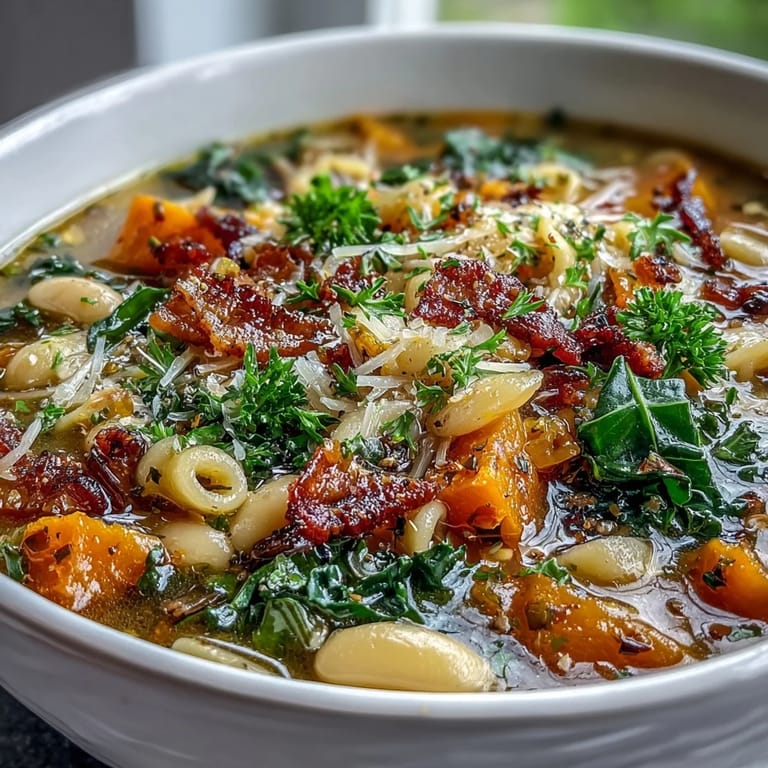
Serve it steaming in wide bowls, scattered with the crispy pancetta, fresh parsley, and a generous handful of grated Parmesan. The soup keeps beautifully in the refrigerator for three days, though the pasta will absorb more broth as it sits; add a splash of water or broth when you reheat if it becomes too thick.
- Crusty bread is not optional here; it's the only acceptable way to finish a bowl.
- A light Pinot Noir pairs surprisingly well if you're in the mood for wine.
- Make a double batch and freeze half in portions for those mornings when you need comfort without effort.
 Save
Save This soup has become my reliable answer to almost everything—the cure for tired evenings, the gift for someone struggling, the proof that simple cooking done with attention is its own kind of love. Make it once and you'll understand why.
Recipe FAQs
- → Can I make this minestrone vegetarian?
Absolutely. Simply omit the pancetta and use vegetable broth instead of chicken broth. Add a pinch of smoked paprika to maintain some of the savory depth that the pancetta provides.
- → What other vegetables work well in this soup?
You can substitute acorn or delicata squash for butternut. Spinach or Swiss chard can replace kale. Additional vegetables like zucchini, green beans, or bell peppers also complement the flavors beautifully.
- → How should I store leftovers?
Store in an airtight container in the refrigerator for up to 4 days. The pasta may absorb more liquid over time, so add a splash of broth or water when reheating. This soup also freezes well for up to 3 months.
- → Can I use a different pasta shape?
Yes, any small pasta works wonderfully here. Try small shells, elbows, orzo, or even broken spaghetti pieces. Just adjust the cooking time based on the package instructions for your chosen shape.
- → Is butternut squash difficult to prep?
Peeling and cubing butternut squash requires a sharp knife and some effort. You can buy pre-cut squash from the grocery store to save time. The squash should be cut into uniform 1-inch cubes for even cooking.
- → What can I serve with this minestrone?
Crusty bread or garlic bread is perfect for soaking up the flavorful broth. A simple green salad with vinaigrette balances the heartiness. For wine, pair with a light Pinot Noir or Chianti.