 Save
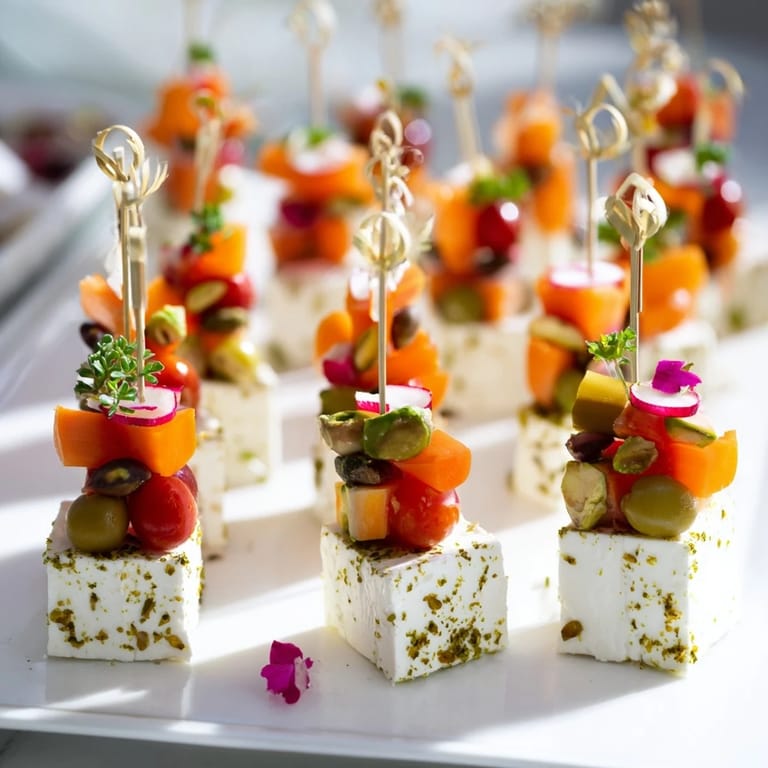
Save I discovered The Hanging Gardens at a dinner party where everything felt a bit too formal until someone served this playful, cascading arrangement of vegetables and fruits. Watching people's faces light up as they reached for colors they could actually see inspired me to recreate that moment at home. What struck me most was how the vertical arrangement made a simple vegetable board feel like an art installation, turning snacking into an experience rather than just refueling between courses.
The first time I built this for a potluck, I was genuinely nervous about whether the mini-stands would feel gimmicky or if it would just topple over. Instead, something magical happened: people gravitated toward it immediately, and the conversation naturally gathered around the board like we were all part of creating something together. That's when I realized this wasn't just about feeding people—it was about making them feel like they belonged to the moment.
Ingredients
- Cherry tomatoes: Use the smallest, firmest ones you can find because they hold their shape and burst with sweetness when bitten into.
- Baby carrots: The tender, slim varieties are way better than chunky ones; they feel delicate on the arrangement.
- Cucumber slices: Cut them on a slight bias so they catch the light and feel less stark than straight rounds.
- Radishes: Slice paper-thin so they become almost translucent and add a peppery snap without overwhelming the plate.
- Snap peas: Keep them whole or split lengthwise; they're naturally beautiful and add a satisfying crunch.
- Endive leaves: These are your natural spoons for dips, and they stay crisp longer than most other vegetables.
- Seedless grapes: Green and red together create visual rhythm; their slight sweetness balances savory elements.
- Strawberries: Hull them just before serving so they don't oxidize and lose their jewel-like appearance.
- Goat cheese: Roll it into balls using a small spoon dipped in water; the creaminess pairs beautifully with both fruits and vegetables.
- Feta: Cube it generous and uneven so it feels rustic rather than uniform.
- Hummus: A silky base that welcomes any vegetable without demanding attention.
- Tzatziki: Cool and herbaceous, it's the bridge between dips and makes everything taste like summer.
- Pesto: Use fresh basil and good olive oil; this is where the brightness lives.
- Toasted pistachios: Chop them roughly so you get varied texture, and toast them yourself to unlock their full nuttiness.
- Fresh basil: Scatter whole leaves at the end for color and a whisper of anise flavor.
- Edible flowers: Optional but transformative; they signal that this is a celebration.
- Extra virgin olive oil: This isn't a cooking ingredient—it's the final signature, so choose one you actually love.
- Sea salt and pepper: Finish with these just before guests arrive so they stay visible and potent.
Tired of Takeout? 🥡
Get 10 meals you can make faster than delivery arrives. Seriously.
One email. No spam. Unsubscribe anytime.
Instructions
- Prepare your mise en place:
- Wash and dry everything thoroughly—moisture is the enemy of a beautiful board. Slice and prep all vegetables and fruits, then store them in separate small bowls with damp paper towels so they stay crisp and ready to assemble.
- Shape the cheeses:
- Roll goat cheese into balls using two spoons or your hands (wet hands make this easier), and cube the feta into generous, irregular pieces that feel intentional rather than precise.
- Build your foundation:
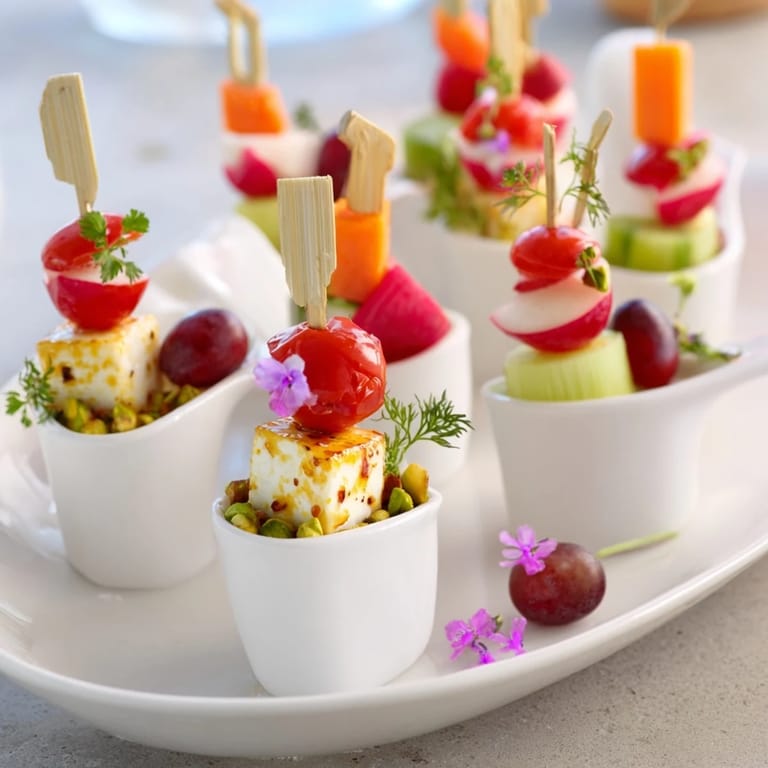
- Arrange your mini-stands and tiered bowls on your platter at varying heights, leaving enough space between them so the final arrangement feels organic rather than crowded.
- Layer with intention:
- Start with leafy vegetables as a base in bowls, then place denser items like cheese and carrots where they won't roll, allowing some ingredients to cascade over the edges for that lush garden effect.
- Create visual rhythm:
- Alternate colors and textures as you place items—reds next to greens, smooth cheese beside textured radishes—so every angle offers something new to the eye.
- Position the dips:
- Nestle small bowls of hummus, tzatziki, and pesto among the vegetables so they feel integrated into the arrangement, not an afterthought.
- Finish with garnish:
- Sprinkle pistachios, scatter whole basil leaves, and add edible flowers for that final touch of artistry, then drizzle lightly with olive oil and season with salt and pepper just before serving.
- Serve with warmth:
- Step back and admire your work, then invite guests to pick and dip as they please, trusting that the arrangement will still look beautiful as people explore.
 Save
Save I'll never forget watching my usually picky nephew navigate this board, pointing out flavors he'd never noticed in vegetables before because he got to choose the combinations himself. That's when I understood that sometimes the most nourishing thing food can do isn't fill your stomach—it's give you permission to play.
The Art of Arrangement
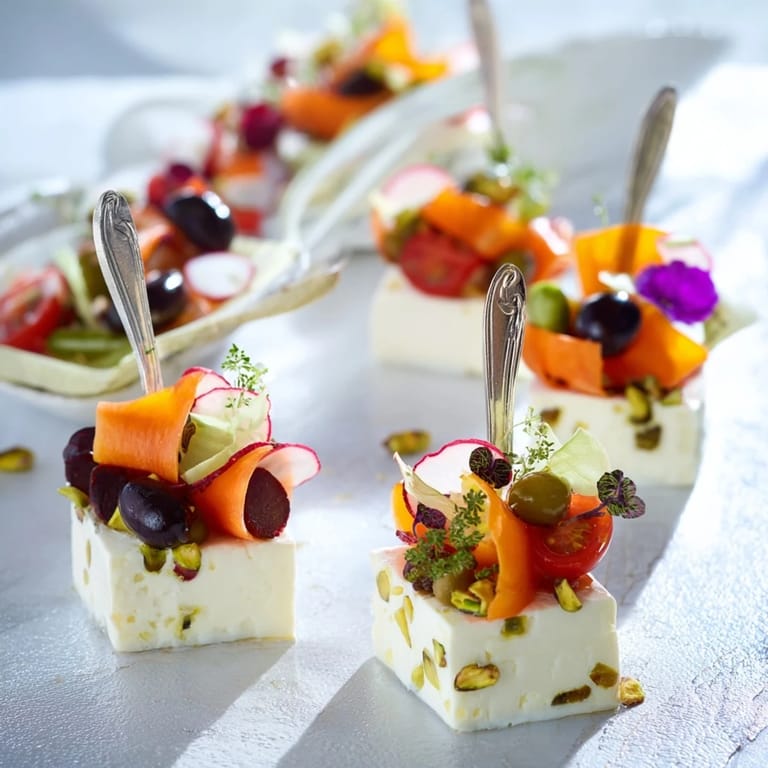
Building this board taught me that presentation isn't vanity; it's actually generosity. When people can see what they're eating, understand the colors and textures available, they eat more adventurously and enjoy it more consciously. I've stopped thinking of arrangement as extra work and started seeing it as part of the cooking itself, because the way food looks shapes how people experience it before they even take a bite.
Seasonal Flexibility
The beauty of this dish is that it adapts to whatever your market offers. In spring, I load it with delicate asparagus tips and peas; summer means stone fruits and heirloom tomatoes; fall calls for roasted grapes and apple slices; winter gets pomegranate seeds and candied nuts. You're not locked into one version—you're creating a conversation with the season, and that keeps it feeling fresh and relevant no matter when you make it.
Entertaining Without Stress
What I love most about this recipe is that it removes the pressure of last-minute cooking when guests arrive. Everything is prepared, nothing needs to be heated or worried over, and you can actually be present with your people instead of stuck in the kitchen. It's elegant enough for a dinner party but casual enough for a Friday night gathering, which makes it one of my most reliable entertaining tools.
- You can assemble this entirely in advance and keep it covered loosely in the fridge until it's time to serve.
- Double or triple the quantities easily depending on your guest count without changing the technique.
- It pairs beautifully with sparkling wine, a crisp white, or even just sparkling water with lemon if you're keeping it alcohol-free.
 Save
Save The Hanging Gardens isn't really a recipe in the traditional sense; it's more of a permission structure to celebrate what's good right now. Make it your own, and let it become the way you say hello to people you care about.
Recipe FAQs
- → What vegetables are used in the Hanging Gardens platter?
Fresh cherry tomatoes, baby carrots, cucumber slices, radishes, snap peas, and endive leaves form the vegetable base.
- → Which cheeses complement the fresh produce in this dish?
Goat cheese shaped into small balls and cubed feta add creamy, tangy notes that pair well with the fresh ingredients.
- → Are there any dipping options included?
Yes, the platter includes hummus, tzatziki, and pesto served in small bowls placed amid the produce for easy dipping.
- → How is the Hanging Gardens platter styled for serving?
Ingredients are artfully arranged on elevated mini-stands and bowls of varying heights to create a lush garden effect.
- → Can this dish accommodate dietary restrictions?
It is vegetarian and gluten-free but contains dairy and nuts. Swapping or omitting certain components can adapt it further.
- → What garnishes enhance the overall presentation?
Toasted pistachios, fresh basil leaves, and optional edible flowers add texture, flavor, and visual appeal.