 Save
Save My neighbor Maria taught me minestrone soup on a crisp autumn afternoon when her garden was overflowing with zucchini and green beans she couldn't possibly use fast enough. She moved through her kitchen with such casual confidence, barely measuring anything, just tossing handfuls of vegetables into a pot like she was painting a picture. That soup became my anchor recipe, the one I make when I want to feel grounded and when I need to know exactly what went into my meal.
I made this soup for a potluck dinner during a particularly stressful work week, and three people asked for the recipe before they'd finished their bowls. One coworker told me it tasted like someone had turned an Italian farmers market into soup, which honestly felt like the highest compliment I could receive.
Ingredients
- Olive oil: Use a good quality one for sautéing, and save your expensive bottle for the final drizzle because heat destroys those delicate, fruity notes.
- Onion, carrots, and celery: This holy trinity creates the flavor foundation, so don't skip the step of letting them soften properly.
- Garlic: Mince it finely so it distributes throughout the broth rather than settling into chunky surprise bites.
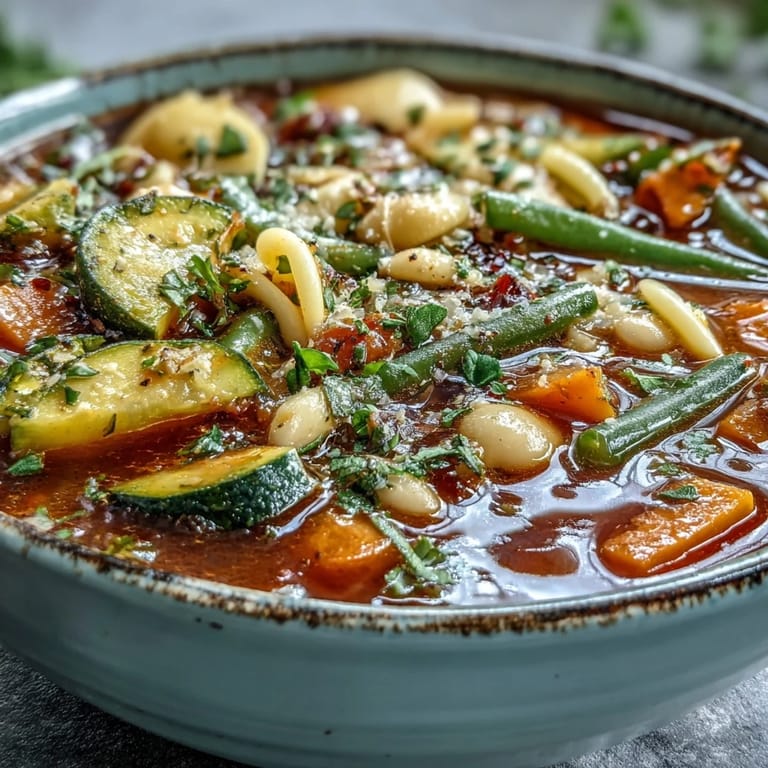
- Zucchini and green beans: Summer or frozen works equally well, and frozen actually means you can make this soup in January without feeling like you're pretending it's warm outside.
- Spinach or kale: Either works beautifully, though kale holds its shape better if you prefer a less wilted green.
- Diced tomatoes: Canned is perfectly fine and actually more consistent than fresh, so don't feel bad reaching for the can.
- Vegetable broth: A good quality broth matters here since it's literally half your soup, so taste it before adding to make sure it's not overly salty.
- Dried oregano, basil, and thyme: These three herbs are the soul of the dish, but if you only have one or two, use a little more of what you have rather than leaving the pot bland.
- Bay leaf: It adds a subtle depth that feels like a secret because most people don't notice it, but they notice when it's missing.
- Cannellini and kidney beans: Rinsing them well removes excess starch and sodium, making your broth clearer and less salty.
- Small pasta: Ditalini is traditional, but elbow or small shells work just as well and cook at similar speeds.
- Parmesan cheese: Freshly grated tastes incomparably better than pre-grated, even though it takes thirty extra seconds.
Tired of Takeout? 🥡
Get 10 meals you can make faster than delivery arrives. Seriously.
One email. No spam. Unsubscribe anytime.
Instructions
- Build your aromatic base:
- Heat the olive oil in your largest pot and toss in the onion, carrots, and celery together, letting them soften into a fragrant, golden base over five to six minutes. You'll know it's right when the onion turns translucent and the whole kitchen smells like cooking rather than raw vegetables.
- Layer in the garden vegetables:
- Add the minced garlic, diced zucchini, and chopped green beans, stirring everything together for about three to four minutes until the raw edge mellows out. The garlic should perfume the oil but never turn brown, or it gets bitter and sullen.
- Add liquid and seasoning:
- Pour in the diced tomatoes with their juice, the vegetable broth, and all your dried herbs along with the bay leaf, stirring until everything mingles together smoothly. Bring the pot to a boil so the broth picks up all those herb flavors.
- Establish a gentle simmer:
- Lower the heat, cover the pot with a lid, and let it bubble quietly for fifteen minutes so the vegetables begin breaking down and the flavors deepen. This covered time is when the magic happens, even though it looks like nothing's changing.
- Add the pasta and beans:
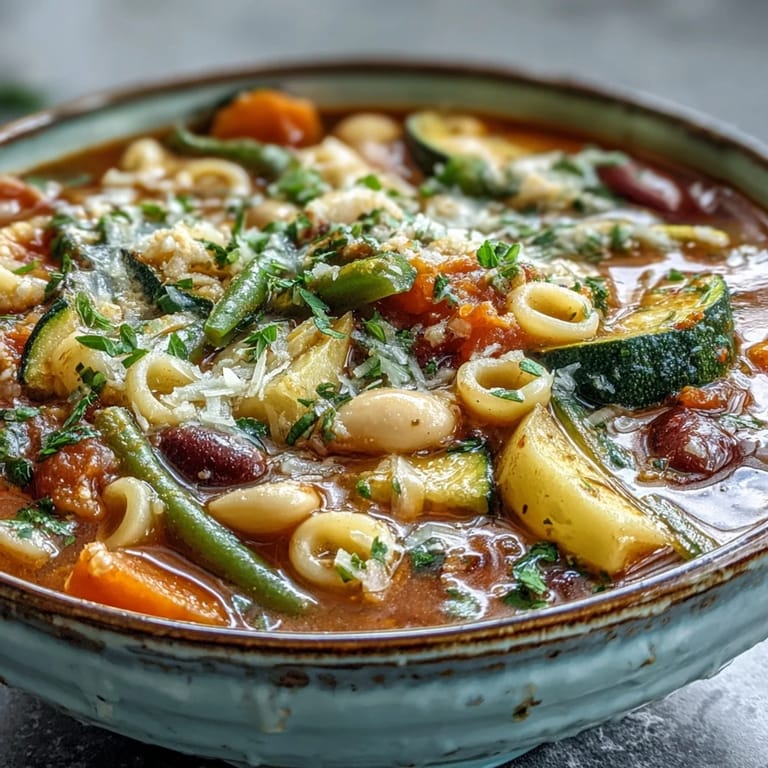
- Stir in your small pasta and both types of drained beans, leaving the lid off this time so you can watch the pasta soften over ten to twelve minutes. The pasta will gradually plump up and turn tender without becoming mushy if you stay attentive.
- Finish with greens:
- Add your spinach or kale and let it wilt right down into the broth in just two to three minutes, then fish out that bay leaf and taste everything for salt and pepper. This is your moment to adjust the seasoning, so be generous with both if the broth tastes flat.
 Save
Save There's a particular moment in winter when this soup stops being just dinner and becomes a ritual, something I make in my pajamas on Saturday mornings knowing I'll have warmth waiting for me on Tuesday night. It's when I remember why Maria taught me this, why she understood that good food is really just an excuse to slow down.
When to Make It
Minestrone belongs to no single season, though it feels most natural when vegetables are abundant or when you're craving something both light and substantial. Spring demands fresh green beans and young zucchini, while autumn and winter let you experiment with heartier additions like potatoes, chunks of root vegetables, or even some shredded cabbage for extra body.
Making It Your Own
The beautiful secret of minestrone is that it's genuinely a soup you cook to your mood and your pantry, not a recipe you follow with white-knuckle precision. I've made versions with white beans instead of red, versions that lean heavily on tomato, versions where I used up the last of nearly everything in my vegetable drawer and still somehow arrived at something delicious that made sense.
Serving and Storing
Serve this soup hot with crusty bread on the side and a small bowl of freshly grated Parmesan at the table so people can add as much or as little as they like. Minestrone keeps beautifully for three to four days in the refrigerator, and it actually tastes better the next day when the flavors have had time to become better friends with each other.
- If you're making it ahead, add the pasta just before serving or store it separately and add it when reheating so it doesn't turn to mush.
- Drizzle each bowl with good olive oil and fresh parsley right before eating for a brightness that cuts through the richness.
- Leftover soup freezes well for up to three months, though the pasta texture changes slightly upon thawing, so consider making extra soup base and adding fresh pasta each time you serve it.
 Save
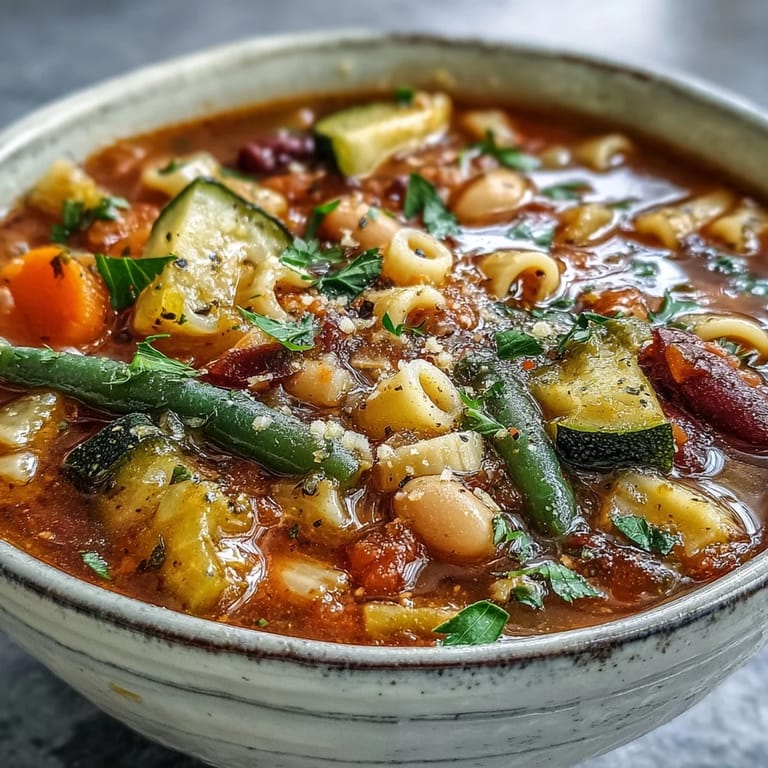
Save This soup somehow tastes like coming home, like someone cared enough to chop things deliberately and let them simmer while thinking of you. Make it once and it becomes yours.
Recipe FAQs
- → What vegetables work best in minestrone?
Traditional minestrone includes onions, carrots, celery, zucchini, and green beans. You can also add potatoes, cabbage, peas, or Swiss chard based on seasonal availability and personal preference.
- → Can I make minestrone soup gluten-free?
Yes, simply substitute regular pasta with gluten-free pasta varieties like brown rice, corn, or quinoa pasta. The cooking time may vary slightly, so check for doneness earlier.
- → How long does minestrone soup keep in the refrigerator?
Stored in an airtight container, minestrone keeps well for 4-5 days in the refrigerator. The flavors often deepen and improve after a day or two. Add pasta when reheating to prevent it from becoming too soft.
- → Can I freeze minestrone soup?
Yes, freeze without the pasta for best results. Cook the pasta separately when reheating. Frozen minestrone maintains quality for 3-4 months. Thaw overnight in the refrigerator before warming.
- → What type of pasta is traditional in minestrone?
Small pasta shapes like ditalini, elbows, small shells, or tubetti work beautifully. These tiny shapes hold up well in broth and provide satisfying texture in every spoonful.
- → Is minestrone soup suitable for meal prep?
Absolutely. Make a large batch and portion into containers for lunches throughout the week. Prepare pasta separately and add when reheating to maintain ideal texture.