 Save
Save My neighbor Maria taught me minestrone wasn't about following a recipe perfectly, it was about using what you had on hand and trusting the process. One rainy afternoon, she stood at her stove with a half-empty vegetable drawer and showed me how every chop, every simmer, turned into something that tasted like home. That soup changed how I cooked, especially when the weather turned cold and people needed more than just food.
Years ago, I made this for a friend who'd just moved to a new city, alone and overwhelmed. She sat at my kitchen table while the soup simmered, and by the time I ladled it into bowls, she'd already started talking about her worries. Something about the steam rising and the smell of basil and tomatoes made the conversation easier. She came back for soup every Sunday after that.
Ingredients
- Olive oil: Use good oil if you can, it carries the flavor of everything else in the pot.
- Onion, celery, and carrots: This trio is the foundation, the soffritto that builds the whole soup's personality.
- Garlic: Mince it fine so it disappears into the broth rather than sitting in chunks.
- Zucchini and green beans: Fresh vegetables keep the soup feeling alive, not heavy.
- Baby spinach or kale: Add at the end so the greens stay bright and keep their texture.
- Canned diced tomatoes: Quality matters here, they're the backbone of the broth.
- Vegetable broth: Make your own if you have time, but honest store-bought broth works just fine.
- Tomato paste: A small spoon adds depth without needing hours of cooking.
- Small pasta: Ditalini or elbow pasta absorbs the broth and makes the soup feel substantial.
- Cannellini or kidney beans: Drain and rinse them well, they're your protein and they add creaminess.
- Oregano, basil, and thyme: Dried herbs are fine here, they have time to unfurl and flavor the whole pot.
- Bay leaf: Always fish this out before serving, it's there for flavor, not eating.
- Salt and black pepper: Taste as you go, season at the end when you know what you're working with.
- Fresh parsley: This scattered on top is the last word, bright and alive at the finish.
Tired of Takeout? 🥡
Get 10 meals you can make faster than delivery arrives. Seriously.
One email. No spam. Unsubscribe anytime.
Instructions
- Start with warmth and softness:
- Heat olive oil in a large pot over medium heat, then add your diced onion, celery, and carrots. Let them soften for about 5 minutes, stirring now and then, until they smell sweet and the onion turns golden at the edges. This is where the soup's foundation gets built.
- Bring in the middle layers:
- Stir in your minced garlic, diced zucchini, and green beans, and cook for 3 to 4 minutes until the garlic stops smelling sharp and raw. The vegetables will start to smell softer, greener, less like individual ingredients.
- Build the broth:
- Pour in your diced tomatoes with their juice, stir in the tomato paste, then add your vegetable broth. Add the oregano, basil, thyme, and bay leaf, then bring everything to a boil. Once it's rolling, lower the heat and let it simmer gently for 15 minutes so the herbs have time to release their flavor into the liquid.
- Add pasta and beans:
- Stir in the small pasta and your drained beans, then cook for about 10 minutes until the pasta is tender but still has a little resistance when you bite it. This is al dente, and it's worth waiting for.
- Finish with greens and fresh herbs:
- Stir in your spinach or kale and the fresh parsley, then simmer for another 2 to 3 minutes just until the greens soften and darken. Don't cook them too long or they'll lose their brightness.
- Taste and balance:
- Fish out the bay leaf, then taste the soup and season with salt and pepper to your liking. Remember that salt enhances all the flavors that came before, don't be shy.
- Serve with warmth:
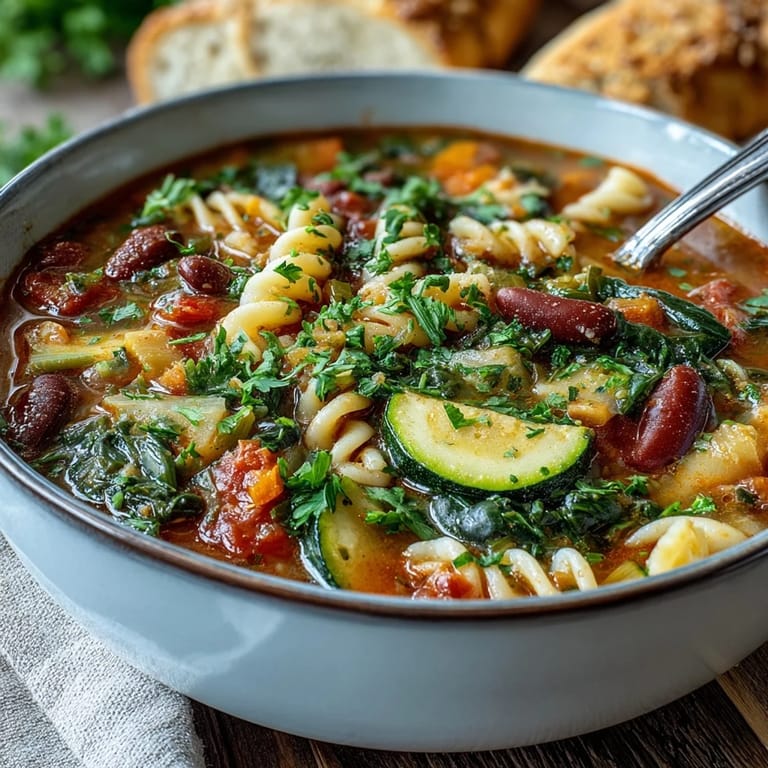
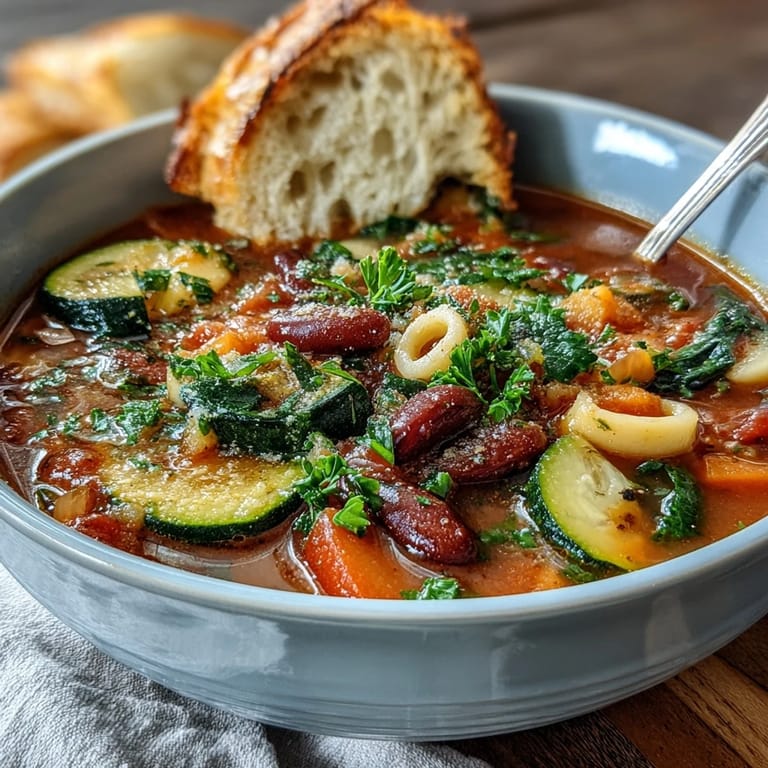
- Ladle the soup into bowls, scatter more fresh parsley over the top, and serve it hot with crusty bread on the side for soaking up every drop.
 Save
Save I learned that minestrone is generous, it stretches to feed whoever shows up at your table. One winter evening, a single pot fed five people who'd stopped by unexpectedly, and nobody left hungry. That's when I understood this soup was never really just about the recipe.
Vegetables Are Your Canvas
The beauty of minestrone is that it welcomes whatever vegetables are in season or living in your drawer. Summer calls for fresh zucchini and green beans, fall asks for diced butternut squash or kale, winter wants root vegetables like parsnips. Once you understand the rhythm of the soup, the vegetables become flexible, and that's when cooking stops feeling like following instructions and starts feeling like conversation between you and your ingredients.
The Herb Balance That Matters
Oregano, basil, and thyme each bring different voices to the pot. Oregano is earthy and loud, basil is bright and slightly sweet, and thyme is quiet and grounding. Together they sound Italian, but if you lean too heavy on one, the soup tips off balance. I learned this by accident once when I tripled the oregano and the soup tasted like an Italian restaurant's bathroom. Now I measure carefully and trust that all three work better together than alone.
Serving and Storage Wisdom
Minestrone tastes even better the next day when the flavors have had time to get to know each other. Store it in the refrigerator for up to four days, and it reheats gently on the stovetop with a splash of broth or water if it's thickened too much. Some people swear by grated Parmesan scattered across the top, while others add a drizzle of olive oil or crusty bread crumbled into the bowl.
- Make it a day ahead if you have time, the flavors deepen and the house will smell incredible when you reheat it.
- If you're cooking for someone avoiding gluten, use gluten-free pasta and check your broth label to be sure.
- Leftovers freeze beautifully for up to three months, a gift to future tired versions of yourself.
 Save
Save Minestrone is one of those dishes that reminds you cooking doesn't have to be complicated to be meaningful. It asks only for your attention and a little patience.
Recipe FAQs
- → Can I make minestrone soup ahead of time?
Absolutely. Minestrone actually improves after refrigeration as the flavors deepen. Store for up to 4 days, adding a splash of broth when reheating since pasta absorbs liquid.
- → What vegetables work best in minestrone?
Traditional choices include onions, celery, carrots, zucchini, and green beans. Seasonal swaps like butternut squash, cabbage, or Swiss chard work beautifully. Use what's fresh and available.
- → How do I prevent pasta from getting mushy?
Cook pasta separately until just shy of al dente, then add to soup for the final minutes. Alternatively, slightly undercook pasta directly in the soup—it will continue softening in the hot broth.
- → Can I freeze minestrone soup?
Yes, freeze for up to 3 months. For best results, omit pasta and add fresh when reheating. If freezing with pasta, expect it to be softer—the flavor remains excellent.
- → What makes minestrone authentic?
Authentic minestrone uses whatever vegetables are in season, a tomato-based broth, beans for protein, and small pasta shapes. The key is the soffritto base of sautéed onions, carrots, and celery.
- → Is minestrone suitable for special diets?
Naturally vegetarian and easily vegan by skipping Parmesan. Use gluten-free pasta for gluten-free needs. Packed with fiber, vitamins, and plant protein while remaining low in fat.