 Save
Save The first time I tasted laksa, I was standing in a cramped food stall in Kuala Lumpur, steam rising from a bowl so aromatic it made my eyes water in the best way. A vendor with flour-dusted hands had ladled this golden, creamy broth over noodles with the kind of practiced efficiency that comes from making the same dish a thousand times. I spent the next year trying to recreate that exact warmth and complexity in my own kitchen, and somewhere between burnt garlic and too-timid spice, I finally understood the magic: it's not about perfection, it's about layers building into something that feels like a warm embrace.
I made this for my partner on a Tuesday night when the weather turned unexpectedly cold, and they described it as tasting like a vacation we couldn't take. We sat at the kitchen table with our bowls, squeezing lime into the steaming broth and adding chili slices one by one, adjusting the heat to exactly what felt right. That's when I realized laksa isn't really a recipe—it's an invitation to slow down and taste what you're doing.
Ingredients
- Vegetable oil: Use a neutral oil like canola or vegetable; it won't compete with the spices.
- Onion, garlic, ginger, and lemongrass: These form the fragrant base—don't skip the lemongrass, as it gives laksa its distinctive grassy-citrus note.
- Laksa paste: This is the shortcut that makes everything work; look for it in Asian markets or use homemade if you're feeling ambitious.
- Coconut milk: Full-fat is non-negotiable here—it creates the silky broth that makes this dish memorable.
- Vegetable broth: Good quality matters; watery broth makes watery laksa.
- Soy sauce and sugar: These balance the heat and richness, rounding out the flavor profile.
- Rice noodles: Thicker varieties hold up better to the broth, but use what you can find.
- Firm tofu: Frying it first gives it a light golden crust that contrasts beautifully with the soft vegetables.
- Fresh vegetables: Bean sprouts, carrot, bell pepper, and snow peas add crunch and color—they're also how you personalize this dish.
- Spring onions, cilantro, lime, and chili: These finishing touches are where the dish comes alive, so don't rush past them.
Tired of Takeout? 🥡
Get 10 meals you can make faster than delivery arrives. Seriously.
One email. No spam. Unsubscribe anytime.
Instructions
- Build the fragrant base:
- Heat oil in your pot and add the onion, garlic, ginger, and lemongrass. You'll know it's ready when the kitchen smells so good you can barely stand it—about 3 to 4 minutes. The vegetables should be soft and starting to stick slightly to the bottom of the pot.
- Deepen with laksa paste:
- Stir in the paste and let it cook for 2 minutes, stirring often so it doesn't burn. The aroma will shift from raw spice to something cooked and complex.
- Create the broth:
- Pour in coconut milk and vegetable broth, stirring well so the paste dissolves completely. Bring everything to a gentle simmer—not a rolling boil, which can break the coconut milk.
- Season and simmer:
- Add soy sauce, sugar, and salt, then let the broth bubble softly uncovered for 10 minutes. Taste it halfway through and adjust—the flavors should taste rounded and balanced, not sharp.
- Prepare the noodles and tofu:
- While the broth simmers, cook or soak your rice noodles according to package directions, then drain them. In a separate skillet, fry the tofu cubes over medium heat until they're golden and slightly crispy on all sides, about 5 to 6 minutes total.
- Cook the vegetables:
- Add carrots, bell pepper, and snow peas to the broth and let them simmer for 3 to 4 minutes until they're tender but still have a slight bite. Don't overcook them—they should taste fresh, not mushy.
- Assemble your bowl:
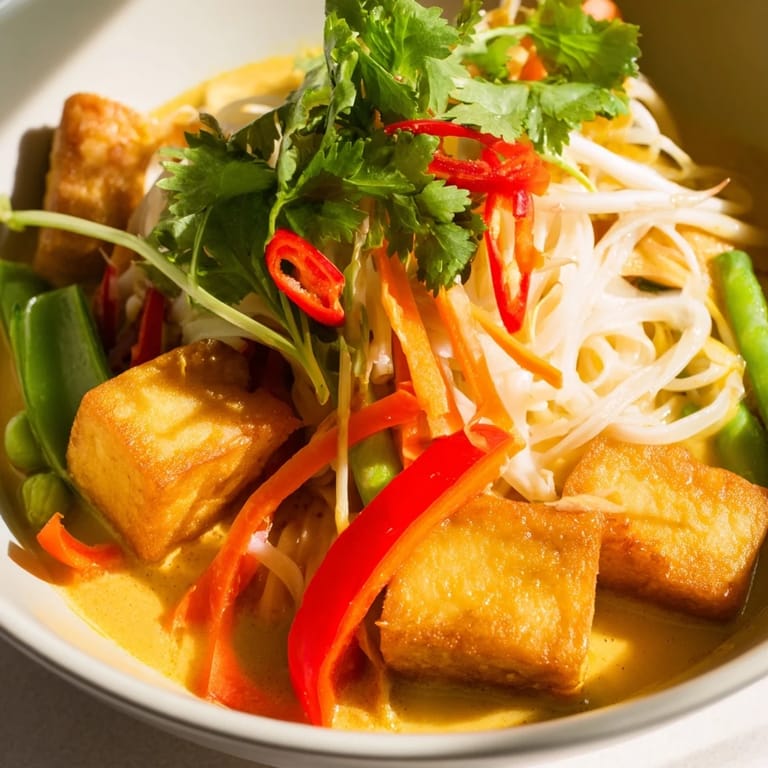
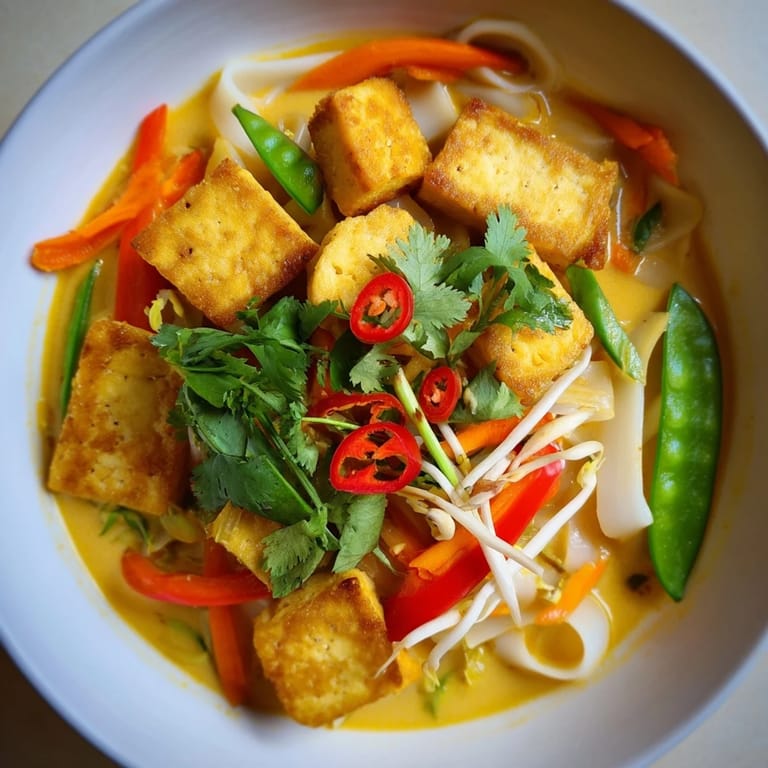
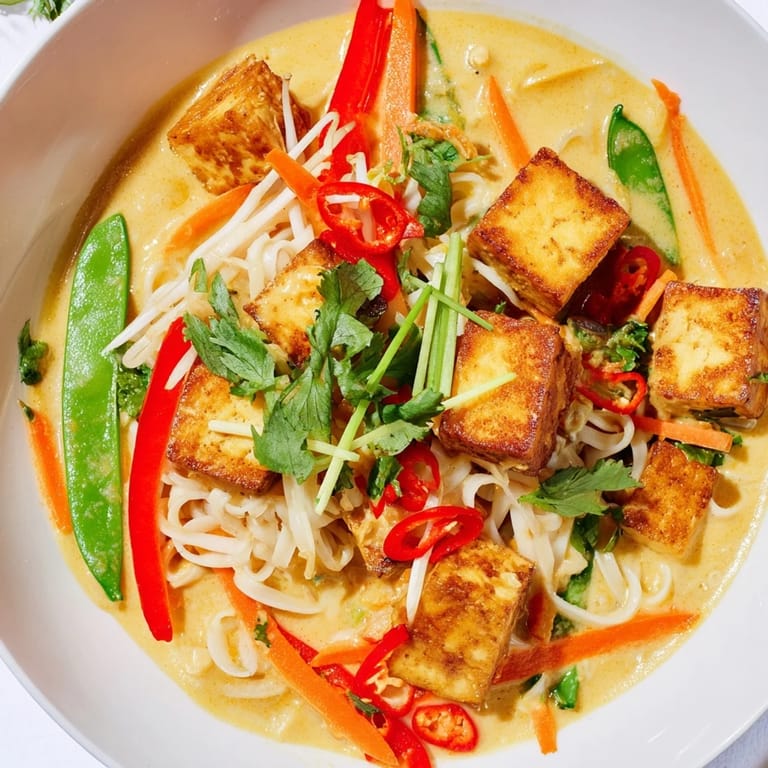
- Divide noodles among four serving bowls, then ladle the hot broth and vegetables over them. Top each bowl with fried tofu, a handful of bean sprouts, spring onions, cilantro, and chili slices if you want heat. Serve with lime wedges on the side so everyone can adjust the brightness to their taste.
 Save
Save There's a moment in every good bowl of laksa when you stop thinking about the recipe and just eat, letting the layers of flavor guide you. That's the moment I'm chasing every time I make this, and it's the moment I know my kitchen has done something right.
Why Laksa Feels Like Home
Laksa is the kind of dish that wraps around you—literally and figuratively—with its steam and spice and generous portions. It's humble enough for a Tuesday night but impressive enough to serve to people you're trying to impress, which is a rare gift in cooking. The first spoonful always feels like an event, but by the second bowl, it feels like comfort.
Customizing Your Laksa
The beauty of laksa is that it welcomes improvisation without falling apart. Use whatever vegetables are in season or on sale—mushrooms add earthiness, baby corn adds sweetness, bok choy adds body. Some people add a fried egg on top, others use chicken or shrimp, and some swear by a splash of fish sauce even in the vegetarian version. The paste is doing the heavy lifting, so you have freedom everywhere else.
Serving and Pairing
Laksa is best served immediately while the broth is hot and the vegetables are still slightly crisp. The first sip should be almost too hot to drink, steaming and intense. If you're pairing it with wine, go for something crisp and aromatic like a Riesling or even a light Sauvignon Blanc—the acidity and florals complement the coconut richness beautifully.
- Have all your toppings prepped and arranged before you ladle, so assembly feels easy and joyful.
- Squeeze lime into the broth as you eat, not all at once—it should taste like a conversation, not a conclusion.
- Make extra broth if you have friends over; people always want seconds, and there's nothing worse than running out of something this good.
 Save
Save This laksa has become my answer to almost any craving for something deeply satisfying, and I hope it becomes yours too. Make it once to learn it, then make it again to make it yours.
Recipe FAQs
- → What type of noodles works best?
Thick rice noodles or vermicelli both absorb the broth well and complement the dish’s texture.
- → Can I make it vegan?
Yes, choose a laksa paste without shrimp or fish ingredients and confirm all condiments are vegan-friendly.
- → How do I achieve the rich coconut flavor?
Using full-fat coconut milk combined with simmering spices and laksa paste enhances the creamy, aromatic broth.
- → What vegetables are recommended?
Carrots, bell peppers, snow peas, bean sprouts, and spring onions contribute freshness and crunch.
- → Is it possible to prepare ahead?
Prepare broth in advance and store separately from noodles and tofu to keep textures fresh when serving.