 Save
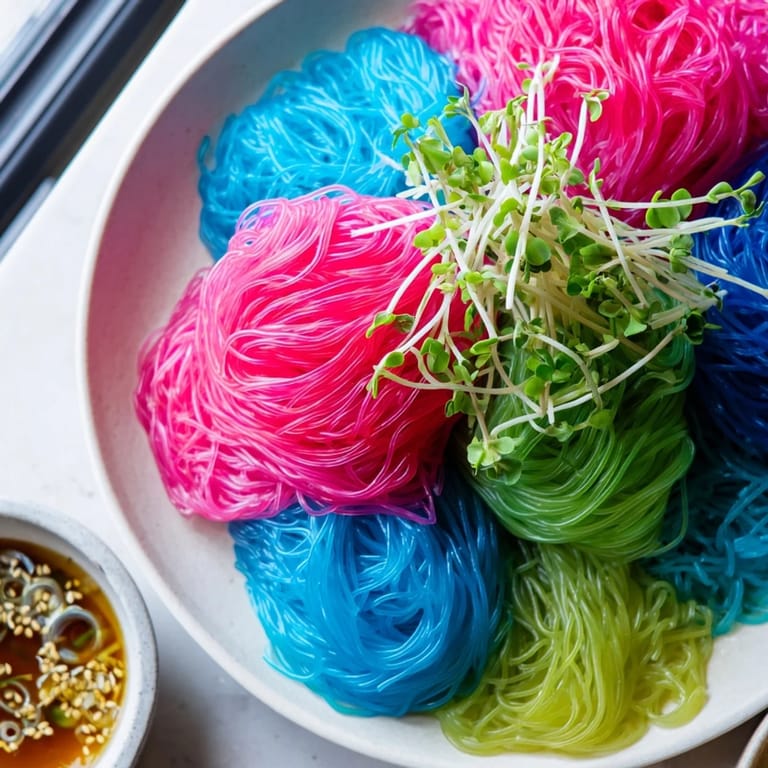
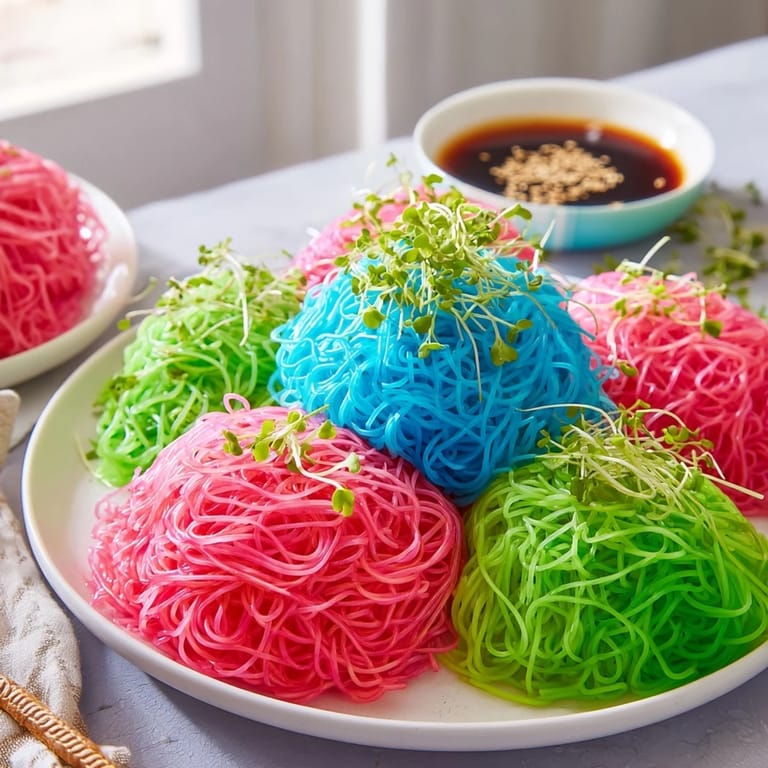
Save I first made these neon noodles on a Tuesday afternoon when my friend texted asking if I could create something wildly visual for her dinner party. The request felt impossible at first—colorful noodles that bounce? But then I remembered playing with agar-agar in culinary school and thought: what if I could pipe it into ice water and actually make it work? When those first bright strands set in the bowl, I laughed out loud. They looked like edible art, and somehow tasted even better than they looked.
The real magic happened when I served these at that dinner party and watched people's faces light up. One guest actually gasped and said they'd never seen anything like it on a plate. Someone else joked that we'd accidentally discovered edible neon signs. That moment reminded me why I love cooking—it's not always about flavor alone, sometimes it's about creating an experience that makes people feel delighted.
Ingredients
- Water: This is your base; it carries the agar-agar and needs to be measured precisely so your noodles set with the right bouncy firmness.
- Agar-agar powder: The secret ingredient that makes everything work—it's a seaweed-derived gelling agent that sets without refrigeration and gives that addictive wobble.
- Sugar: Balances the mineral flavor that agar can bring and adds subtle sweetness that rounds out the salty dipping sauce.
- Food coloring: Gel or liquid food coloring works best; go bold with neon shades because the colors mellow slightly as the noodles cool.
- Soy sauce or tamari: The backbone of your dipping sauce—tamari keeps it gluten-free if that matters to your guests.
- Rice vinegar: Adds brightness and cuts through the richness of sesame oil with a gentle tang.
- Mirin: Brings a subtle sweetness and silky texture to the sauce that balances everything.
- Sesame oil: Just a teaspoon goes a long way; it's the aroma that makes people say mmm before they even taste.
- Fresh ginger: Grate it right before mixing so the oils stay vibrant and peppery, not flat.
- Scallion: Slices of green onion add freshness and a slight bite that wakes up your palate between bites.
- Toasted sesame seeds: Optional but worth it—they add crunch and nutty depth that elevates the whole bite.
- Microgreens or edible flowers: These are entirely optional but they're what turn a fun dish into something that looks restaurant-quality.
Tired of Takeout? 🥡
Get 10 meals you can make faster than delivery arrives. Seriously.
One email. No spam. Unsubscribe anytime.
Instructions
- Dissolve the agar-agar base:
- Pour water into a saucepan with the agar-agar powder and sugar, then bring to a rolling boil over medium heat, stirring constantly for 2-3 minutes until you see no grainy bits at the bottom. The mixture will look clear and slightly viscous when it's ready.
- Split and color your liquid:
- Remove from heat and immediately divide into bowls—one for each color you want. Add just one or two drops of food coloring to each bowl and stir gently; the colors intensify as the liquid cools slightly, so go lighter than you think.
- Form the noodle strands:
- This is where it gets fun—use a syringe or squeeze bottle to pipe thin streams of colored agar into a bowl of ice water, letting them set for 1-2 minutes until they're firm enough to handle. If you don't have a syringe, pour into a flat tray, let it cool completely, then cut it into thin noodle-like strips with a sharp knife.
- Chill and refresh:
- Rinse your finished noodles quickly under cold water to remove any stickiness, then drain and refrigerate until you're ready to plate. They'll stay perfect for up to 24 hours in an airtight container.
- Mix the dipping sauce:
- Whisk together soy sauce, rice vinegar, mirin, sesame oil, grated ginger, and sugar in a small bowl until the sugar completely dissolves—you'll feel the graininess disappear as you stir. Fold in the scallion and sesame seeds right before serving so they stay crisp.
- Plate and serve:
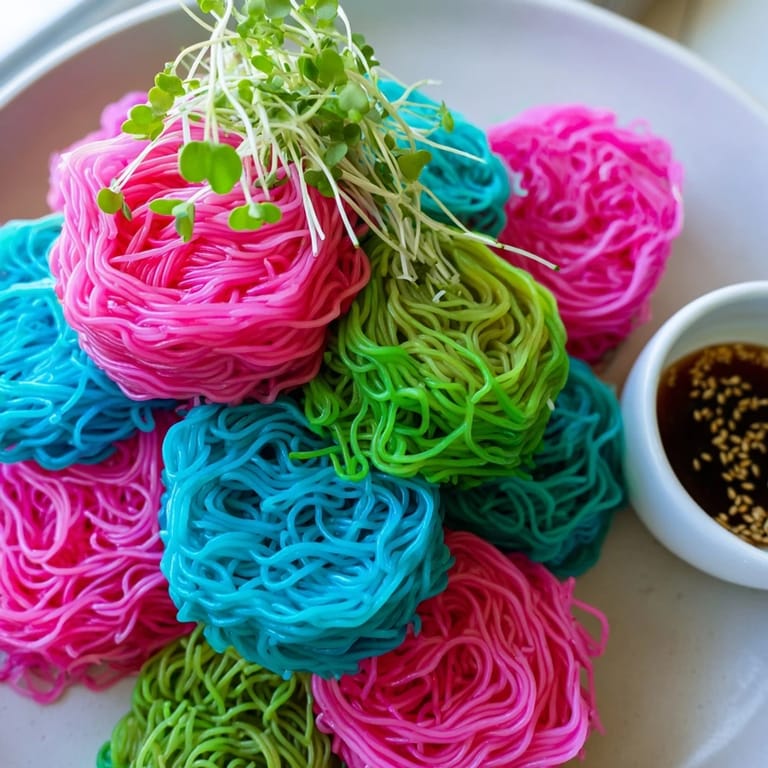
- Pile the chilled noodles into small bundles or nests, scatter microgreens or edible flowers on top if you have them, and serve alongside the dipping sauce for people to dunk into with chopsticks or a fork.
 Save
Save The moment that made this dish stick with me happened when a usually quiet guest at that dinner party suddenly started asking technical questions about the agar-agar, then admitted she wanted to try making it at home. Watching someone get genuinely curious about food because of how it looked and tasted reminded me that playfulness in cooking isn't frivolous—it actually makes people care more about what they're eating.
The Science of Bounce
Agar-agar is wild stuff—it's derived from red algae and has been used in Asian cooking for centuries, but most people in Western kitchens have never heard of it. What makes it special is that it gels when it cools, not when it's heated like gelatin does, which means you get this springy, bouncy texture that actually holds up better than traditional noodles. The first time I bit into an agar noodle, I genuinely wasn't expecting that resistance; it felt playful in my mouth. Once you understand that agar sets on cooling and not on heating, you unlock all kinds of possibilities—you can pipe it, pour it, mold it, and it'll set into whatever shape you gave it.
Playing with Color and Natural Alternatives
I've experimented with both synthetic food coloring and natural alternatives, and honestly, both have their place. Gel and liquid food coloring give you that pure neon look that feels almost otherworldly on the plate, but if you want to keep things more natural, spirulina creates a gorgeous green, butterfly pea flower makes a striking blue that shifts when you add acid, and beet juice gives you jewel-toned reds and purples. The downside to natural colors is that they're more subtle and sometimes slightly earthy in flavor, so taste as you go. I once used way too much beet juice and ended up with noodles that tasted like the earth itself, which was a learning moment.
Sauce Magic and Personal Touches
The dipping sauce is where you make this dish truly yours. The base of soy, vinegar, and mirin is classic and balanced, but it's also a canvas. A splash of yuzu juice adds brightness that makes people pause and ask what that citrus note is, while a tiny drizzle of chili oil gives it heat that sneaks up on you. I've also added a whisper of wasabi for guests who like spice, or a touch of honey for those who prefer things slightly sweet. The key is to let the sauce sit in the refrigerator for at least 30 minutes before serving so all the flavors get to know each other—it tastes noticeably better than when freshly made.
- Always taste your sauce and adjust the balance before serving; soy sauces vary in saltiness across brands.
- Keep the sauce separate until the last minute if you're making these ahead, because noodles will start to absorb liquid over time.
- A teaspoon of fresh lime juice can replace rice vinegar if you want to shift the flavor profile entirely.
 Save
Save These noodles remind me that cooking doesn't always have to be serious or traditional to be good—sometimes the most memorable meals are the ones where you let yourself play and see what happens. If you serve these at your table, I promise you'll see that same delighted surprise I saw that first night.
Recipe FAQs
- → What gives the noodles their unique texture?
The bouncy texture comes from agar-agar, a natural gelling agent that sets into firm yet tender strands once chilled.
- → Can I use natural colorings for the noodles?
Yes, alternatives like spirulina, butterfly pea, or beet juice provide vibrant, natural hues without artificial additives.
- → How should the dipping sauce be stored?
Keep the soy-based dipping sauce refrigerated and stir before serving to maintain flavor balance.
- → What tools help shape the noodles?
A syringe or squeeze bottle allows precise piping of noodle strands into ice water for setting.
- → Is the dish suitable for gluten-free diets?
Yes, substituting tamari for soy sauce makes the entire dish gluten-free.