 Save
Save The moment I saw those jewel-toned eggs nestled against hot pink pickles on a black plate at a late-night market in Berlin, I knew I had to recreate it. There's something about arranging bright, unexpected colors that makes you feel like you're painting with food. I came home determined to build a platter that would stop people mid-conversation, one that tasted as bold as it looked. This dish became my answer to every potluck where I wanted to show up with something people had never seen before.
I'll never forget the silence that fell over the table when my friend Sarah saw this platter for the first time. She actually gasped, then immediately started taking photos before eating anything. That moment taught me that food doesn't always have to be complicated to be memorable—sometimes the most powerful dishes are the ones that make people pause and notice.
Ingredients
- Mini cucumbers: These are gentler on the palate than larger ones and stay crisp through the pickling process, which keeps the whole platter feeling fresh and crunchy.
- Rainbow carrots: Not just for show, the bias slicing helps them absorb the brine faster and makes each bite feel precious and intentional.
- Radishes: Their natural peppery kick gets even more interesting when pickled, and they hold their bright pink color like tiny edible jewels.
- Red onion: The thin slices soften beautifully during marinating and add a sharp note that wakes up your palate between bites of fruit.
- White vinegar and pickling spices: This combination creates a clean, aromatic brine that lets the vegetables shine without overpowering them.
- Eggs and beet: The beet dye is a natural alchemist, turning plain eggs into something that looks like it took professional styling but was actually just patience.
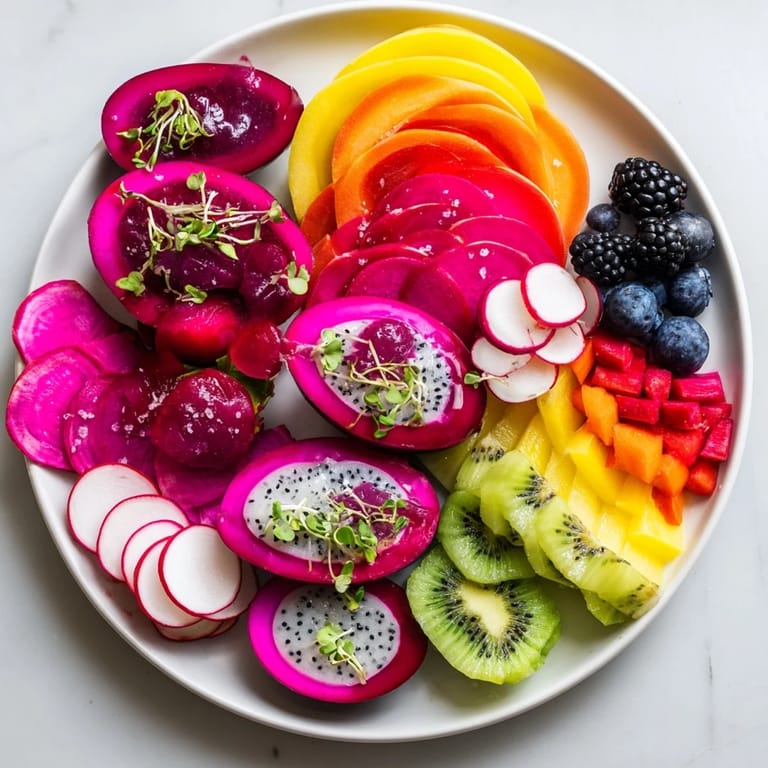
- Fresh fruits: The berries and tropical fruits provide sweetness and tartness that plays beautifully against the pickled vegetables, creating layers of flavor on the same plate.
- Microgreens and sea salt: These final touches feel like the signature on a painting—small but absolutely essential.
Tired of Takeout? 🥡
Get 10 meals you can make faster than delivery arrives. Seriously.
One email. No spam. Unsubscribe anytime.
Instructions
- Build your pickling brine:
- Combine vinegar, water, sugar, salt, mustard seeds, and peppercorns in a saucepan and bring to a gentle simmer. You'll know it's ready when you can smell the spices blooming and the sugar has dissolved completely—it should taste bright and slightly sweet on your tongue.
- Pickle the vegetables:
- Layer your sliced vegetables in a heatproof container and pour the hot brine over them. Let it cool at room temperature so the flavors gently infuse, then refrigerate for at least 2 hours or overnight. The longer they sit, the more personality they develop.
- Hard boil the eggs:
- Place eggs in cold water, bring to a boil, then let them cook for 8 to 9 minutes depending on how you like the yolk. Transfer immediately to an ice bath—this stops the cooking and makes peeling surprisingly easy if you crack and roll them gently under your palm.
- Dye the eggs with beets:
- In a jar, layer sliced beets with the peeled eggs and pour in a mixture of apple cider vinegar, water, sugar, and salt. The eggs will start developing color almost immediately, but they'll deepen and become more striking after 2 hours or overnight in the refrigerator.
- Compose your platter:
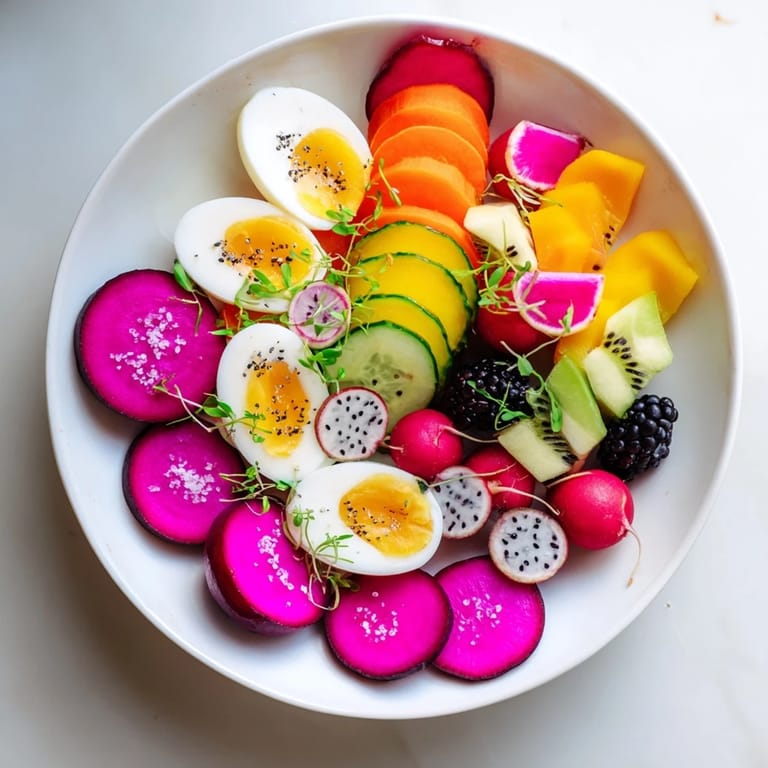
- Choose a large black serving board and arrange your pickled vegetables in little clusters, leaving negative space so each element gets its moment. Nestle the beet-dyed eggs among them, either halved to show the jeweled interior or sliced into thin rounds for maximum visual drama.
- Final garnish:
- Scatter microgreens across the board like you're dotting a constellation, sprinkle flaky sea salt for texture and visual contrast, and step back to admire what you've created before anyone digs in.
 Save
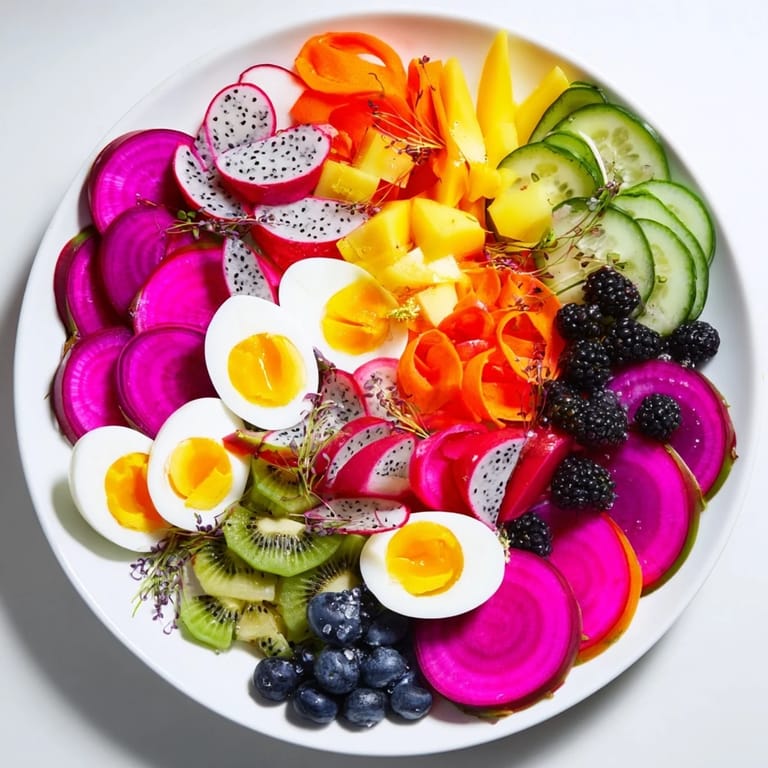
Save The night I brought this to a dinner party, a guest who usually just makes small talk ended up helping me arrange the platter. We stood there for twenty minutes, moving things around, debating whether the dragon fruit should go next to the blueberries or the blackberries. It became less about serving food and more about creating something together, and that shifted the whole energy of the evening.
The Magic of Color on a Black Canvas
A black serving board does something remarkable—it makes every color pop in a way that white never could. I learned this by accident when I ran out of my usual marble boards and grabbed a black charcuterie board from the back of the cabinet. The moment I started placing bright pink pickles and deep red beet eggs against that darkness, I understood why the high-end restaurants were doing this. The contrast isn't just visual; it changes how you experience the flavors because your brain is primed to expect something bold.
Timing and Preparation Strategies
What makes this platter so party-friendly is that nothing needs to happen at the last minute. You can pickle the vegetables the night before, dye the eggs in the morning, and wash the fruit an hour ahead. On the day of, all you're doing is arranging and garnishing, which means you can actually talk to people instead of being trapped in the kitchen. I've learned to prep in stages, which turns what could feel overwhelming into manageable little tasks spread across a day or two.
Flavor Combinations and Variations
The genius of this platter is how the sweet berries soften the sharp pickled vegetables, while the tropical fruit adds unexpected brightness. Every bite becomes a small adventure because you're mixing textures and flavors in different combinations. Once you understand this balance, you can start experimenting with what you find at the market—purple cabbage pickles instead of radishes, roasted beets alongside the dyed eggs, or swap the kiwi for fresh pineapple.
- Try turmeric for golden-yellow pickles or purple cabbage for a deep indigo brine if you want even more color variation.
- Serve alongside crusty bread or crackers for guests who want to make little bites, or offer it as is for the true platter experience.
- To make it vegan, simply double the pickled vegetables and add roasted chickpeas for protein—the platter will still be just as stunning.
 Save
Save This platter is proof that sometimes the most memorable dishes aren't the ones requiring technical skill—they're the ones that make people feel something when they see them. Whether it's a quiet dinner with family or a crowded celebration, this is the kind of food that brings people together.
Recipe FAQs
- → How are the vegetables pickled?
The vegetables are immersed in a warm brine of vinegar, water, sugar, salt, mustard seeds, and peppercorns, then refrigerated for at least 2 hours to absorb the flavors.
- → What gives the eggs their vibrant color?
Hard-boiled eggs soak in a mixture of beet slices, vinegar, water, sugar, and salt, allowing the beet’s natural pigments to dye them vivid red tones.
- → Can the pickling be done in advance?
Yes, marinating the vegetables and eggs overnight enhances the flavor and deepens the colors.
- → What fruits complement the pickled items?
Fresh blueberries, blackberries, kiwi, mango, and dragon fruit add bright, sweet contrasts to the tangy pickles and earthy eggs.
- → How is the platter best served?
Arrange the pickled veggies, beet-dyed eggs, and fruits on a dark board, garnishing with microgreens or edible flowers and finishing with flaky sea salt for texture and visual appeal.
- → Are there any suggested variations?
Use naturally color-rich pickling liquids like turmeric or purple cabbage for different hues, or omit eggs for a vegan option.