 Save
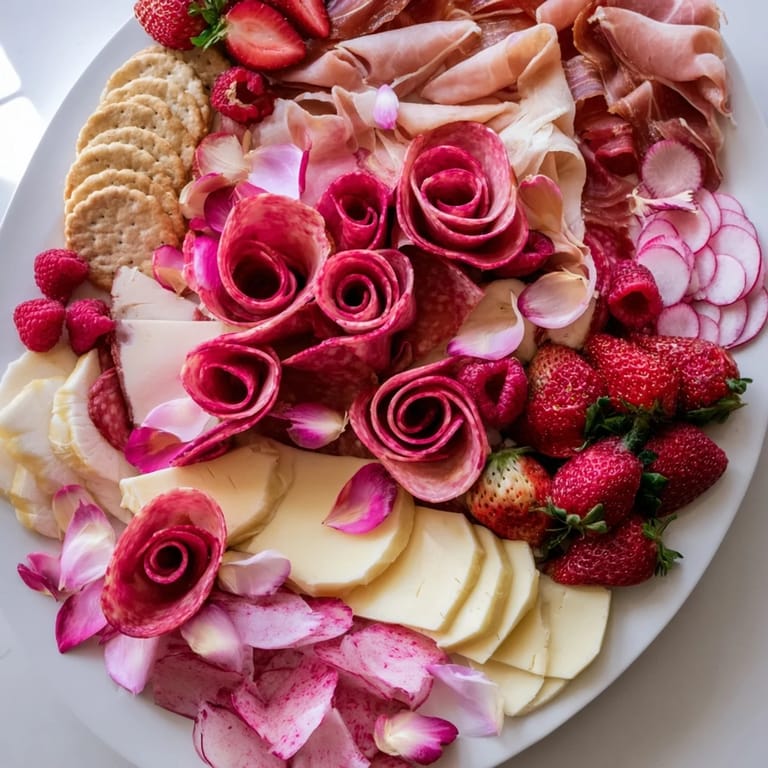
Save I remember the first time I created this Pink Petal Watercolor Wash platter was for my sister's spring engagement party. She'd always admired watercolor paintings, so I thought, why not translate that beauty onto a serving board? As I arranged the delicate layers of prosciutto roses, pink radishes, and creamy cheeses, I realized I was painting with food—each ingredient a brushstroke of color and flavor. The whole room gasped when I brought it out, and that moment of watching people's faces light up made me understand that the most memorable dishes aren't just about taste; they're about creating an experience.
I made this for a brunch with my closest friends last April, and what started as a pretty appetizer became the centerpiece of our entire conversation. We ended up sitting around the platter for over two hours, picking at the prosciutto roses and strawberries, talking about everything from dreams to disappointments. That's when I realized this platter does something special—it doesn't demand to be eaten quickly or perfectly. It invites people to linger, to enjoy each other's company at a slower pace.
Ingredients
- Prosciutto, thinly sliced: The star of this show. Look for prosciutto di Parma if you can; it has a delicate sweetness that transforms when you shape it into roses. The thin slices are key—they fold beautifully without tearing, and they add that essential salty-savory note that balances the sweetness of the fruits.
- Mortadella, thinly sliced: This Italian delicacy brings a buttery richness and gorgeous pale pink color. Slice it just before serving so it doesn't dry out. It's milder than prosciutto, so it works wonderfully next to the sharper cheeses.
- Pink radishes: These are your workhorses for color and crunch. I learned to slice them paper-thin on a mandoline so they almost become translucent at the edges—it makes them photograph beautifully and adds a delicate peppery bite.
- Watermelon radish: The pale pink interior is absolutely stunning, and the flavor is surprisingly sweet. The pale color creates those gorgeous watercolor transitions when you overlap the slices.
- Beet, cooked and sliced: Cook or buy pre-cooked beets; they add deep pink-to-crimson notes that anchor the color palette. I roast mine with a little salt and balsamic because those flavors complement everything else on the board.
- Pink-hued cheese: Port wine Derby or a rosé goat cheese brings both color and sophistication. These cheeses taste as interesting as they look, with wine or fruit undertones that feel special without being fussy.
- Brie or Camembert: The creamy contrast is essential. Choose a good quality one; you'll taste the difference, and it's the foundation that makes everything else work together.
- Baguette slices or gluten-free crackers: These are your edible architecture—they give guests something substantial to build their flavor combinations on. Toast them lightly if they're soft; they'll be easier to handle and won't get soggy.
- Rice crackers: These add textural variety and stay crisp much longer than regular crackers. They're also naturally gluten-free if that matters for your guests.
- Fresh strawberries: Halved strawberries bring brightness and natural sweetness. Choose ones that are vibrant pink, not pale—they contribute to the watercolor effect. Add them just before serving so they don't weep juice onto the board.
- Raspberries: These are the final color deepener, with delicate flavor and that gorgeous dusty pink exterior. They're fragile, so handle gently and add last.
- Edible rose petals or microgreens: Optional, but they transform the platter from lovely to ethereal. If you're using them, add just before serving.
Tired of Takeout? 🥡
Get 10 meals you can make faster than delivery arrives. Seriously.
One email. No spam. Unsubscribe anytime.
Instructions
- Set your canvas:
- Choose a large wooden board or ceramic platter—something with a neutral background so your pink palette really sings. If you're using marble or slate, that cool tone makes the pinks pop even more. Honestly, I like wood because it feels warm and inviting. Take a moment to visualize where everything will go; this isn't rigid, but having a rough mental map makes the actual arrangement feel effortless rather than stressful.
- Create your prosciutto roses:
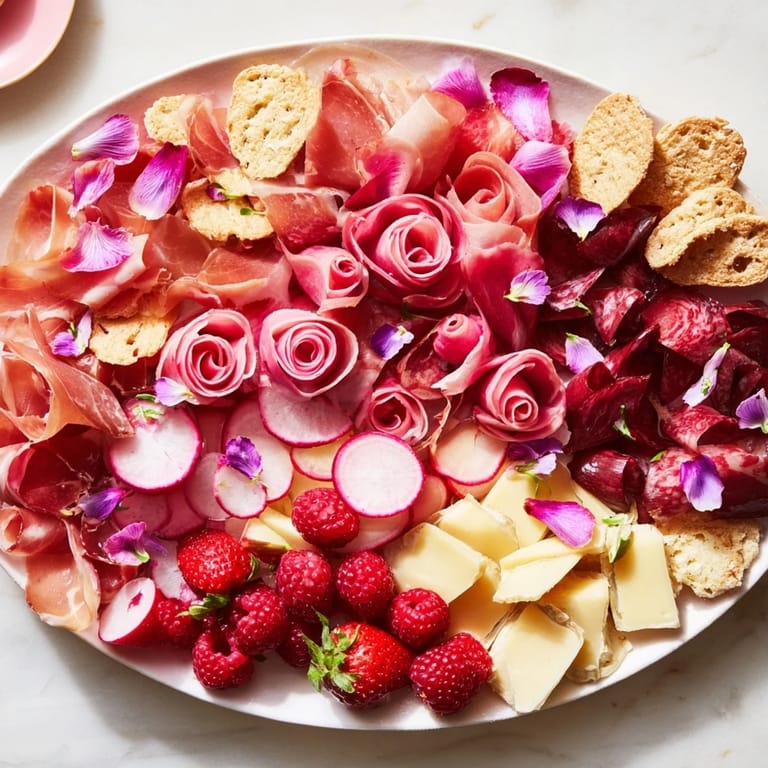
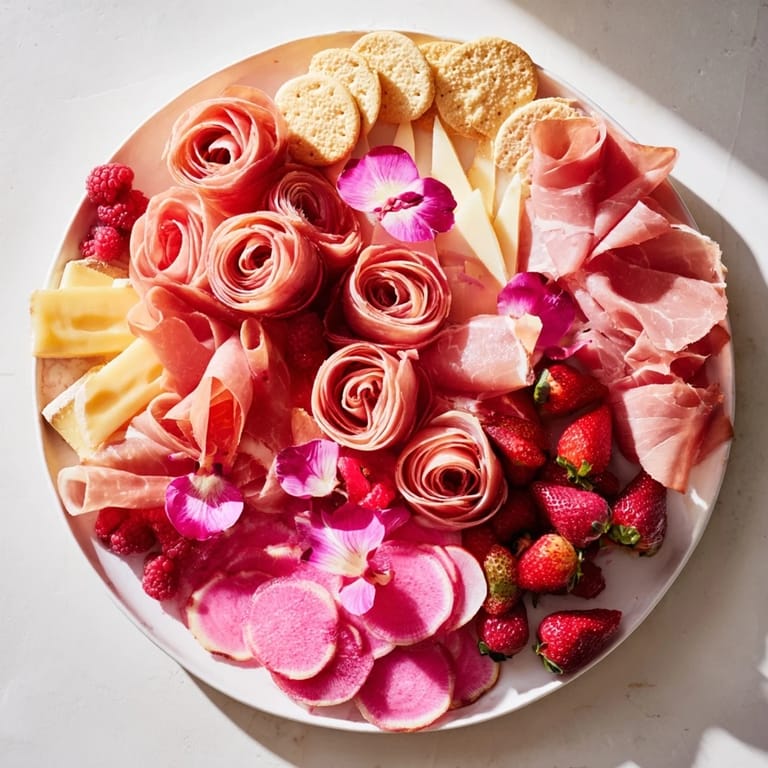
- This is the move that always impresses people. Lay a slice of prosciutto on the board and loosely roll it, or fold it accordion-style, creating a rose-like form. Don't overthink it—even a casual fold looks elegant because prosciutto naturally drapes beautifully. Place these in little clusters or scattered groups across the board. I learned that grouping three or five roses together looks more intentional than spreading them out one by one.
- Drift the mortadella:
- Lay mortadella slices in gentle, loose folds next to the prosciutto. Let them overlap and catch light; this ingredient loves a little drama. The pale pink will create a softer transition between the deeper-colored elements.
- Layer your vegetables like brushstrokes:
- This is where the watercolor metaphor really comes alive. Arrange your radish slices in slightly overlapping, fanned layers. Place a few pink radish slices, then watermelon radish, then beet slices, allowing them to blend and dance into each other. The overlapping creates depth and that painted effect. Don't arrange everything in neat rows; let colors bleed into each other. Stand back occasionally to see how the visual composition feels—this is your art.
- Nestle the cheeses:
- Slice your pink cheese into irregular pieces and cut the brie into wedges. Tuck these into clusters among the vegetables and meats. The different textures and creamier colors should visually blend with everything else. I place some cheese right against the radish slices so the colors interact.
- Add your structural elements:
- Arrange baguette slices and rice crackers in gentle curves or casual lines across the platter. They don't have to be perfectly placed—in fact, a little looseness makes it feel more approachable. Think of these as the negative space that lets all the colors breathe.
- Crown with fruit:
- This is the final flourish. Distribute halved strawberries and raspberries in small piles. They add both color depth and sweetness. Place them just before serving so they're at their freshest—raspberries especially will thank you for the last-minute addition.
- Finish with finesse:
- If you're using edible rose petals or microgreens, scatter them gently across the platter. Step back and admire your work. This moment, when you see it all come together, is honestly why I make this recipe.
- Serve with grace:
- Bring it straight to the table. Don't cover it; let people see the full composition. Encourage guests to mix and match flavors—a bit of prosciutto with strawberry, cheese with radish, mortadella with beet. That's the joy of a platter like this.
 Save
Save I made this platter for my grandmother's eightieth birthday brunch, and when she saw it, she got quiet for a moment. Then she told me it reminded her of the tablecloths her mother used to embroider—careful, intentional beauty that didn't require anything beyond itself to be meaningful. We all gathered around that board for hours, and she didn't touch a single thing for the first five minutes; she just looked at it and smiled. That's when food becomes memory.
Building Your Perfect Flavor Combinations
The magic of this platter lives in the combinations your guests create. I've discovered that the sweetness of strawberry with salty prosciutto is truly transcendent—it's the same reason prosciutto and melon became a classic pairing. The peppery snap of a radish against creamy brie is another revelation. The earthiness of beet with the delicate flavor of mortadella creates something elegant and sophisticated. Encourage people to be adventurous with their combinations; the beauty of a platter is that everyone gets to compose their own experience. Some people will be all about the cheese, others will load up on vegetables and fruit. There's no wrong way to enjoy this.
Making This Recipe Your Own
While this recipe is stunning as written, it's also incredibly forgiving and personal. I've made vegetarian versions by doubling down on the cheese and vegetable selections, and honestly, they're just as impressive. For a fall gathering, I've swapped in thinly sliced pears and added a pale pink walnut-crusted cheese. Pickled onions or pink peppercorns add extra flavor dimension if you want to venture slightly beyond the base recipe. One time I added a small bowl of fig jam in the center, and it became an instant focal point. The framework is there; you're just deciding how you want to paint it. The point is that this platter is a template for your creativity, not a rigid formula.
Pairing and Presentation Tips
This platter is begging to be served alongside rosé wine or sparkling wine with a delicate touch. Cold champagne works wonderfully, or even a crisp white if rosé isn't your preference. The aesthetics matter as much as the flavors—the presentation is half the experience with a platter like this. Choose your serving board with intention; it's your foundation. A wooden board brings warmth, while marble or slate makes the colors pop more intensely. Lighting matters too; natural daylight is ideal, but if you're serving indoors, soft lighting flatters the soft colors much better than harsh overhead lights. I once arranged this platter the night before a brunch and just covered it loosely with plastic wrap; by morning, it looked slightly tired, so now I always assemble it within the hour before guests arrive. The freshness in presentation mirrors the freshness of the ingredients.
- Use a large platter or board—crowding everything together diminishes the visual impact
- Prep each ingredient separately before arranging; this makes the actual assembly feel calm and intentional
- Step back frequently to assess the color distribution and balance
 Save
Save This platter isn't just food; it's an invitation to slow down and savor moments together. Every time I make it, I'm reminded that the most meaningful dishes are the ones that create space for connection.
Recipe FAQs
- → How can I create the watercolor effect with ingredients?
Arrange thinly sliced pink radishes, watermelon radish, and beets in overlapping layers to mimic watercolor brush strokes and place meats and cheeses to blend colors gently.
- → What cheeses complement the pink theme?
Pink-hued cheeses such as rosé goat cheese, berry-washed rind cheese, or port wine Derby pair beautifully with brie or camembert for color and texture contrast.
- → Can this platter be made vegetarian?
Yes, omit the prosciutto and mortadella, and increase the variety of cheeses and vegetables for a vegetarian-friendly platter.
- → What garnishes enhance the presentation?
Edible rose petals or microgreens add an elegant touch that complements the pink color palette and elevates the visual appeal.
- → How should the bread and crackers be arranged?
Slice baguette or use gluten-free crackers arranged in gentle curves along the platter edge or interspersed among ingredients to add texture and balance.