 Save
Save I'll never forget the moment I discovered that a cheese board could tell a story through color and flavor. It was at a wine bar in Tuscany, where I watched a sommelier arrange cheeses that had been steeped in red wine, creating this jeweled landscape that looked almost too beautiful to eat. The deep ruby tones, the way each ingredient seemed to glow against the wooden board, the theatrical touch of an empty wine bottle as the centerpiece—it all clicked. I came home determined to recreate that magic, and this Ruby Red Wine Stain Board became my answer to impressing people without spending hours in the kitchen.
The first time I made this for friends, someone gasped when they walked into the room. Not because the food was fancy—it was the visual impact. That wine bottle standing proud in the center, surrounded by jewel-toned cheeses and glistening grapes, it became the conversation starter before anyone even picked up a cheese knife. People lingered longer, tasted more adventurously, and kept coming back to that board all evening. That's when I realized this wasn't just appetizer; it was an experience.
Ingredients
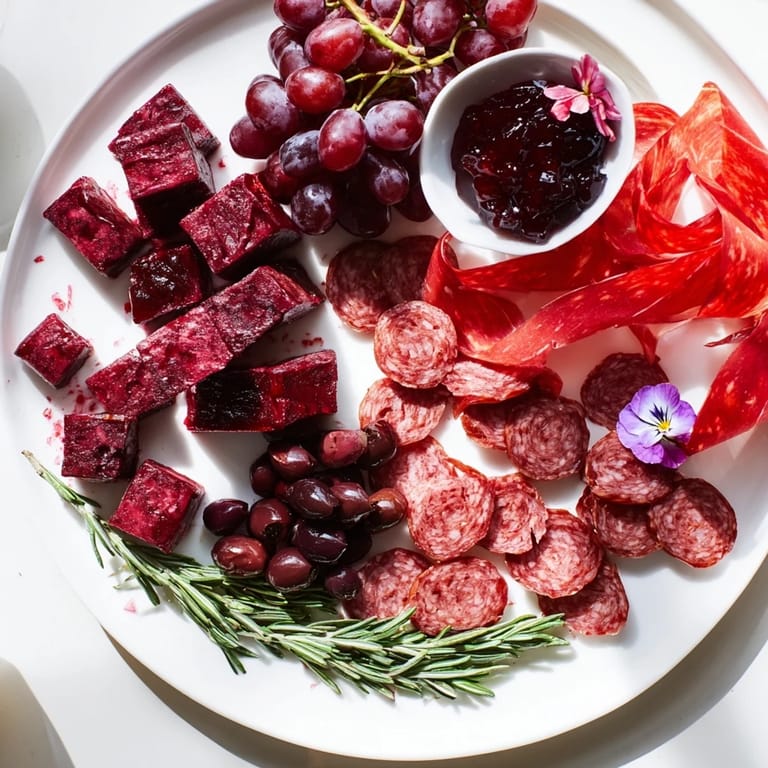
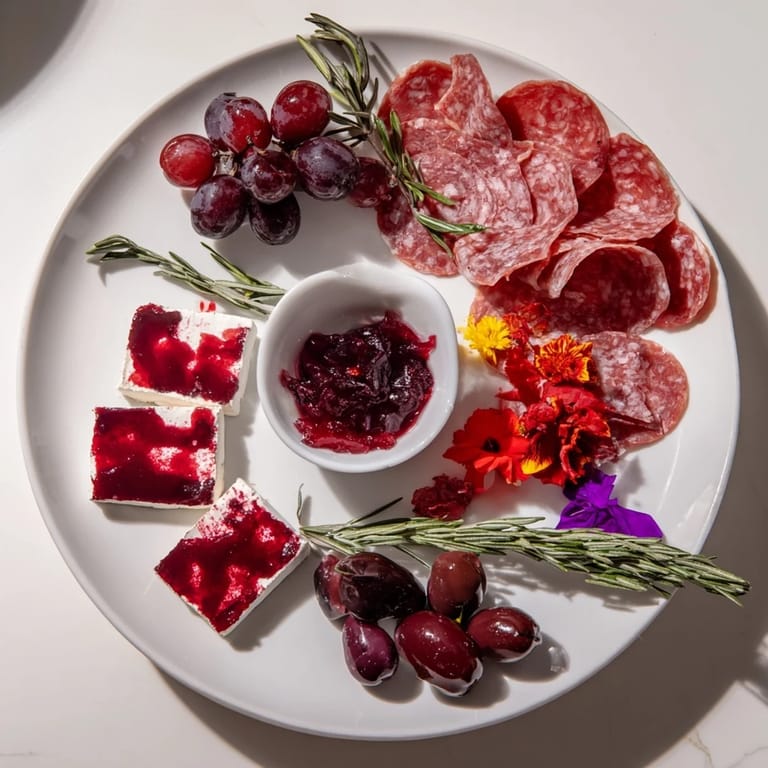
- Drunken Goat Cheese (200 g, sliced): This creamy cheese soaked in red wine becomes almost silky, with tangy notes mellowed by the wine's tannins. Buy it already prepared if you can, but if you're making it yourself, that's your moment to understand how wine transforms dairy into something luxurious.
- Red Wine BellaVitano (150 g, cubed): A harder cheese that holds its shape beautifully on the board and doesn't crumble under a knife. The wine aging gives it complexity that pairs perfectly with the cheeses and meats around it.
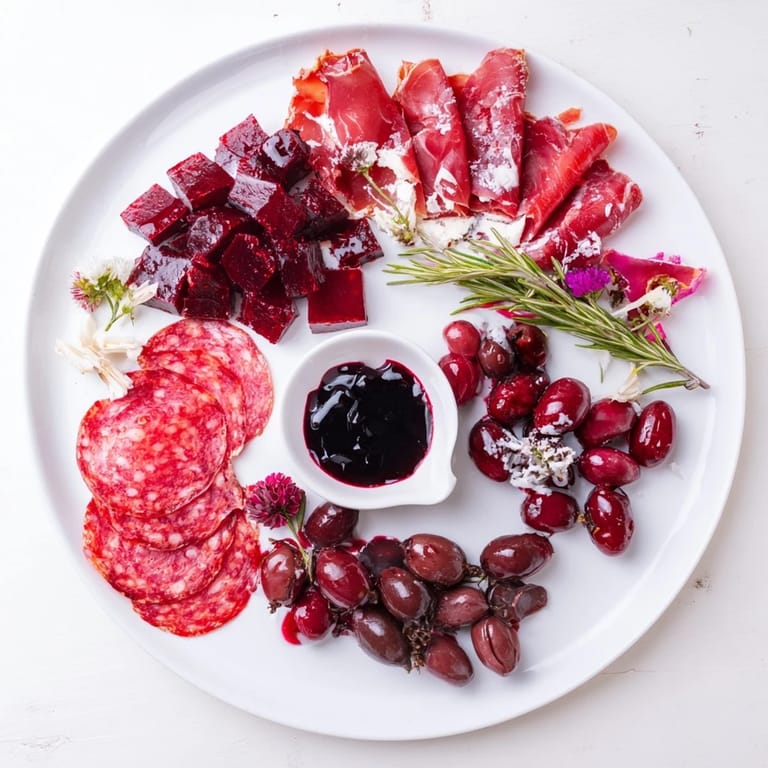
- Red Wine-Cured Salami (100 g, thinly sliced): Each slice should be translucent at the edges, showing how the wine has infused every layer. This is where umami meets elegance.
- Prosciutto (80 g, torn into ribbons): Tear it by hand rather than cutting—those irregular edges catch light and look intentional, generous. It's the gentle protein that balances rich cheeses.
- Red Wine Jelly (1/2 cup): This glossy jewel of a condiment brings brightness and a subtle wine tang. Use good wine for the jelly; it's one of the few ingredients where quality shines through completely.
- Red Wine-Poached Grapes (1/2 cup): Poaching grapes softens their skins and lets the wine flavor settle in. They become little flavor bombs that guests always ask about.
- Red Wine-Infused Dried Cherries (1/4 cup): These add chewiness and a concentrated fruitiness that bridges sweet and savory. A handful goes a long way.
- Red Wine-Marinated Olives (1/3 cup): Whether kalamata or green, marinating them in wine adds depth that raw olives simply can't match. The brine becomes part of the story.
- Baguette (1 small, sliced): Toast it lightly if you want crunch, or leave it soft if you prefer it to soak up jelly and cheese. This is your choice to make based on your mood.
- Red Wine and Rosemary Crackers (1 cup): If you can't find these specialty crackers, use quality rosemary crackers and dust them lightly with red wine reduction yourself. The herb-wine combination is non-negotiable.
- Fresh Rosemary Sprigs: These aren't just garnish—crush a sprig between your fingers and smell it as you're building the board. That aroma is part of what makes people gather closer.
- Edible Flowers (optional): A few purple or yellow petals add that final touch of intentionality that says you care about beauty as much as taste.
Tired of Takeout? 🥡
Get 10 meals you can make faster than delivery arrives. Seriously.
One email. No spam. Unsubscribe anytime.
Instructions
- Set Your Stage:
- Place that empty wine bottle in the dead center of your wooden board. Clean it well—the label removed lets the glass shine like a sculpture. This is your anchor, your focal point. Everything else radiates outward from here, so take a breath and see the board as a blank canvas.
- Build the Foundation:
- Arrange the sliced drunken goat cheese and cubed BellaVitano around the bottle's base, letting some pieces rest against the glass. This creates height and visual intrigue. The cheeses should look like they're casually placed, never military-straight. Let the color do the talking.
- Add the Proteins:
- Fan out the red wine-cured salami in loose ribbons, then tear the prosciutto into pieces and pile them in small nests around the board. These don't need to be perfect—imperfection is what makes a board feel abundant and welcoming.
- Pour the Jewels:
- Spoon the red wine jelly into a small bowl and nestle it where you want guests to find it first. The glossy ruby surface catches light and draws the eye. This is your moment to pause and appreciate what you're creating.
- Scatter the Smaller Treasures:
- In small clusters, distribute the poached grapes, wine-infused cherries, and marinated olives. Clusters feel intentional. Random scattered pieces feel accidental. Think of this like arranging flowers—you're creating little moments of color and flavor throughout the board.
- Frame with Bread and Crackers:
- Arrange baguette slices and crackers in gentle arcs, leaning some against the cheeses for visual interest. These are the vehicles for everything else, so place them where people naturally reach.
- Add Aroma and Light:
- Tuck fresh rosemary sprigs throughout, and scatter any edible flowers you're using. Step back and look. If something feels too empty, add more herb. If it feels crowded, remove a cluster. Trust your eye—you'll know when it's right.
- Serve with Intention:
- Bring this board to the table and encourage people to mix flavors. Sweet grapes with salty salami. Creamy cheese with bright jelly. That's the conversation you're hosting.
 Save
Save The moment I'll always remember is when my grandmother picked up a piece of that ruby-stained goat cheese, closed her eyes as she tasted it, and said, "This is what sophistication tastes like." She wasn't being flowery—she understood that wine, time, and intention had transformed simple ingredients into something that felt ceremonial. That's what this board does. It turns a Tuesday night into something worth remembering.
The Wine Bottle Centerpiece: Why It Works
Using an empty wine bottle as your centerpiece isn't just about looks—it's about creating a natural flow to your board. That vertical element draws the eye upward, makes the arrangement feel less flat, and gives guests an immediate visual clue about the theme. It's also practical: it creates a natural boundary that helps everything stay organized, and it's free if you've just opened a bottle to drink alongside the board. The best centerpieces are the ones that serve a purpose beyond decoration.
Pairing Wine with Your Wine-Stained Board
The poetry here is that you're serving food infused with wine while pouring a complementary wine. A fruity, medium-bodied red like Pinot Noir or Merlot echoes the flavors already in your cheeses and accompaniments without competing. Pour it slightly cool—not room temperature—so it refreshes the palate between bites. I learned this trick the hard way after serving a big Cabernet that overpowered the delicate goat cheese. The wine should be a partner, not the star.
Customizing for Your Crowd
This is where the board becomes yours to reimagine. Vegetarian guests? Double the cheese and add toasted nuts or dried figs. Someone avoiding dairy? Build another small board around that person with cured meats, olives, bread, and preserves. Wine enthusiasts? Swap the jelly for a wine reduction that's more intense. The foundation is solid enough that you can swap nearly anything while keeping the red wine theme intact. That's the sign of a good recipe—it's flexible without losing its identity.
- Roasted almonds or walnuts add texture and feel luxurious without upstaging the cheeses
- A spoonful of good fig jam or quince paste offers sweetness that plays beautifully against the wine's tannins
- If you're nervous about any component, make it ahead—everything keeps beautifully for 24 hours covered in the refrigerator
 Save
Save This board is proof that the most impressive entertaining doesn't require cooking—just thoughtfulness and respect for quality ingredients. Make it once, and you'll make it again and again.
Recipe FAQs
- → How do I make the red wine-poached grapes?
Simmer seedless red grapes in dry red wine with sugar and a cinnamon stick for about 10 minutes, then allow to cool before serving.
- → Can I prepare this board vegetarian?
Yes, simply omit the salami and prosciutto, and add more cheeses or roasted nuts for extra variety and texture.
- → What cheeses work best soaked in red wine?
Soft cheeses like drunken goat and semi-hard options like BellaVitano soaked in red wine offer rich, layered flavors ideal for this board.
- → How should I arrange the components for the best presentation?
Place an empty wine bottle at the center of the board and arrange cheeses, meats, and accompaniments in clusters around it for a dramatic look.
- → What pairs well with this board as a beverage?
A fruity, medium-bodied red wine such as Pinot Noir or Merlot complements the deep red wine notes beautifully.
- → Are there any allergen considerations?
The board contains dairy, wheat/gluten, and sulfites; meat options may include additional allergens. Always check ingredient labels.