 Save
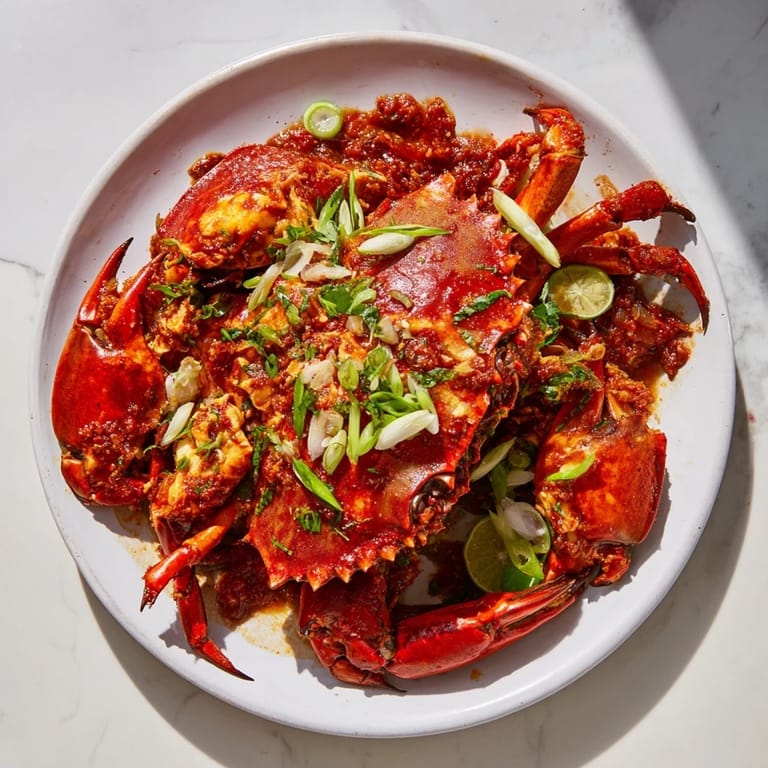
Save The first time I watched someone eat chili crab properly, I understood why Singaporeans speak about this dish with such reverence. My friend plunged her hands right into the sauce-slicked shells, cracking them open with abandon, licking her fingers between bites while laughing about the mess. There's something primal and joyful about it—this isn't food you eat delicately. It's a dish that demands your full attention and your appetite, rewarding both with flavors that shift from tangy to spicy to subtly sweet with every bite.
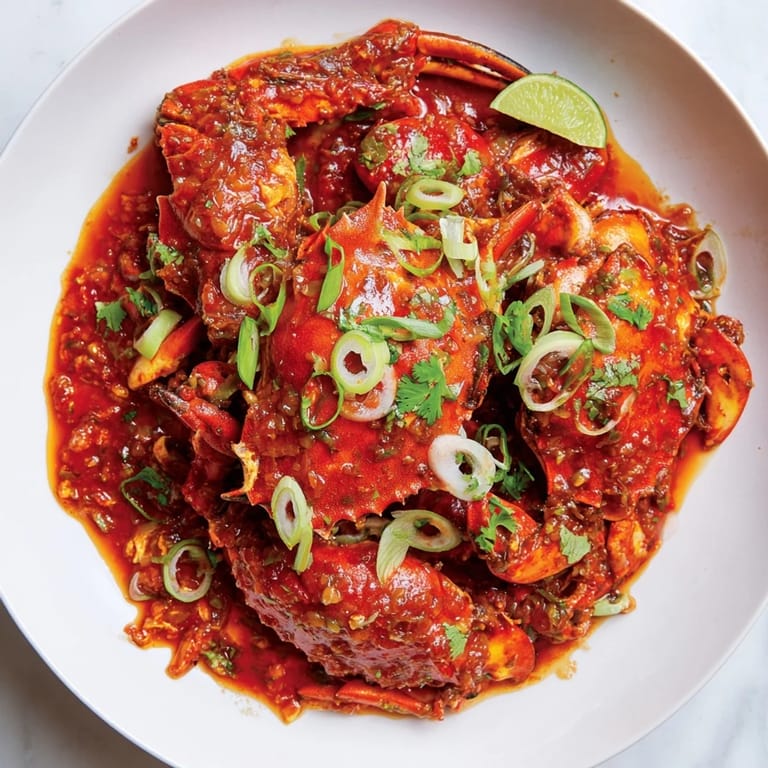
I made this for a dinner party where everyone showed up exhausted from their week, ready to complain. By the time the crabs hit the table, surrounded by their glossy red sauce and wisps of steam, the whole mood shifted. People stopped talking and started cooking—cracking shells, dipping mantou buns, asking for extra napkins. Something about the ritual of it, the hands-on mess, the shared experience of struggling with the shells together—it brought everyone back to life.
Ingredients
- 2 whole live mud crabs (about 1.5 kg total), cleaned and cut into pieces: Live crabs taste infinitely better than frozen ones, and the cleaning is worth the effort—ask your fishmonger to do it if you'd rather not.
- 3 tbsp vegetable oil: Use neutral oil so the aromatics shine.
- 1 medium onion, finely chopped: This dissolves into the sauce, sweetening it gently.
- 5 cloves garlic, minced: Don't skimp here—it builds the savory foundation.
- 3 red chilies, deseeded and chopped: These give warmth more than fire; seed them unless you want serious heat.
- 2 birds eye chilies, chopped (adjust to taste): These little ones pack the real punch—they'll make your lips tingle in the best way.
- 2 cm piece fresh ginger, peeled and minced: It cuts through the richness and adds brightness you didn't know you needed.
- 250 ml tomato ketchup: The sweet ketchup is essential here—it's not about shame, it's about balance.
- 2 tbsp chili sauce (such as Sriracha or sambal oelek): Use sambal oelek if you can find it for a more authentic flavor.
- 1 tbsp sugar: This might seem odd, but trust the balance.
- 1 tbsp soy sauce: A touch of umami to deepen everything.
- 1 tsp fish sauce: Yes, it smells intense, but it disappears into a layer of pure savory depth.
- 250 ml chicken or seafood stock: Seafood stock is better if you have it, but chicken works perfectly fine.
- 1 tsp cornstarch mixed with 1 tbsp water: This thickens the sauce just enough to cling.
- 2 large eggs, lightly beaten: These create those silky ribbons that make the dish feel luxurious.
- 2 spring onions, sliced: Green, bright, and fresh against all that rich sauce.
- Fresh cilantro, chopped: A herbaceous whisper at the end.
- Lime wedges, to serve: A squeeze of acid is everything.
Tired of Takeout? 🥡
Get 10 meals you can make faster than delivery arrives. Seriously.
One email. No spam. Unsubscribe anytime.
Instructions
- Wake up your wok:
- Heat the oil over medium heat until it shimmers slightly. Add the onion and let it soften for two minutes, stirring occasionally—you want it translucent and sweet, not brown.
- Build the flavor base:
- Toss in the garlic, ginger, and both types of chilies. Stir constantly for 2–3 minutes until the kitchen smells like a Singaporean street market and the aromatics are golden at the edges. This step shouldn't be rushed.
- Meet the crabs:
- Add the crab pieces and toss them through the aromatic mixture. You'll see the shells start to blush pink, then deeper red as they cook for 3–4 minutes. This is when you know they're absorbing all that flavor.
- Build the sauce:
- Pour in the ketchup, chili sauce, sugar, soy sauce, fish sauce, and stock. Stir everything together until there are no streaks—the sauce should look uniform and glossy. Bring it to a boil, then lower the heat.
- Let it simmer:
- Reduce to a gentle simmer and cook uncovered for 10–12 minutes, turning the crab pieces occasionally so every surface gets coated. The sauce will reduce slightly and intensify, clinging beautifully to the shells.
- Thicken it up:
- Stir in the cornstarch slurry and let the sauce bubble for a minute, coating everything in a silky sheen.
- Add the silk:
- Slowly drizzle the beaten eggs into the bubbling sauce while stirring gently. They'll cook instantly, creating delicate ribbons that swirl through the sauce like edible silk.
- Finish and serve:
- Remove from heat immediately. Scatter the spring onions and cilantro over the top, squeeze lime over it all, and bring it to the table while the sauce is still steaming.
 Save
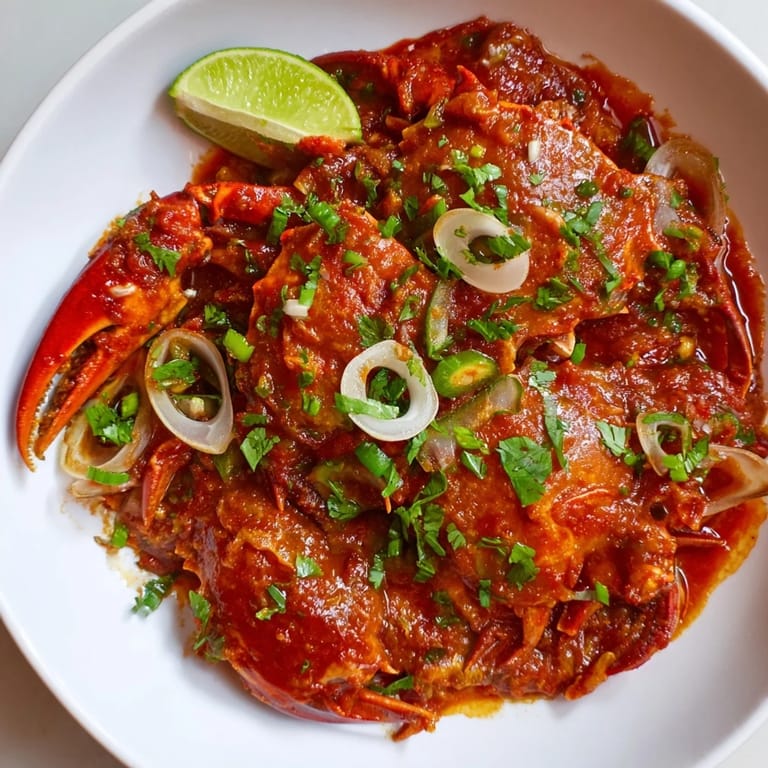
Save The best part happens after everyone finishes eating and you're left with cracked shells, empty plates, and that warm, satisfied silence that follows good food shared with people you care about. Someone always reaches for one last piece of mantou to soak up the last of the sauce, and in that moment, you understand why this dish has stayed so beloved for generations.
The Sauce Ratio That Changed Everything
I spent years making chili crab that tasted good but never quite right, until I realized I was being too clever. The balance of ketchup, chili sauce, and fish sauce isn't accidental—it's the foundation that every other flavor rests on. Once I stopped second-guessing the recipe and trusted the measurements, something clicked. The sweetness of the ketchup isn't childish; it's sophisticated counterpoint to the heat and umami. The fish sauce isn't a secret ingredient that hides in the background; it's a backbone that makes everything else sing louder.
Why Live Crabs Matter More Than You Think
A live crab tastes so significantly different from a frozen one that it almost feels like a different dish. The meat stays tender and sweet, and the shells impart a subtle depth that frozen versions simply can't match. I learned this the hard way, after making batch after batch with what I thought were quality frozen crabs, wondering why my version never tasted like the ones I'd eaten in Singapore. When I finally used live crabs, the difference was immediate and undeniable. Now I don't negotiate on this point—if I can't find live crabs, I make something else.
Serving and the Art of Controlled Chaos
This is not a dish for people worried about table manners. Chili crab demands hand-eating, napkins, lemon juice on your fingers, and a kind of joyful abandon that transforms dinner into theater. Set the table with extra napkins, plenty of lime wedges, and maybe some steamed buns or jasmine rice to balance the heat. The messiness is part of the appeal—it gives everyone permission to stop being formal and just enjoy the experience together.
- Keep mantou buns or steamed white rice nearby to soak up sauce and cool the heat between bites.
- A damp cloth or small bowl of water mixed with lemon helps clean your hands mid-meal without breaking the flow.
- Serve lime wedges on the side for people to squeeze over the sauce, which brightens everything and adds a cool counterpoint to the heat.
 Save
Save This dish teaches you something important about cooking: sometimes the best meals are the ones that require effort, make a mess, and bring people together in the most unpretentious way possible. Chili crab is never fancy, but it's always memorable.
Recipe FAQs
- → What type of crab is best for this dish?
Live mud crabs are preferred for their sweet, tender meat, but blue swimmer or Dungeness crab can also be used.
- → How do I adjust the spiciness?
Adjust the number of birds eye chilies to increase or decrease the heat according to taste.
- → Can I use fresh tomatoes instead of ketchup?
Fresh tomatoes can work but ketchup provides the perfect balance of sweetness and acidity that complements the sauce.
- → What side dishes pair well with this flavor profile?
Steamed mantou buns or plain rice are ideal for soaking up the rich, tangy sauce.
- → How is the sauce thickened?
The sauce is gently thickened with a cornstarch slurry and enriched with beaten eggs, creating silky ribbons throughout.