 Save
Save There's something almost magical about the moment when you pull a focaccia from the oven and the kitchen fills with that toasted, yeasty aroma—especially when it's your own sourdough creation. My friend Sarah brought a jar of her starter to a dinner party three years ago, and somewhere between her stories about feeding it like a pet and my curiosity about what to actually do with it, this focaccia was born. It became the dish that proved I could handle bread, which honestly felt like unlocking a secret level of cooking I didn't know existed.
I made this for a small dinner party on a rainy October evening, and watching guests tear into it with their hands—no plates needed—taught me that the best food breaks down formality. Someone asked for the recipe mid-bite, and suddenly everyone was leaning in, which is when I knew I'd stumbled onto something worth repeating.
Ingredients
- Active sourdough starter (100 g): This is your leavening agent and flavor foundation; make sure it's bubbly and fed a few hours before mixing, or it won't have the strength to lift your dough properly.
- Bread flour (400 g): Use bread flour, not all-purpose, because the extra protein builds structure and creates that chewy, airy crumb you're after.
- Lukewarm water (300 ml): Temperature matters here—too hot kills the starter, too cold slows fermentation; aim for around 38°C if you can check it.
- Fine sea salt (10 g): Added after the autolyse because salt tightens gluten too early if mixed in immediately; it's a small timing detail that genuinely changes texture.
- Extra-virgin olive oil (20 ml plus more for topping): This enriches the dough and adds a silky finish; don't skip or substitute with a neutral oil if you want that authentic focaccia richness.
- Yellow onions (2 medium, thinly sliced): Sweet varieties work best, and the slower you cook them, the better—rushing caramelization gives you grilled onions, not the jammy sweetness you want.
- Flaky sea salt (1 tsp for topping): This finishes the bread with texture and brightness; regular table salt dissolves and disappears, so don't swap it out.
- Fresh rosemary (1 tsp, optional): If you use it, strip the leaves from the stem and scatter them just before baking so they don't burn.
Tired of Takeout? 🥡
Get 10 meals you can make faster than delivery arrives. Seriously.
One email. No spam. Unsubscribe anytime.
Instructions
- Mix and rest:
- Combine your bubbly starter, bread flour, and lukewarm water in a large bowl, stirring until everything is shaggy and moistened—no dry flour pockets. Cover and let it sit for 30 minutes; this autolyse lets the flour fully hydrate and makes the dough easier to work with once you add salt.
- Incorporate salt and oil:
- After the rest, sprinkle salt and drizzle olive oil over the dough, then mix gently until both are fully worked in. It feels sticky at this point, which is exactly right.
- Build strength with folds:
- Over the next 2 hours, every 30 minutes, grab one side of the dough, stretch it up, and fold it over itself; rotate the bowl and repeat from all four sides. You'll do this 3 to 4 times total, and you'll feel the dough getting smoother and stronger with each set of folds.
- First long rise:
- Cover the bowl and let the dough rise at room temperature for 6 to 8 hours until it's roughly doubled and jiggles when you gently shake the bowl. The exact timing depends on your kitchen's warmth, so go by look and feel, not the clock.
- Shape and refrigerate:
- Generously oil a 9x13-inch baking pan, then carefully turn the dough out and stretch it gently with oiled fingers to fill the pan—work from the center outward, and don't deflate it completely. Cover and refrigerate overnight or up to 12 hours; this cold fermentation develops flavor and makes the dough easier to dimple later.
- Caramelize the onions:
- While the dough rests, heat olive oil in a skillet over medium-low heat and add your thinly sliced onions. Stir occasionally as they cook for 20 to 25 minutes, letting them turn golden, soft, and deeply sweet; this patience is non-negotiable, so don't crank the heat thinking you'll speed things up. Let them cool completely before using.
- Bring dough to room temperature:
- Remove the focaccia from the fridge about an hour before baking and let it come to room temperature; this gives the yeast time to wake up and start a final rise.
- Dimple, top, and bake:
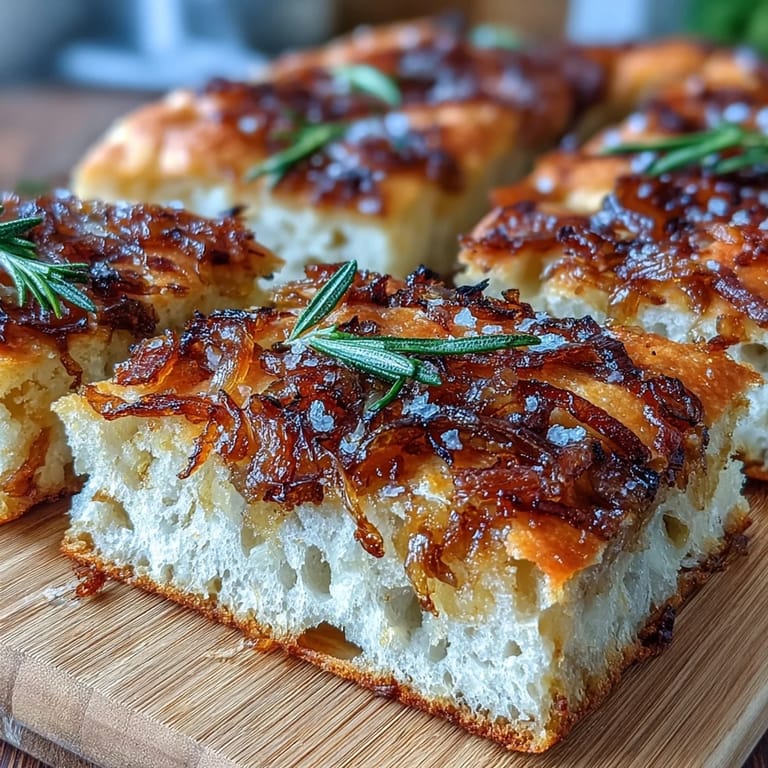
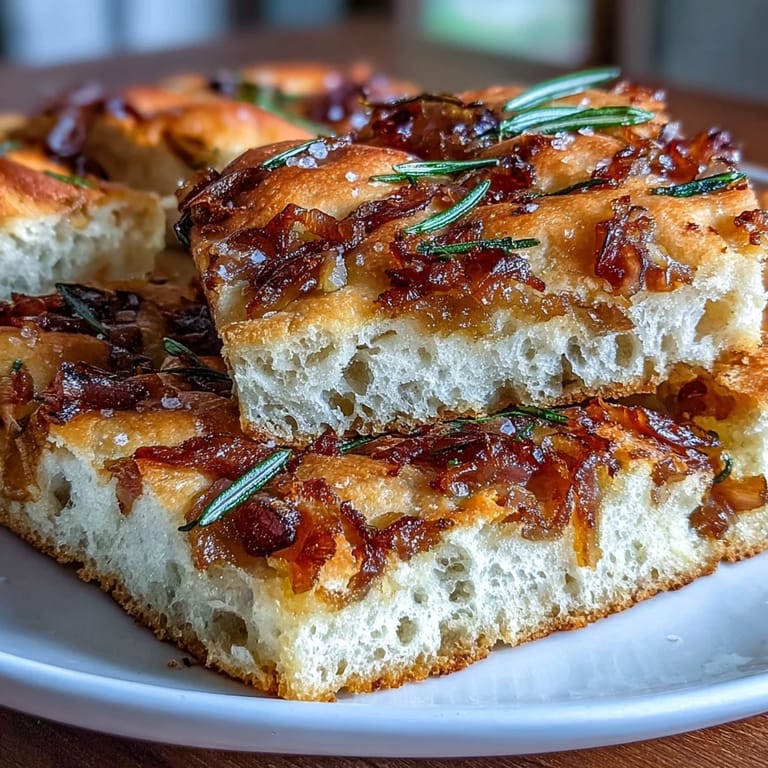
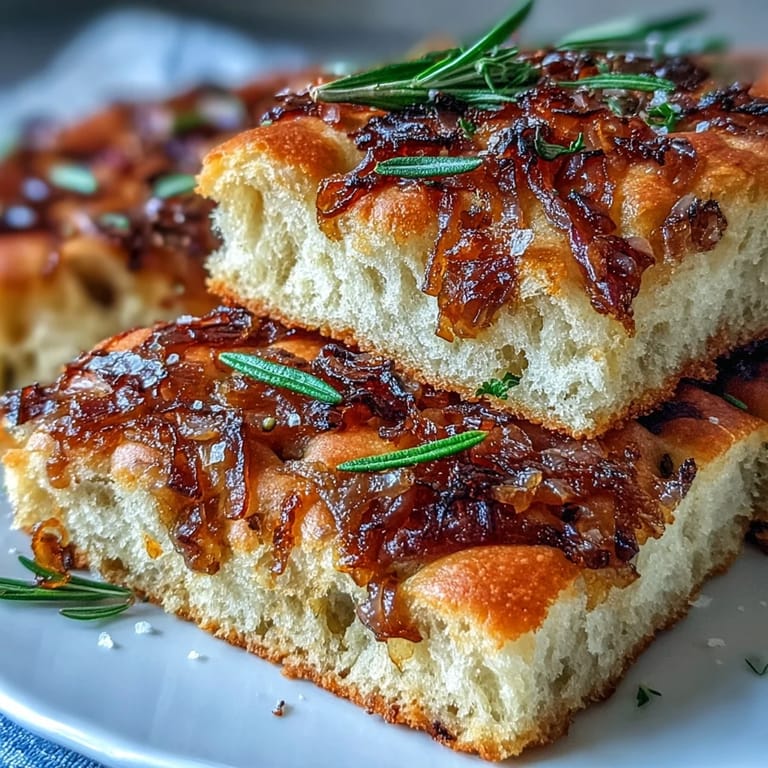
- Preheat your oven to 220°C (425°F), then use your oiled fingertips to gently press dimples all over the dough's surface—these are the signature focaccia texture and they also catch the toppings. Drizzle with a bit more olive oil, then scatter caramelized onions, flaky sea salt, fresh rosemary if using, and a crack of black pepper evenly across the top.
- Bake until golden:
- Bake for 25 to 30 minutes until the top is a deep golden brown and the edges are crispy and slightly darkened. You'll know it's done when the smell is almost unbearable and your kitchen looks like an Italian bakery.
- Cool and serve:
- Let the focaccia cool for a few minutes on the pan—this prevents the bottom from becoming soggy—then slice and serve warm or at room temperature.
 Save
Save A colleague tasted this focaccia one morning when I brought it to the office, and she sat down mid-conversation just to experience it fully—no multitasking, just focus and quiet appreciation. That moment made me understand that bread is more than technique; it's a small gift you give to someone, and somehow that changes everything about how you make it.
The Sourdough Starter Secret
Your sourdough starter is living, and it has moods. If it's sluggish or hasn't doubled in 4 to 6 hours after feeding, your kitchen is probably too cold; if it's overflowing the jar, you're feeding it too frequently or storing it too warm. Learning to read your starter—watching how quickly it bubbles, how it smells, the texture of its surface—is like developing a relationship with it. Once you do, bread becomes predictable in the best way.
Why Cold Fermentation Changes Everything
The overnight rest in the refrigerator is where magic happens, but not the kind you see. Cold temperatures slow yeast activity way down while letting enzymes work steadily, breaking down starches and proteins into flavor compounds. It's why bakery bread tastes more complex than bread you rush through in one day—they're not just being patient, they're being smart. Plus, cold dough is easier to handle, less sticky, and more forgiving when you're shaping and topping it.
Variations and Personal Touches
This recipe is sturdy enough to welcome additions, and that's part of its charm. Some mornings I've stirred a handful of sliced olives or sun-dried tomatoes into the caramelized onions, other times I've added a light shower of grated Parmesan right before baking. The base is solid enough that you can experiment without ruining anything; think of it as a framework rather than a rigid set of rules. Leftovers reheat beautifully in a toaster oven—I've brought cold slices to work more times than I can count, and they're still good, if slightly less dramatic than fresh.
- Try caramelized garlic alongside the onions for a sweeter, deeper flavor.
- A sprinkle of finishing salt crystals right out of the oven adds brightness and texture that table salt can't match.
- If you want it slightly less rich, you can reduce the olive oil to 15 ml, though the dough becomes a bit less tender.
 Save
Save Making focaccia has taught me that the best bread isn't about rushing or even about perfect technique—it's about building something with your hands and trusting the process. Every loaf tells the story of your kitchen that week, and that's exactly why it matters.
Recipe FAQs
- → How do I achieve the airy texture in this bread?
Performing multiple stretch-and-folds during fermentation strengthens gluten, while a long rise and overnight rest encourage gas retention for an open, airy crumb.
- → What type of onions work best for caramelizing?
Yellow onions are ideal due to their natural sweetness and ability to soften and caramelize evenly over low heat.
- → Can I add herbs to the topping?
Yes, fresh rosemary leaves add a fragrant touch, enhancing the focaccia’s flavor profile without overpowering the caramelized onions.
- → What is the best way to bake the focaccia for a crisp crust?
Preheating the oven to a high temperature and drizzling olive oil over the dimpled dough creates a golden, crisp exterior while keeping the inside tender.
- → How should I store leftovers to maintain freshness?
Wrap cooled focaccia in foil or an airtight container and reheat gently in a toaster oven to restore crispness.