 Save
Save There's something about cooking three different cuisines in parallel that makes you feel like you're actually traveling without leaving your kitchen. I stumbled onto this approach one chaotic dinner party when a friend from Lebanon arrived just as my Mediterranean prep was underway, and my partner was insisting on Asian flavors. Instead of choosing, I thought: what if I just cooked all three at once? The result was messy, loud, and absolutely magical—three skillets sizzling, three different worlds meeting on one plate.
What really sold me on making this regularly was watching my sister, who's usually quiet about food, suddenly start mixing flavors and telling stories about each region. She'd take a bite of the Mediterranean cluster, then immediately grab the Middle Eastern chickpeas, then sneak a sesame-coated snap pea. That's when I realized this dish does something special—it turns eating into discovery.
Ingredients
- Extra-virgin olive oil: Use the good stuff for the Mediterranean cluster; you'll taste the difference, and don't waste it by cooking at too high a heat.
- Eggplant: Cut it into small, even pieces so it cooks through without turning into mush.
- Red bell pepper: The sweetness balances the earthiness of the eggplant beautifully.
- Zucchini: Slice it slightly thicker than you think you need to; it releases water as it cooks.
- Cherry tomatoes: Halving them keeps them from disappearing into the pan.
- Garlic: Mince it fine so it distributes evenly and doesn't brown too fast.
- Dried oregano: This is the backbone of the Mediterranean flavor; don't skip it.
- Toasted sesame oil: A little goes a long way, and toasted oil has way more depth than regular sesame.
- Shiitake mushrooms: They're meaty and stand up to high heat without falling apart.
- Snap peas: Add them near the end so they stay crisp and vibrant.
- Carrot: Julienne it thin so it cooks quickly and looks elegant on the plate.
- Soy sauce or tamari: Tamari is worth keeping on hand if you're feeding people with gluten sensitivities.
- Ginger: Fresh ginger tastes like brightness; don't substitute powdered here.
- Rice vinegar: It's gentle and slightly sweet, different from white vinegar's sharp edge.
- Red onion: The purple color stays vibrant and adds visual contrast to the plate.
- Chickpeas: Buy canned if you're short on time; just rinse them well.
- Bulgur or quinoa: Quinoa is lighter and gluten-free, but bulgur has a chewy texture that's traditional.
- Ground cumin, coriander, and cinnamon: These three together are the heart of Middle Eastern warmth; toast them if you have time.
- Fresh parsley: Add it at the very end so it stays bright and fresh-tasting.
- Lemon juice: Squeeze it fresh; bottled tastes thin compared to the real thing.
- Feta cheese: Crumble it yourself rather than buying pre-crumbled; it's creamier and holds together better.
- Toasted sesame seeds: They add crunch and a toasty depth that raw sesame seeds can't match.
- Fresh mint or cilantro: Choose one or mix them; both brighten the whole dish.
Tired of Takeout? 🥡
Get 10 meals you can make faster than delivery arrives. Seriously.
One email. No spam. Unsubscribe anytime.
Instructions
- Set up your three-skillet station:
- Arrange your cutting board with three large skillets nearby, ingredients prepped and within reach. Having everything ready before you start cooking is the secret to making this feel effortless instead of panicked.
- Start the Mediterranean cluster:
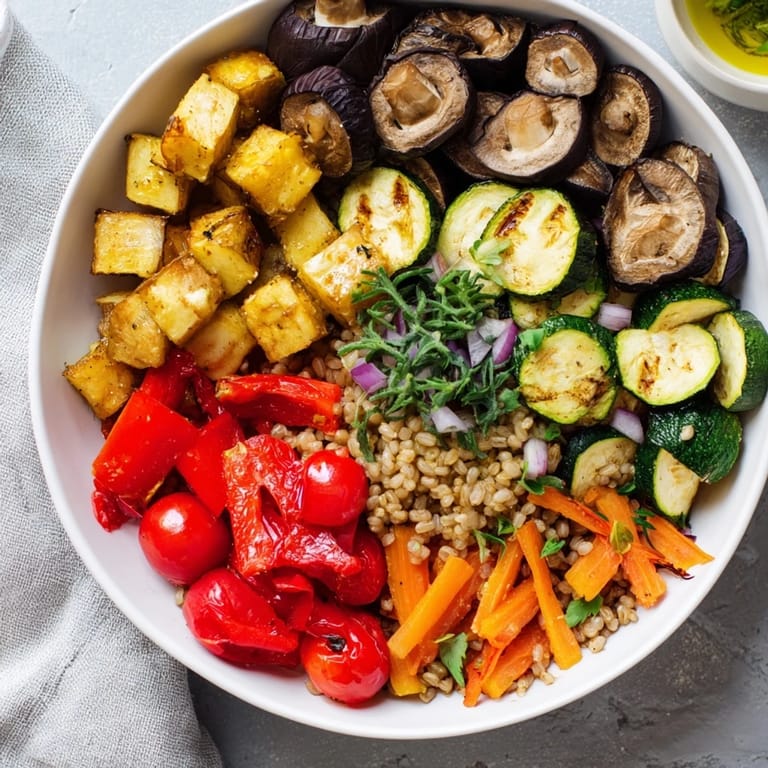
- Heat olive oil in the first skillet over medium heat and add the diced eggplant, letting it cook undisturbed for about 3 minutes so the edges start to caramelize. Then stir in the bell pepper, zucchini, tomatoes, and garlic, seasoning with oregano, salt, and pepper, and cook for 8–10 minutes, stirring occasionally, until everything is tender and the kitchen smells incredible.
- Begin the Asian cluster:
- While the Mediterranean cluster is going, heat the toasted sesame oil in the second skillet over medium-high heat. Add the sliced mushrooms and let them sit for a couple of minutes so they brown slightly, then add the snap peas and julienned carrot, cooking for 2 more minutes before hitting everything with soy sauce, ginger, and rice vinegar for a final 2–3 minutes of crisp-tender perfection.
- Build the Middle Eastern cluster:
- In the third skillet, warm olive oil over medium heat and cook the thin-sliced red onion until it softens, about 3 minutes, then add the chickpeas, bulgur or quinoa, and your warm spices—cumin, coriander, and cinnamon—stirring often for about 5 minutes so everything gets to know each other. Finish by tossing with fresh parsley and lemon juice, tasting and adjusting the seasoning as you go.
- Plate and celebrate:
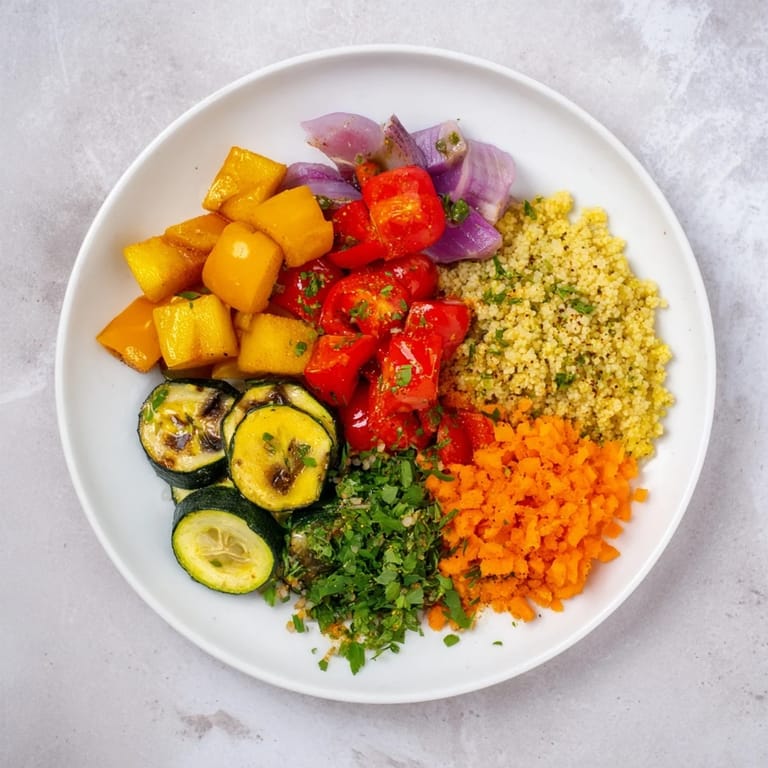
- Arrange the three warm clusters side by side on a large platter or on individual plates, giving each cluster its own little space. Top generously with crumbled feta, toasted sesame seeds, and scattered mint or cilantro leaves.
 Save
Save The moment I knew this had become a keeper was when my neighbor asked for the recipe after tasting it. What struck me wasn't just that she loved it, but that she immediately understood the concept—that food doesn't have to choose a side, and neither do we. That's what this dish taught me.
The Three-Cluster Philosophy
This recipe works because it's not trying to be one thing; it's celebrating three distinct cooking traditions at once. The Mediterranean cluster is all about letting vegetables shine with heat and aromatics. The Asian cluster is crisp, bright, and grounded in umami. The Middle Eastern cluster brings warmth and earthiness through spices and grains. By cooking them separately but serving them together, each one stays true to its roots while creating something entirely new on your plate.
Timing and Your Rhythm
I used to think cooking three things at once would be stressful, but I've learned it's actually easier than cooking sequentially because everything's done at almost the same time. Start the Mediterranean cluster first since it takes the longest, then get the Asian cluster going a couple of minutes in, and finally start the Middle Eastern cluster once you've got a rhythm going. If you keep your movements calm and purposeful, three skillets become a dance instead of a disaster.
Making It Your Own
The magic of this dish is that it's a framework, not a prison. Swap vegetables based on what's in your market, adjust spices by a pinch if your palate runs toward more heat or less, and don't feel locked into the specific grains. I've made this with farro, couscous, and even millet when that's what I had on hand, and it's been perfect every time.
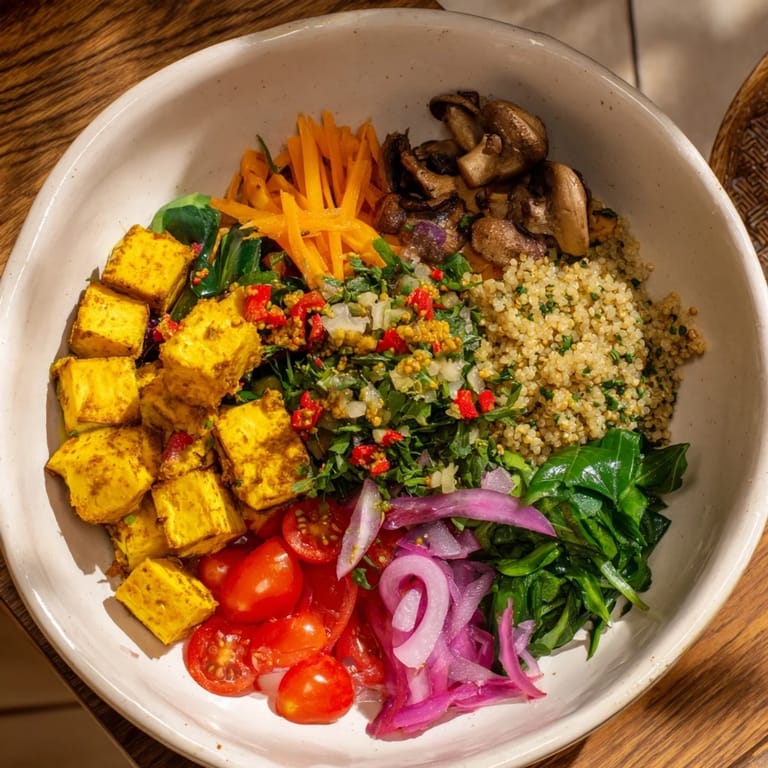
- Add grilled chicken, crispy tofu, or tender lamb to any cluster for more protein without losing the vegetable-forward feel.
- If someone at your table is vegan, skip the feta and add an extra drizzle of tahini mixed with lemon juice to the Middle Eastern cluster.
- Serve with warm flatbread so people can load up their own little plates and customize with flavors as they go.
 Save
Save This dish reminds me that the best meals are the ones that bring people together by honoring where they come from. Cook this when you want everyone at your table to feel seen and celebrated.
Recipe FAQs
- → What are the main flavor clusters in this dish?
The dish combines three clusters featuring Mediterranean vegetables, Asian stir-fried mushrooms and snap peas, and Middle Eastern chickpeas with spiced grains.
- → Can I substitute bulgur for a gluten-free option?
Yes, quinoa is an excellent gluten-free alternative that pairs well with Middle Eastern spices in this dish.
- → How should the clusters be served for best presentation?
Arrange the clusters side by side on a large platter or individual plates and garnish with crumbled feta, toasted sesame seeds, and fresh herbs.
- → Are there protein options to add to the clusters?
Grilled chicken, tofu, or lamb can be added to any cluster to enhance protein content and texture.
- → What oils are used in the different clusters?
Extra-virgin olive oil is used for the Mediterranean and Middle Eastern clusters, while toasted sesame oil flavors the Asian cluster.
- → What sides pair well with this flavorful dish?
Flatbread or steamed rice complements the clusters nicely, adding heartiness and balance.