 Save
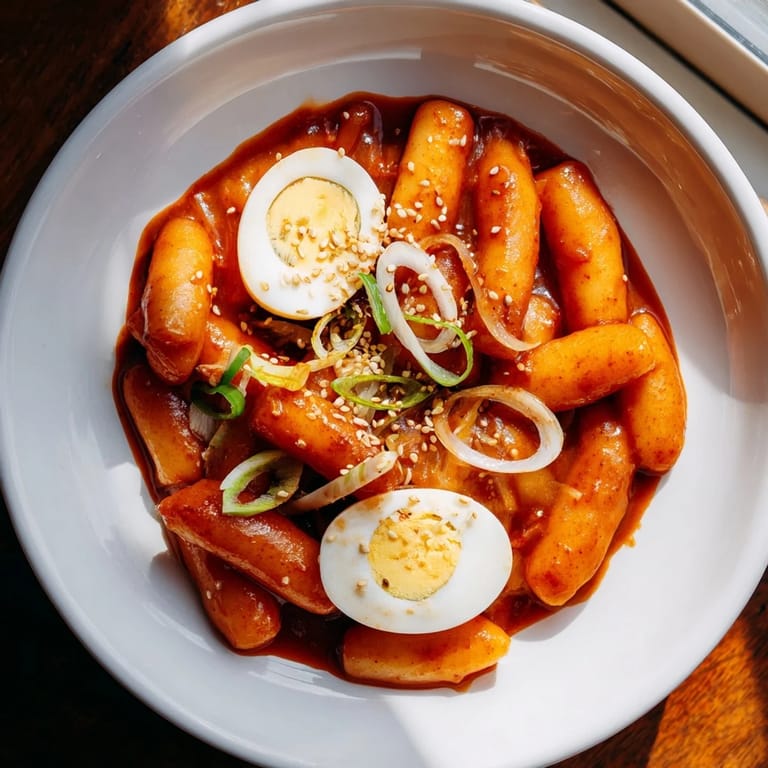
Save The first time I really understood tteokbokki wasn't from a recipe—it was from standing in a Seoul street market on a drizzly afternoon, watching a vendor's hands move with practiced speed through a cloud of steam. She'd pull those chewy rice cakes from a bubbling pot of crimson sauce, and the smell alone made my stomach growl before the spoon even touched my mouth. Years later, I recreate that moment in my own kitchen, and honestly, it's become the dish I make when I want to feel less alone or when friends drop by unexpectedly. There's something about the balance of spicy, sweet, and that satisfying chew that just works.
I made this for my roommate after she'd had a rough day at work, and I remember her eyes lighting up the moment she tasted it—that combination of chili heat and honey sweetness hitting all at once. She kept going back for more, scraping the pot with her spoon like she was trying to get every last bit of sauce, and I realized right then that this dish has a quiet kind of power. It's not fancy or complicated, but it feels generous and real.
Ingredients
- Korean cylindrical rice cakes (tteok), 500 g: These are the heart of the dish—chewy and slightly springy, they absorb the sauce beautifully while keeping their texture even after simmering.
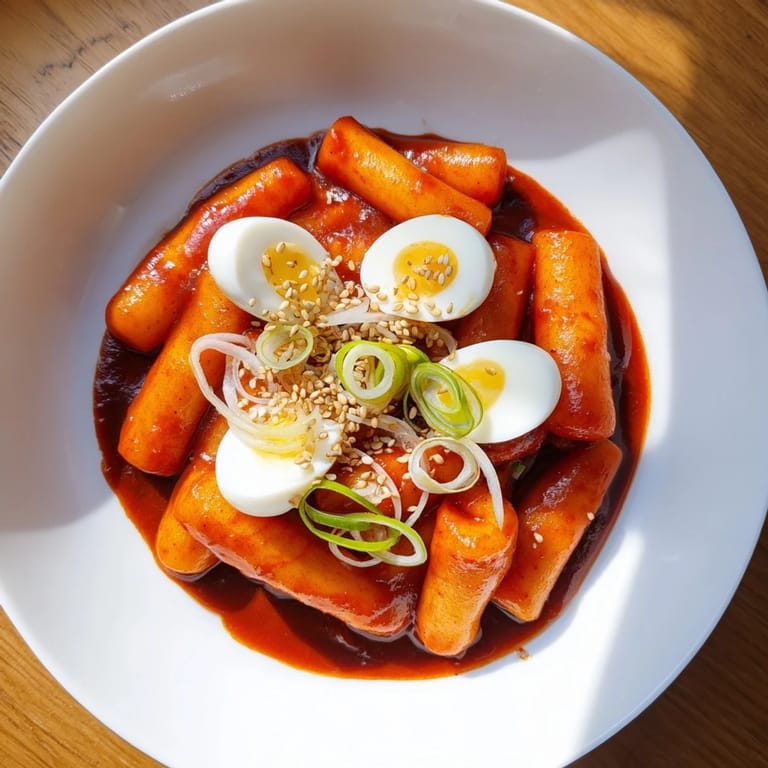
- Large eggs, 4: Soft-boiled eggs are crucial; they anchor the dish with protein and create creamy pockets when your spoon breaks the yolk into the hot sauce.
- Gochujang, 3 tablespoons: This fermented chili paste is the base flavor—use one you like tasting on its own because it's really the star here.
- Gochugaru (Korean chili flakes), 2 tablespoons: These add texture and a sharper heat compared to gochujang; don't skip them or use regular paprika as a substitute.
- Soy sauce, 2 tablespoons: This brings saltiness and depth, balancing the sweetness and spice.
- Sugar and honey (1 tablespoon each): The honey rounds out the heat with a gentle sweetness that makes people ask what the secret ingredient is.
- Garlic, 2 minced cloves: Fresh garlic adds brightness and keeps the sauce from feeling one-dimensional.
- Toasted sesame oil, 1 teaspoon: Just a whisper at the end—it carries the entire flavor profile forward.
- Water and kombu (dried kelp): The kombu infuses the broth with subtle umami that you won't notice you're missing if you skip it, but it absolutely changes the depth.
- Dried anchovies, 8 (heads and guts removed): These add a savory backbone; omit them for vegetarian, but know the broth will taste lighter.
- Onion and green onion: The onion softens into the sauce and adds sweetness, while the green onion's brightness on top cuts through all that richness.
- Fish cake, 1 sheet (optional): These add a bouncy texture contrast, but you can skip if you prefer just the rice cakes.
- Toasted sesame seeds, 1 tablespoon: The final garnish that makes it look intentional and adds a subtle nuttiness.
Tired of Takeout? 🥡
Get 10 meals you can make faster than delivery arrives. Seriously.
One email. No spam. Unsubscribe anytime.
Instructions
- Soak your rice cakes:
- If they're cold or firm, soak them in warm water for 10 minutes—this prevents them from staying hard in the center when the sauce hits. You want them tender all the way through.
- Build the broth:
- Bring water, kombu, and anchovies to a gentle boil, then simmer for 10 minutes so you get all that subtle ocean and seaweed depth. Remove the solids and you're left with a clean, clear base that lets the gochujang shine.
- Get the eggs going:
- While the broth simmers, boil eggs for 8 to 9 minutes depending on how soft you like the yolk. Cool them in cold water and peel gently—the yolk should give way almost immediately when your spoon touches it.
- Make the sauce:
- Add gochujang, gochugaru, soy sauce, sugar, honey, garlic, and sesame oil to the hot broth, stirring until everything dissolves and the color deepens to a rich red-brown. This is where the magic starts—taste it if you like, and adjust spice if needed.
- Combine and simmer:
- Toss in the drained rice cakes, sliced onion, and fish cake if using, then simmer for 10 to 12 minutes over medium heat, stirring now and then. The sauce will thicken slightly, and the rice cakes will soften and soak up all that spicy sweetness.
- Add the eggs:
- Nestle the boiled eggs into the pot and let them warm through for 2 to 3 minutes—just enough to absorb some of the sauce without overcooking them further.
- Finish and serve:
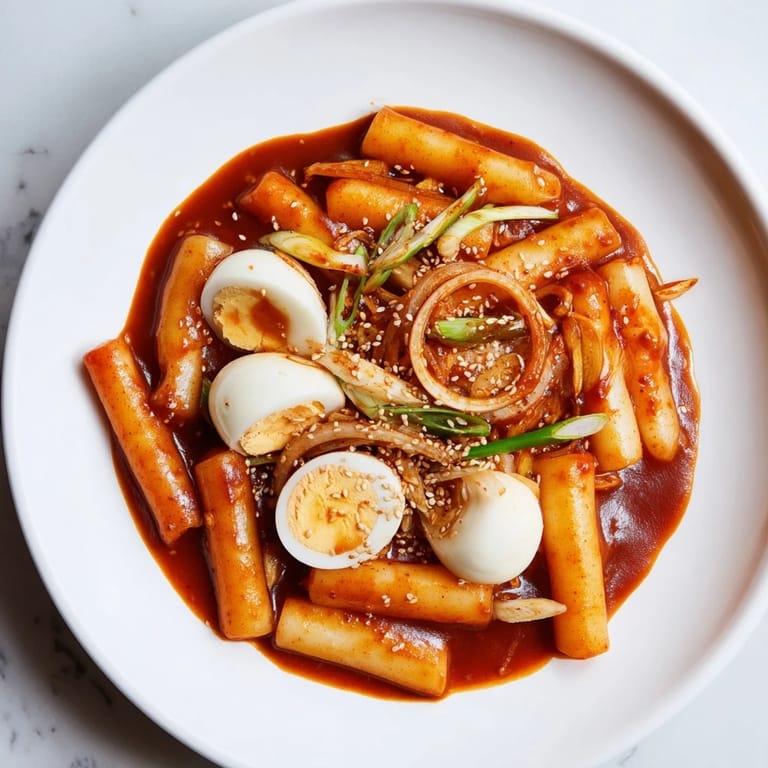
- Scatter green onions and sesame seeds on top, then serve immediately in bowls with as much sauce as you can manage. Eat while it's hot and steaming.
 Save
Save There's this moment that always happens when I'm making tteokbokki for someone new—when they take their first spoonful and their face goes quiet for a second, processing all the heat and sweetness and chewiness happening at once. That pause before they smile is when I know I've gotten it right.
Balancing Heat and Sweetness
The trick to tteokbokki is that tightrope between spicy and sweet; tip too far either direction and it falls flat. I learned this by accident once when I added way too much gochujang and the dish became almost painful to eat, then overcompensated with sugar and it became cloying. Now I add the gochujang and gochugaru together first, taste, and then use the honey to round out the heat rather than mask it. Think of the honey as a handshake between the spice and everything else—it doesn't diminish the heat, it just makes it friendlier.
The Importance of Kombu and Anchovies
The broth is what separates a good tteokbokki from a great one, and the kombu and anchovies are why. They don't make the broth taste fishy when done right—they make it taste deeper, more complex, like someone's been simmering this sauce all day. If you're vegetarian, you lose that particular kind of savory depth, so compensate by using vegetable broth instead of water and maybe adding a tablespoon of miso paste to the sauce for extra umami.
Toppings and Add-Ins
Once you've made the basic recipe a few times, you'll start experimenting with what goes in—ramen noodles are brilliant if you want more substance, and cabbage or carrots add a vegetable-forward spin that still feels authentic. I've even thrown in leftover cooked mushrooms and been surprised by how well they absorb the sauce.
- Ramen noodles added in the last few minutes of simmering turn this into a more filling meal.
- A handful of spinach or cabbage wilts down and adds brightness without requiring extra cooking time.
- Fish cake is traditional, but sliced mushrooms or tofu work beautifully for texture variation.
 Save
Save This dish reminds me why I cook in the first place—not to impress, but to bring people around a bowl of something warm and honest that tastes like care. Every time you make it, it gets easier and more yours.
Recipe FAQs
- → How do I soften the rice cakes before cooking?
Soak the rice cakes in warm water for about 10 minutes if they are hard or refrigerated to ensure they become soft and chewy when simmered.
- → Can I make this dish vegetarian?
Yes, simply omit anchovies and fish cake, and use vegetable broth instead to keep the flavors balanced and suitable for vegetarians.
- → What level of spiciness does this dish have?
The dish has a bold spicy-sweet flavor mainly from gochujang and gochugaru, but you can adjust the amount of chili paste and flakes to suit your taste.
- → How long does it take to cook the boiled eggs perfectly?
Boil the eggs for 8 to 9 minutes for a firm white with a tender yolk, then cool before adding to the dish.
- → Are there any suggestions for additional ingredients?
Try adding sliced cabbage, carrots, or ramen noodles for extra texture and variety in the dish.
- → What garnishes enhance the final taste?
Fresh green onions and toasted sesame seeds provide aromatic and textural contrasts, enriching the overall flavor.