 Save
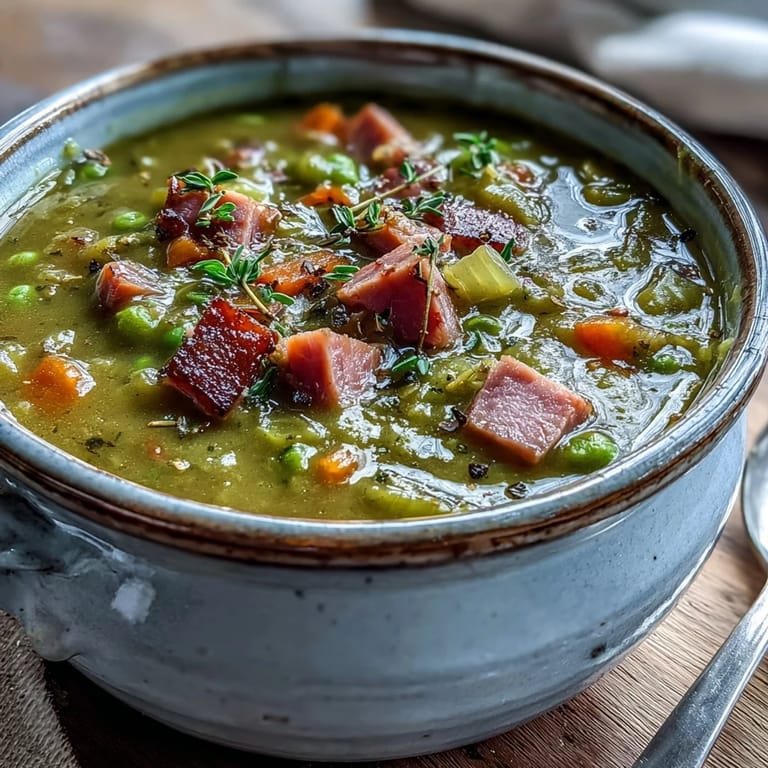
Save My grandmother kept a ham bone in her freezer like it was liquid gold, and honestly, I didn't understand why until the first time I made this soup on a gray February afternoon when my kitchen smelled like nothing and my mood matched. One bone, a bag of split peas, and three hours later, something had shifted—the whole house felt warm, and I finally got it. That bone had stories to tell, and they came out as this rich, golden broth that made everything else taste better.
I served this to my sister during a snowstorm when the power kept flickering and we weren't sure if we'd be eating anything hot that night. We sat at the kitchen counter passing bowls back and forth, and she said something like this tastes like what safety feels like, which I think about more than I probably should. Since then, I've made it for friends moving into new places, for my dad after he got sick, for myself on days when I needed something familiar.
Ingredients
- Ham bone or diced cooked ham (1 meaty bone or 2 cups): This is your flavor foundation—the bone releases collagen and deep, savory notes that broth alone can't deliver, while the meat clinging to it becomes part of the story.
- Split peas, dried (1 pound, rinsed and sorted): Sorting them matters more than you'd think because you'll occasionally find a tiny stone hiding in there, and biting into one is genuinely shocking; rinsing them reduces foam during cooking and gives you a cleaner final soup.
- Onion, carrots, and celery (1 large onion, 2 carrots, 2 stalks): This trio is the quiet backbone of everything—they soften into sweetness and add color and body to the broth without announcing themselves loudly.
- Garlic, minced (2 cloves): Added after the vegetables soften, garlic becomes mellow and sweet rather than sharp, filling the kitchen with a signal that something delicious is happening.
- Bay leaf (1): This single leaf adds a subtle herbal note that rounds out the flavor; don't skip it and don't forget to fish it out before serving or you'll find it floating in someone's spoon.
- Broth and water (8 cups low-sodium broth plus 2 cups water): The water balances the sodium while the broth brings the deep flavor—using low-sodium gives you control over the final salt level.
- Dried thyme (1 teaspoon): Thyme bridges the gap between earthy and savory, complementing both the peas and ham without overpowering them.
- Black pepper and salt (½ teaspoon pepper, salt to taste): Don't season too early; let the soup simmer and develop its own salt from the ham and broth, then adjust at the end when you can actually taste what you're building.
Tired of Takeout? 🥡
Get 10 meals you can make faster than delivery arrives. Seriously.
One email. No spam. Unsubscribe anytime.
Instructions
- Build the flavor base with your vegetables:
- Heat a splash of oil in your stockpot over medium heat, then add the diced onion, carrots, and celery—this takes about five to six minutes, and you're looking for them to turn soft and translucent at the edges, which means they're ready to deepen everything that comes next. Listen for a gentle sizzle and the kitchen will start smelling like home.
- Introduce the garlic:
- Once the vegetables have softened, stir in your minced garlic and cook for just one minute, which is enough time for it to release its fragrance without turning bitter or brown. That smell is your signal that you're on the right track.
- Combine everything for the long cook:
- Add your sorted and rinsed split peas, the ham bone or diced ham, the bay leaf, thyme, broth, and water to the pot and stir everything together so nothing sticks to the bottom. Bring the whole mixture to a boil, which takes about five to ten minutes and announces itself pretty loudly.
- Simmer covered for the first hour:
- Once it reaches a boil, reduce the heat to low, cover the pot, and let it simmer for about an hour, stirring occasionally so the peas cook evenly and nothing scorches on the bottom. The soup will start to thicken and the peas will begin surrendering to the heat.
- Finish cooking uncovered to reach your preferred thickness:
- Remove the lid and continue simmering for another twenty to thirty minutes—how long depends on whether you like a brothier soup or a thicker one that's almost stew-like. The peas should be completely soft and starting to break apart, and the liquid should reduce and concentrate into something rich and satisfying.
- Recover the ham and remove what needs to go:
- Fish out the bay leaf with a spoon and remove the ham bone if you used one; if there's meat still clinging to the bone, pick it off, chop it into bite-sized pieces, and stir it back in. If you used diced ham, it's already where it needs to be.
- Adjust texture and seasoning to suit your mood:
- Taste the soup and add salt and pepper to your preference, keeping in mind that flavors intensify as it cools, so go easier than you think you should. If you want it creamier, use a potato masher to partially break down some of the peas, or use an immersion blender for a silkier, more uniform texture—neither is wrong, just different.
 Save
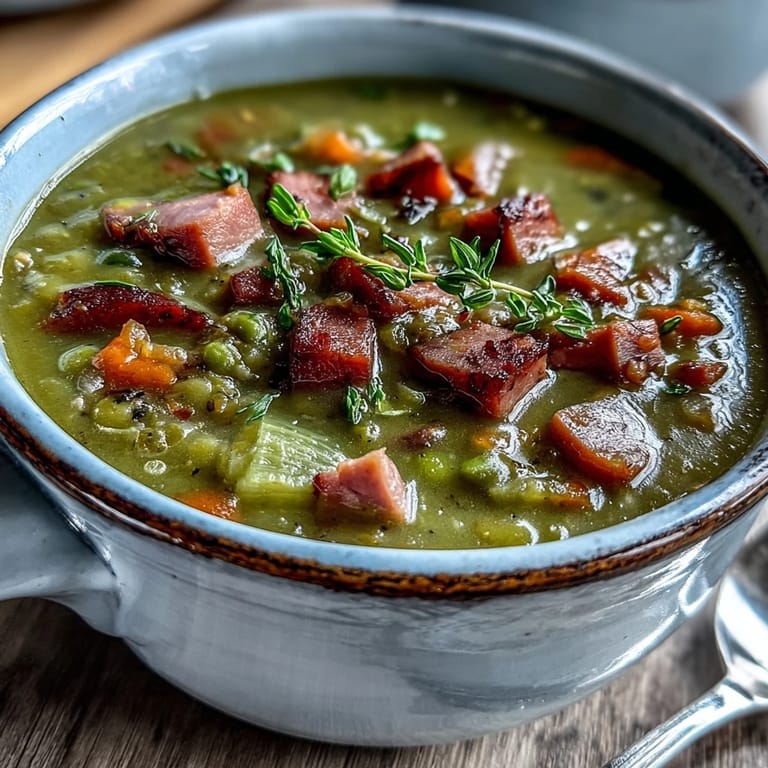
Save There's a moment in every pot of this soup where the kitchen goes quiet and smells like comfort, and that's when I know I've done it right. My nephew asked me once why soup was my love language, and I realized it's because soup is something you give to people when you want them to feel held and safe, and this one does that particularly well.
The Wisdom of Leftovers
This soup actually improves with time, which is genuinely rare and wonderful—the flavors deepen and settle, the texture becomes creamier even if you didn't blend it, and everything tastes more developed and cohesive. I've kept it in the refrigerator for four days and been genuinely excited each time I heated a bowl, which isn't true for every soup.
Building Your Own Version
Once you understand how this soup works, you can adapt it in ways that feel natural rather than forced—add diced potatoes or parsnips if you want something heartier, throw in kale toward the end for green, swap thyme for sage if that's what you have on hand. The core stays the same, but the details become yours, which is when cooking stops being following instructions and starts being a conversation.
Serving Suggestions and Final Thoughts
This soup wants crusty bread nearby—thick slices for dipping, for soaking up every last bit of broth, for creating that moment where you're genuinely unsure where the bread ends and the soup begins. Fresh herbs like parsley or chives on top aren't necessary but they add a small brightness that makes people notice and comment, and there's something satisfying about that small unexpected touch.
- Make it the night before if you're cooking for people—this gives you time to relax and actually enjoy their company instead of standing over a pot.
- Freeze half of it in smaller containers so you have an emergency version of comfort available for moments when you need it most.
- Taste it before your guests arrive so you know exactly how to season it and can serve something that tastes exactly like you meant it to.
 Save
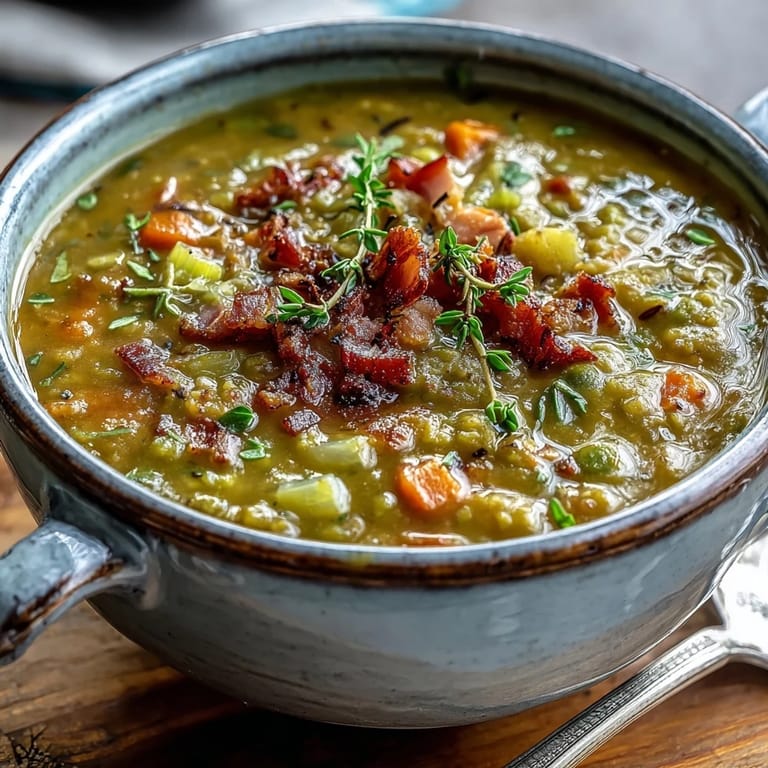
Save This soup has fed my family through winters and transitions, and it never once felt like just soup—it always felt like something bigger and more important. Make it when you want to feel capable, or when you want someone else to feel loved, because it does both equally well.
Recipe FAQs
- → Can I use fresh peas instead of dried?
No, dried split peas are essential here. They break down during cooking to create the characteristic thick, creamy texture. Fresh or frozen peas won't achieve the same result.
- → Do I need to soak the split peas first?
No soaking required! Split peas cook relatively quickly compared to other dried legumes. Just rinse them well before adding to the pot.
- → What if I don't have a ham bone?
Diced cooked ham works perfectly fine. Use about 2 cups of leftover ham from a previous meal. You can also add a smoked pork hock for extra depth.
- → How do I make it vegetarian?
Skip the ham entirely and use vegetable broth. Add smoked paprika or liquid smoke to replicate that savory depth that ham normally provides.
- → Why is my soup still watery after cooking?
The soup thickens naturally as peas break down. If needed, continue simmering uncovered to reduce further, or use an immersion blender to partially puree for creaminess.
- → Can I freeze this soup?
Absolutely! It freezes beautifully for up to 3 months. The texture may change slightly but will still be delicious. Thaw overnight in the refrigerator.