 Save
Save The first time I made this Thai Miso Ramen was after a rainy day trip to our local Asian market, where I'd wandered the aisles collecting ingredients with no particular plan. The subtle scent of ginger and garlic filled my kitchen that evening as rain tapped against the windows. What started as an experiment—combining my favorite elements of Thai curry and Japanese ramen—quickly became something magical that I couldn't stop thinking about for days afterward.
Last winter when my friend Mei was going through a tough breakup, I invited her over without mentioning what I was making. As she walked in, the aromatic broth was already simmering, filling my apartment with its comforting scent. Her eyes lit up as I placed the colorful bowl in front of her, steam rising between us. We sat in comfortable silence for a moment, just appreciating how food can sometimes provide the comfort that words cannot.
Ingredients
- White miso paste: The backbone of this fusion broth that creates a silky, complex base—I've found the sweeter white miso works better than red in this recipe as it balances beautifully with the spicy Thai elements.
- Thai red curry paste: This magical ingredient brings heat, depth, and authentic Thai flavor without requiring a pantry full of exotic ingredients—I always keep a jar in my fridge for emergency flavor boosts.
- Crispy fried shallots: These golden flavor bombs add texture and a savory punch that elevates the entire bowl—once I accidentally doubled the amount and discovered it was actually better that way.
- Bok choy: The tender leaves and crunchy stems provide the perfect textural contrast while soaking up all those beautiful broth flavors.
- Fresh ramen noodles: Worth seeking out as they have that perfect springy bite that dried versions can't quite match—though in a pinch, dried will still create a delicious meal.
Tired of Takeout? 🥡
Get 10 meals you can make faster than delivery arrives. Seriously.
One email. No spam. Unsubscribe anytime.
Instructions
- Build the aromatic base:
- Start by sautéing the onion until it becomes translucent and releases its sweetness, about 2 minutes. When you add the garlic and ginger, the kitchen will fill with a fragrance that always makes me pause and appreciate the simple joy of cooking.
- Create your fusion broth:
- After stirring in the curry paste until it darkens slightly and becomes fragrant, pour in the chicken broth and watch as the colors meld together. This is where patience pays off—let it simmer gently to extract all those complex flavors.
- Prepare your chicken:
- While seasoning the chicken with salt and pepper is simple, the way you cook it matters tremendously for texture. I like to get a good golden sear before letting it finish cooking gently in the simmering broth, which keeps it incredibly tender.
- Master the soft-boiled egg:
- The 7-minute egg is one of cooking's perfect achievements—a set white with a jammy, golden center that melts into the broth. Having an ice bath ready is crucial for stopping the cooking process exactly when you want.
- Assemble with care:
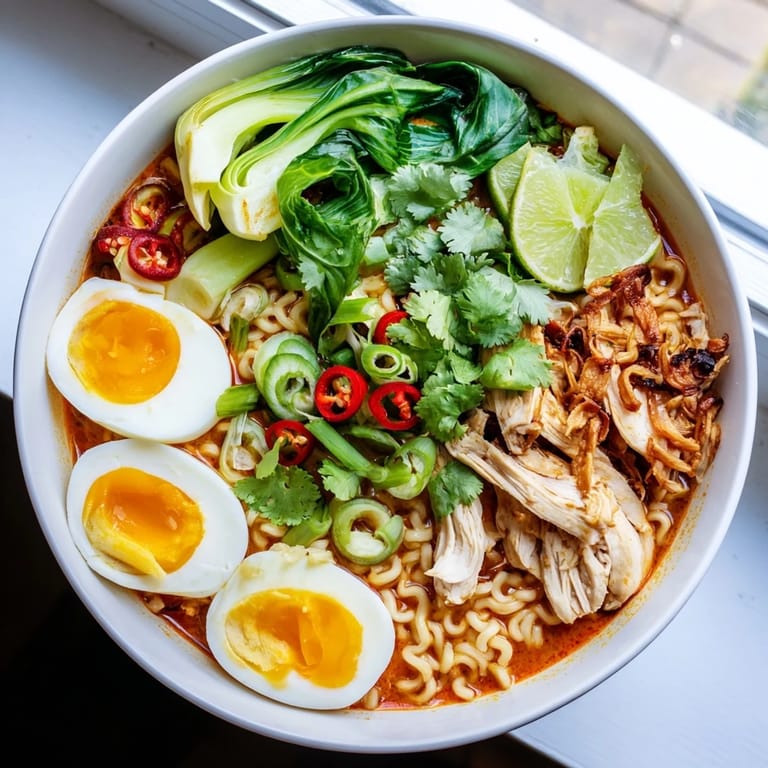
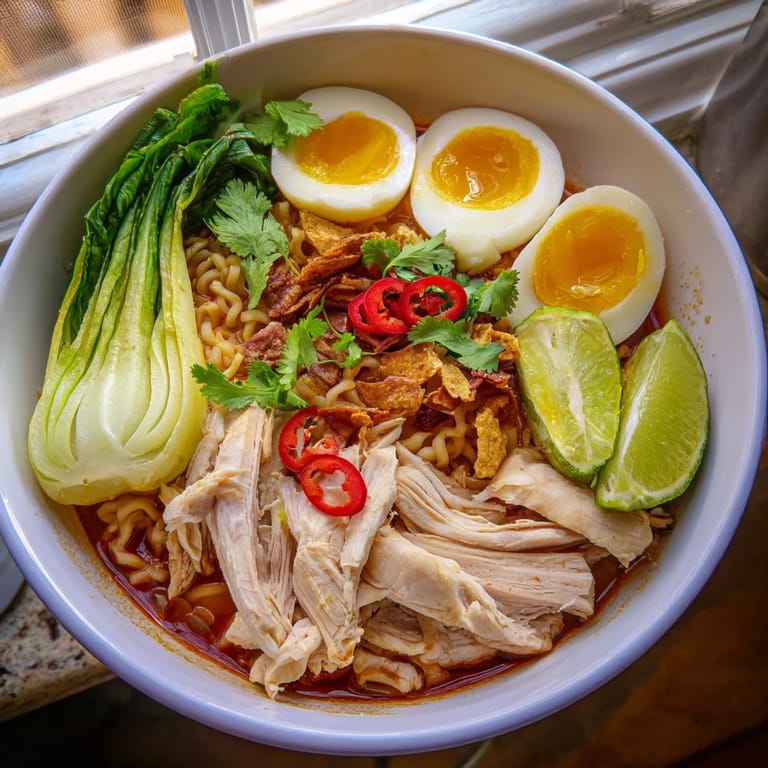
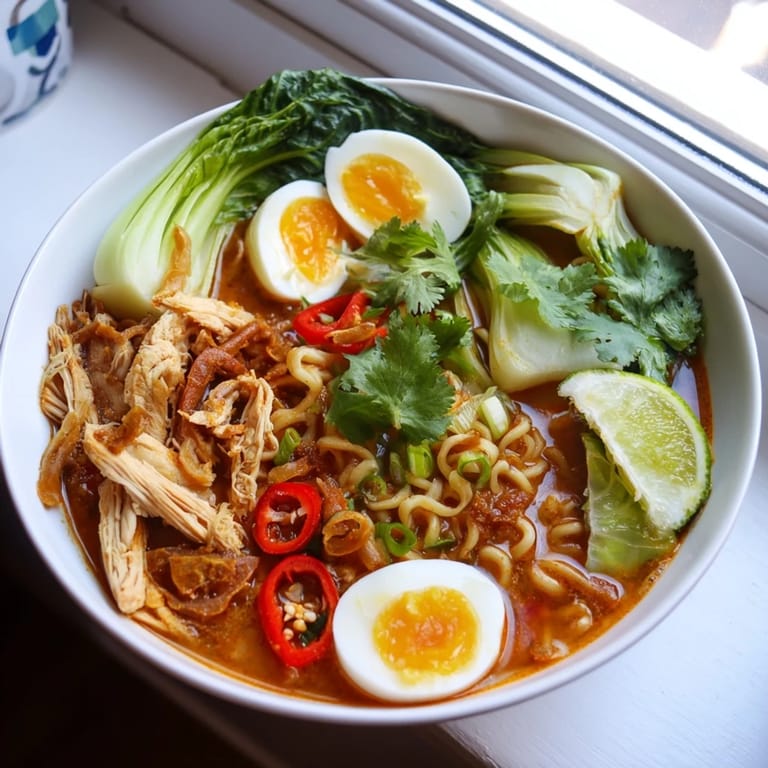
- Think of each bowl as a tiny composition where every element should be visible and inviting. I always place the sliced chicken to one side, the halved eggs showing their beautiful centers, and the crispy shallots sprinkled last so they maintain their texture.
 Save
Save One evening, I served this ramen to my brother who rarely comments on food beyond whether it's good or not. As he reached the bottom of his bowl, he looked up and asked if there was more, then told me this reminded him of the noodle shops we'd visited during our trip to Japan years ago. Coming from him, it felt like winning a culinary medal—a moment when food connected us to shared memories I thought he'd forgotten.
Making It Your Own
This recipe welcomes personalization like an old friend welcomes conversation. When spring arrives, I often add asparagus tips or fresh peas for brightness. During autumn, I might include thinly sliced mushrooms for earthiness. The beauty of this bowl is how it adapts to what you have or what the season offers—it's a living recipe that evolves with you.
Perfect Pairings
I've discovered through multiple dinner parties that this ramen creates magic alongside a cold Singha beer or a crisp glass of Riesling. The slight sweetness in these drinks cuts through the richness of the broth while complementing its aromatic qualities. For non-alcoholic options, a sparkling yuzu drink brings citrusy brightness that refreshes between spoonfulls.
Troubleshooting & Variations
The first few times I made this dish, I struggled with the broth separating when I added the miso paste. After much experimentation, I discovered the secret is to remove a ladleful of hot broth, mix the miso into that smaller amount until completely smooth, then stir it back into the main pot. This prevents those stubborn little miso lumps that can ruin the texture.
- For a vegetarian version, use a combination of dried shiitake and kombu to create a deeply flavored dashi base instead of chicken broth.
- If you prefer a spicier experience, double the amount of fresh chili and add a dollop of chili oil just before serving.
- For a quicker weeknight version, use rotisserie chicken and store-bought broth—it sacrifices some depth but saves significant time when you're craving comfort quickly.
 Save
Save This Thai Miso Ramen has become more than just a recipe in my collection—it's become a solution for cold evenings, a comfort for sick days, and a celebration for achievements both big and small. I hope it finds a similar place in your kitchen stories.
Recipe FAQs
- → Can I make this bowl vegetarian?
Yes, substitute vegetable broth for chicken broth, omit the chicken and fish sauce, and add firm tofu as a protein alternative. The miso and curry paste still provide rich umami flavor.
- → What type of noodles work best?
Fresh ramen noodles are ideal for their texture and quick cooking time. Dried ramen noodles also work well. You can substitute with udon or rice noodles if preferred.
- → How do I achieve perfect soft-boiled eggs?
Boil eggs for exactly 7 minutes, then immediately transfer to ice water to stop cooking. This creates a jammy, slightly runny yolk that's perfect for ramen bowls.
- → Can I adjust the spice level?
Absolutely. Start with less Thai red curry paste for a milder broth, or increase it for more heat. The sliced red chili is optional and adds additional spice when desired.
- → How should I store leftovers?
Store broth, noodles, and toppings separately in airtight containers. The broth keeps for 3-4 days refrigerated. Noodles are best fresh but can be stored for 1-2 days. Reheat gently and assemble fresh bowls.
- → What can I use instead of fish sauce?
For a vegetarian option, use extra soy sauce or tamari. You can also try mushroom-based seasoning sauces that provide similar umami depth without fish products.