 Save
Save Pho came into my life on a rainy Tuesday when a coworker brought a steaming bowl to the office, and the aroma alone made me abandon my sad desk lunch. That first spoonful—the delicate broth with its whisper of spice, the tender beef, the garden of fresh herbs—felt like discovering a secret menu at a restaurant I'd walked past a hundred times. Years later, I realized I didn't need hours of simmering to capture that magic; a focused 25 minutes and the right spices could deliver that same soul-warming experience. Now this quicker version is my go-to on weeknight evenings when I crave something that feels restaurant-quality but doesn't demand my entire evening.
I made this for my sister when she was going through a rough patch, and watching her face light up as she squeezed lime juice into the steaming bowl reminded me that food is sometimes the most honest conversation you can have. She went back for seconds, then asked for the recipe, and now it's become her weeknight ritual too. There's something about the ritual of building your own bowl—choosing your toppings, adjusting the heat—that makes the whole experience feel less like eating and more like caring for yourself.
Ingredients
- Beef or chicken broth (8 cups): The foundation that carries all the flavor; use low-sodium so the spices can shine without the salt drowning them out.
- Fresh ginger and onion: These two create the aromatic backbone—don't skip them, even though they're strained out later.
- Star anise, cinnamon stick, and cloves: The holy trinity that makes pho taste like pho; whole spices release their oils slowly and create that warm, complex depth.
- Fish sauce and soy sauce: They sound intimidating but work together like old friends—umami deepens the broth without making it heavy.
- Rice noodles (bánh phở): Look for the flat kind labeled specifically for pho; they hold the broth beautifully and have the right tender texture.
- Beef sirloin or eye round: Slice it paper-thin against the grain so the hot broth cooks it in seconds; any other cut risks being tough.
- Fresh herbs and lime: These aren't garnish—they're the final conversation your taste buds have with the broth, adding brightness and complexity that shift with each forkful.
Tired of Takeout? 🥡
Get 10 meals you can make faster than delivery arrives. Seriously.
One email. No spam. Unsubscribe anytime.
Instructions
- Build the aromatic foundation:
- In your large pot, combine the broth with halved onion, sliced ginger, star anise, cinnamon stick, and cloves. Bring it to a boil, then lower the heat and let it simmer uncovered for 20 minutes—you'll see the liquid go from cloudy to clear, and the kitchen will fill with that unmistakable pho perfume.
- Season and strain:
- Stir in the fish sauce, soy sauce, sugar, and salt, then simmer for 5 more minutes so everything melds. Pour the broth through a fine-mesh strainer to catch all the solids, then return the clear, golden liquid to the pot and keep it hot on low heat—this is your liquid gold.
- Prepare the noodles:
- Follow the package directions for your rice noodles, which usually means boiling them until tender, then draining them well. Divide the noodles among four large serving bowls—this is where the foundation of each bowl gets laid.
- Arrange the meat:
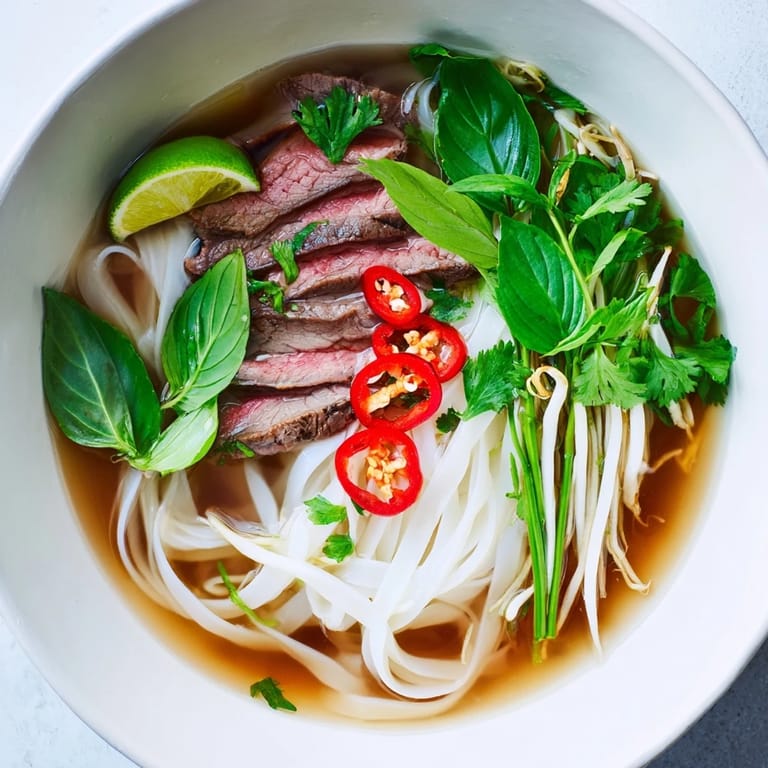
- Layer your paper-thin beef slices right over the warm noodles in each bowl. The heat from below will start to soften them, but they'll finish cooking when the hot broth hits them, turning them tender and pink in an instant.
- The big pour:
- Ladle that steaming broth directly into each bowl, watching as the meat turns from raw to cooked and all the noodles float up to the surface. This moment is when it all comes together.
- Finish and serve:
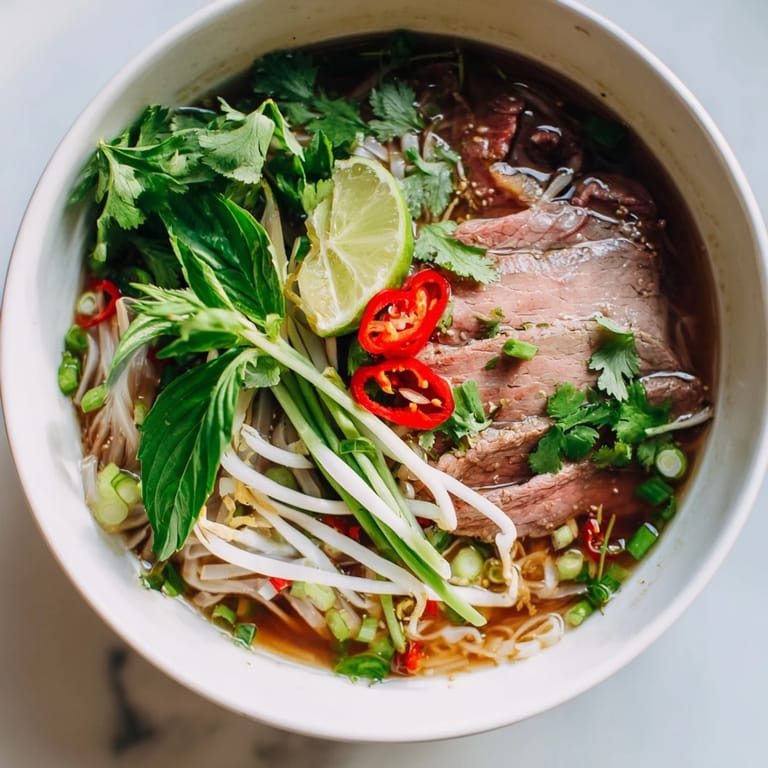
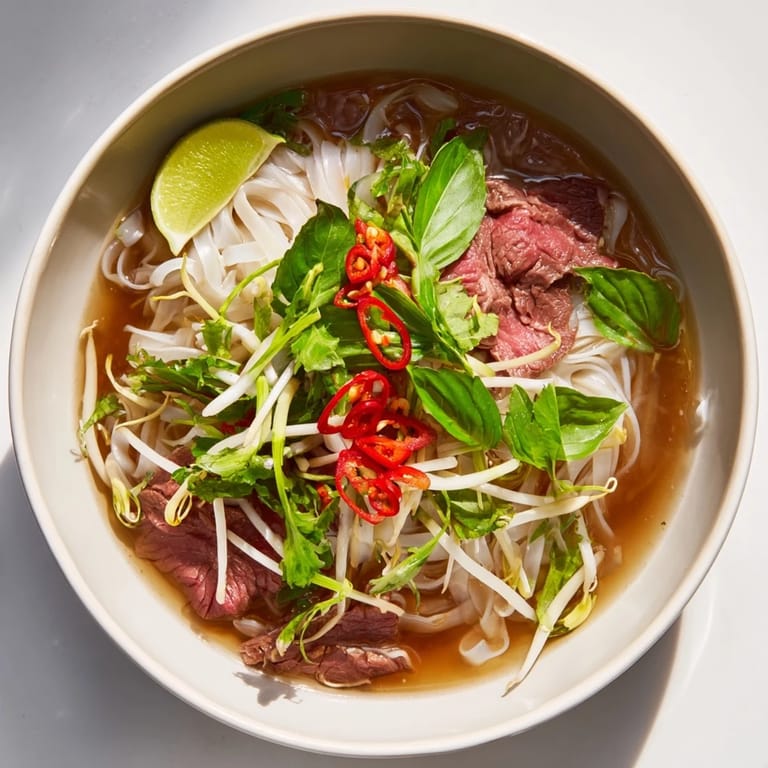
- Scatter bean sprouts, Thai basil, cilantro, sliced scallions, and a few red chili slices across the top of each bowl. Serve immediately with lime wedges, hoisin sauce, and Sriracha on the side so everyone can adjust their own heat level and flavor.
 Save
Save I learned early on that pho is a conversation between you and your bowl. One person might drown theirs in Sriracha and hoisin, another will go minimal with just basil and lime, and both are exactly right. The beauty of this express version is that it honors that flexibility while still tasting like you've been tending a pot all morning.
The Secret to Restaurant-Quality Broth
The trick isn't time; it's the spices and the char. I once made pho without charring the ginger and onion first, and it tasted pleasant but flat—missing that subtle smokiness that separates homemade pho from the microwaved kind. Now I hold the halves over a flame for about a minute per side until they're lightly blackened, then add them to the broth; that small step unlocks layers of flavor you can't rush. The first time I did this, I was nervous about burning them, but gentle char is exactly what you want.
Customizing Your Bowl
Pho is a blank canvas, and your garnishes are the brushstrokes. Some mornings I want just a whisper of herbs and a squeeze of lime; other nights I pile everything in—bean sprouts, basil, cilantro, scallions, chili—until the bowl looks like a small garden. The ratio that works best for me is more herbs than feels necessary, because they wilt into the broth and give you little bursts of flavor. I've also added fried shallots, fresh mint, and even crispy chicken skin when I have it, and the broth welcomes it all.
Timing and Serving
The moment the broth hits the bowl is the moment to serve—don't let it sit and get cold, because the whole point is that interaction between hot liquid and tender ingredients. I've made the mistake of setting a bowl down to answer the phone and coming back to find the beef already cooled and the noodles slightly gummy; speed is your friend here. This isn't a dish you can keep warm for an hour—it's meant to be eaten fresh, steaming, alive.
- Slice your meat as thin as possible; thicker cuts won't cook through properly in the hot broth.
- Keep the broth simmering gently until the moment you serve—a rolling boil can make it cloudy.
- Have all your garnishes prepped and within arm's reach before you pour the broth, so assembly is quick and everything lands fresh.
 Save
Save Pho teaches you that not everything good has to be complicated, and that sometimes the fastest meals are the most satisfying. I'll keep making this version forever.
Recipe FAQs
- → What broth ingredients create the signature pho flavor?
Star anise, cinnamon, cloves, ginger, and onion simmer together to build the aromatic base characteristic of pho.
- → Can I use chicken instead of beef in this dish?
Yes, thinly sliced chicken breast works well and cooks quickly when ladled with hot broth.
- → How should the rice noodles be prepared for the best texture?
Cook the rice noodles according to package instructions until tender, then drain well before serving.
- → What garnishes enhance the flavor and freshness?
Fresh Thai basil, cilantro, scallions, bean sprouts, and lime wedges add brightness and texture.
- → Is it possible to make this dish vegetarian-friendly?
Yes, substitute vegetable broth and tofu for meat to create a satisfying vegetarian version.
- → How can the broth be made more flavorful?
Searing the onion and ginger lightly before simmering enhances the broth’s depth and complexity.