 Save
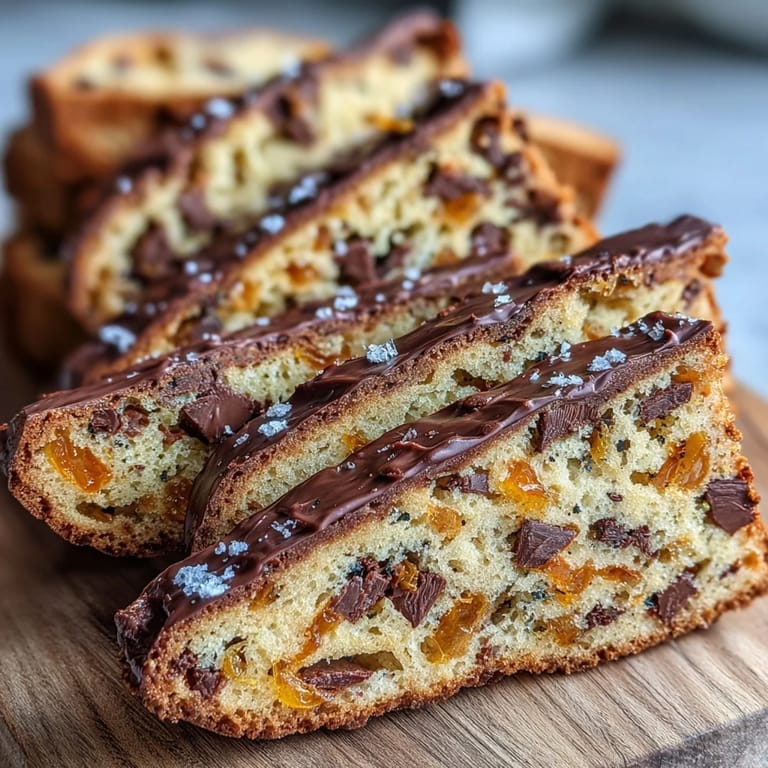
Save There's something magical about the moment when you slice into a freshly cooled biscotti log and watch the candied orange peel glint like tiny jewels through the crumb. I discovered these Italian twice-baked treasures while browsing my nonna's old recipe cards on a quiet Sunday afternoon, and the combination of bright citrus against dark chocolate felt like edible poetry. That first batch, still warm from the oven, paired perfectly with an espresso and a long conversation with a friend who stopped by unexpectedly. Now whenever I bake them, the kitchen fills with that distinctive bittersweet aroma that makes everyone pause and ask what's happening in here.
I made these for my book club once, worried they'd be too fussy for a casual gathering, but instead they became the thing everyone asked for the next month. One friend dipped hers in dessert wine and declared it her new favorite way to end the evening, and suddenly I was taking orders like I'd opened a bakery. It's funny how a humble cookie can become the star of the show, especially when people realize they can actually dunk them without worrying about them crumbling.
Ingredients
- All-purpose flour (2 cups): This is your structure, and measuring by weight makes a real difference in consistency between batches.
- Baking powder (1 1/2 teaspoons): Just enough lift to keep these from being dense, without turning them cake-like.
- Salt (1/4 teaspoon): A pinch that makes the chocolate deeper and the orange brighter.
- Eggs (2 large): Beat them with the sugar until they're pale and foamy—this aeration is what gives biscotti their characteristic snap.
- Granulated sugar (2/3 cup): The sweetness should balance the bittersweet chocolate, so don't skimp.
- Unsalted butter (1/4 cup, melted and cooled): The butter needs to cool slightly so it doesn't scramble the eggs, and this makes a tender crumb.
- Vanilla extract (1 teaspoon): Pure vanilla only—the good stuff makes a noticeable difference here.
- Orange zest (1/2 teaspoon, freshly grated): This is essential and separate from the candied peel; it adds brightness to the base dough itself.
- Candied orange peel (3/4 cup, finely chopped): Quality matters enormously—homemade or from a specialty shop tastes miles better than generic grocery store versions.
- Dark chocolate (3/4 cup, roughly chopped): Go for 60-70% cacao so it stays bitter enough to cut through the sweetness without overpowering the delicate citrus.
Tired of Takeout? 🥡
Get 10 meals you can make faster than delivery arrives. Seriously.
One email. No spam. Unsubscribe anytime.
Instructions
- Set your stage:
- Preheat your oven to 350°F and line a baking sheet with parchment paper so your logs slide onto it easily.
- Build the dry foundation:
- In a medium bowl, whisk together flour, baking powder, and salt, making sure there are no hidden pockets of baking powder that could create bitter spots.
- Cream your base:
- Beat eggs and sugar until they're pale and thick, about two minutes—you're incorporating air that will help these crisp up beautifully during baking.
- Bring it together:
- Whisk the cooled melted butter, vanilla, and fresh orange zest into the egg mixture, then gently fold the dry ingredients in until just combined, being careful not to overwork the dough.
- Add the jewels:
- Fold in your candied orange peel and dark chocolate with a few final strokes, keeping some pieces visible on the surface.
- Shape and bake the logs:
- Divide the dough in half and shape each half into a 10-inch log about 2 inches wide on your parchment paper, spacing them so heat can circulate around them. Bake for 25 minutes until they're golden and slightly firm to the touch, then let them cool for 15 minutes on the pan.
- Lower the heat and slice:
- Drop the oven to 300°F, then using a serrated knife and gentle sawing motions, slice your logs diagonally into 3/4-inch thick pieces, letting the weight of the knife do the work so you don't crush the structure.
- Crisp them twice:
- Arrange slices cut-side down on the baking sheet and bake for 12 minutes, flip each one, then bake for another 10-12 minutes until they're completely dry and crispy. Cool completely on a wire rack—this is non-negotiable because they'll harden more as they cool.
 Save
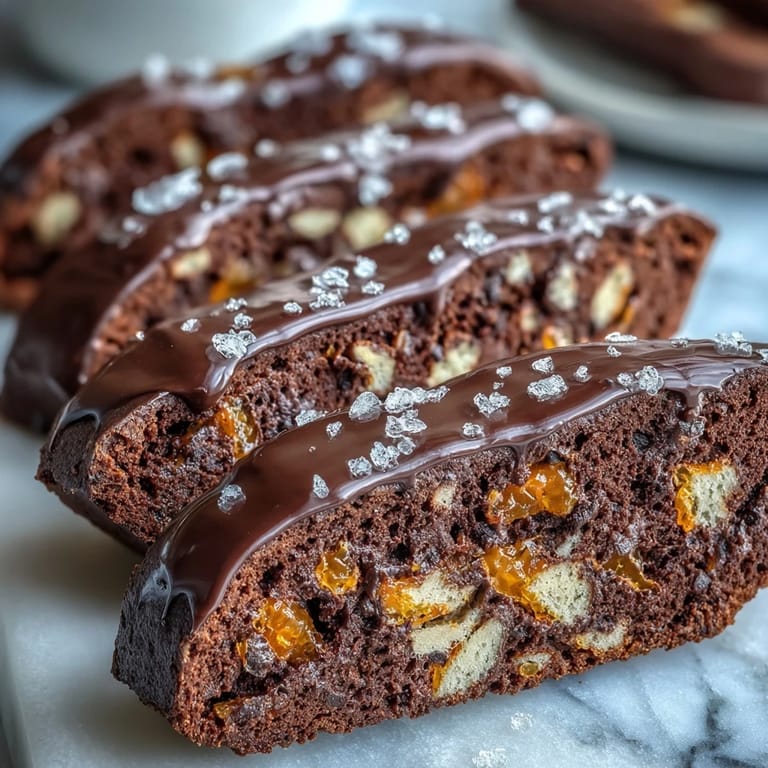
Save There's a moment during that second bake when you crack the oven door slightly and catch the smell of caramelizing sugar and toasted chocolate, and you just know these are going to turn out right. That's when you understand why biscotti has been part of Italian tradition for centuries—it's foolproof once you respect the process.
The Art of the Double Bake
Italian bakers developed the biscotti technique centuries ago for a simple reason: twice-baked cookies lasted for months on long voyages, staying crisp and shelf-stable long before modern packaging existed. What started as practical necessity became a culinary tradition because the method actually creates something better—a texture that's impossible to achieve with a single bake. The low second bake drives out moisture slowly and evenly, creating that distinctive snap that makes biscotti so satisfying to bite into.
Working with Candied Citrus
If you can't find quality candied orange peel, you can make your own by simmering orange peel in sugar syrup for an hour, then drying it slightly in a low oven, though that's a project for a weekend when you have time and patience. Store-bought candied peel from specialty shops or gourmet markets tends to be superior to mass-market versions because it's made with actual orange essence rather than artificial flavoring. The finely chopped requirement matters too—large pieces of candied peel can throw off the texture and make the biscotti uneven when you bite into them.
Chocolate Selection and Storage
The chocolate you choose becomes a personality trait in these cookies, so choose thoughtfully—too dark and you get bitterness that overwhelms the delicate citrus, too mild and you lose that sophisticated edge that makes them special. I prefer single-origin dark chocolate from brands I trust, often something with just a hint of origin character, but honestly a good quality 65% bar from your grocery store will work beautifully. Once your biscotti have cooled completely, store them in an airtight container where they'll stay crisp for up to two weeks, though they rarely last that long in my house.
- If you want extra indulgence, dip one end of each cooled biscotti in melted 70% dark chocolate and let it set before serving.
- Try substituting candied lemon peel for a slightly different citrus personality, or mix half and half for complexity.
- These freeze brilliantly for up to three months if you want to prepare ahead for holidays or unexpected guests.
 Save
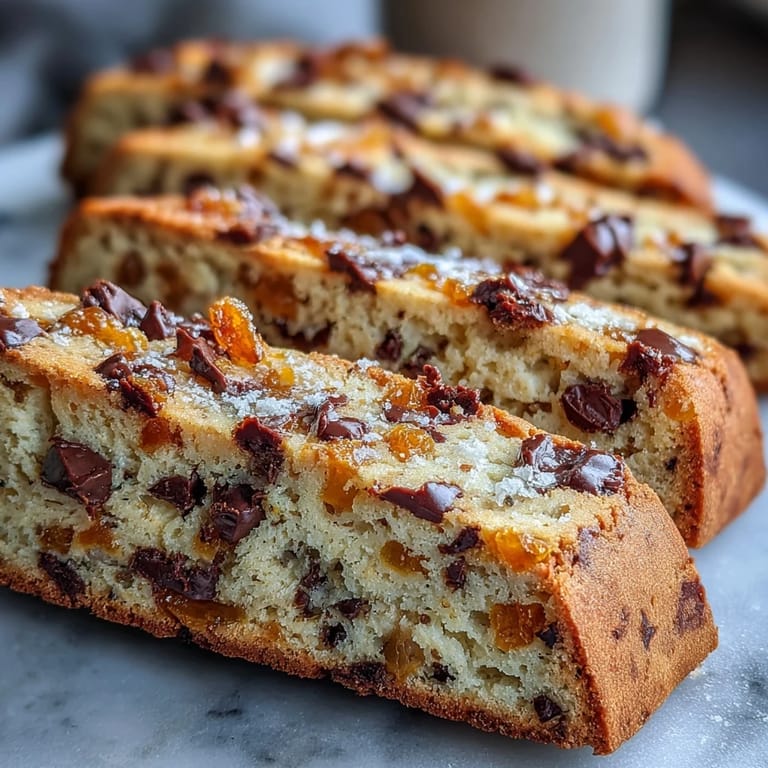
Save These biscotti are proof that the best treats don't need to be complicated—just thoughtfully made with real ingredients and a little bit of patience. Every time you dunk one into your coffee or dessert wine, you're honoring centuries of Italian baking tradition while creating your own kitchen memory.
Recipe FAQs
- → What gives these biscotti their crisp texture?
The twice-baking process dries out the slices, creating a firm, crisp texture perfect for dipping.
- → Can I substitute candied orange peel with other citrus?
Yes, candied lemon peel can be used for a different, but equally bright citrus note.
- → How should biscotti be stored to keep fresh?
Store in an airtight container at room temperature for up to two weeks to maintain crispness.
- → What chocolate works best for these biscotti?
Dark chocolate with 60-70% cocoa content adds a rich depth without overpowering the orange flavors.
- → Is dipping biscotti in chocolate recommended?
Dipping one end in melted dark chocolate adds indulgence and contrasts nicely with the citrus notes.