 Save
Save My first encounter with mapo tofu wasn't in a restaurant but in a cramped kitchen in Chengdu, watching my friend's mother coax that distinctive numbing heat from a handful of Sichuan peppercorns. The tofu arrived silky and pale, almost fragile, but within minutes it transformed into something bold and unforgettable. That moment taught me that the best dishes often whisper before they roar, and mapo tofu is a masterclass in that philosophy. Every time I make it now, I'm transported back to that kitchen, to the sound of the wok and the smell of fermented bean paste turning the oil a deep crimson red.
I made this for my roommate on a cold Tuesday evening when she came home exhausted from work, and watching her face light up as that first spoonful hit—that moment when her eyes widened at the heat and complexity—reminded me why comfort food matters so much. She asked for the recipe that night, and I realized that mapo tofu had become my go-to dish for feeding people I care about, not because it's impressive, but because it's honest.
Ingredients
- Silken or soft tofu (400g): This delicate tofu absorbs sauce beautifully and melts on your tongue, though firm tofu works if you need it to hold together better during cooking.
- Ground pork or beef (150g): Adds richness and texture, but skip it entirely for a vegetarian version without sacrificing any flavor.
- Sichuan doubanjiang (2 tbsp): This fermented chili bean paste is the soul of the dish—it's salty, spicy, and funky in the best way, so don't substitute it.
- Soy sauce (1 tbsp): Look for a good quality one; it brightens the sauce and deepens the umami.
- Shaoxing wine (1 tbsp): A splash of this rice wine adds depth, but dry sherry works in a pinch.
- Sichuan peppercorns (1 tbsp): Toast and grind these yourself—the numbing, almost citrusy tingle they provide is what makes this dish sing.
- Vegetable oil (3 tbsp): Use a neutral oil that can handle high heat without burning.
- Garlic and ginger (3 cloves and 2 tsp): Mince these fine so they disperse throughout the sauce and perfume the entire dish.
- Scallions (2, separated): The whites go in early for depth, and the greens get scattered on top for freshness and color.
- Chicken or vegetable broth (1/2 cup): Low-sodium is essential here so you control the salt.
- Cornstarch slurry (1 tbsp cornstarch + 2 tbsp water): This thickens the sauce into a silky coating that clings to the tofu.
Tired of Takeout? 🥡
Get 10 meals you can make faster than delivery arrives. Seriously.
One email. No spam. Unsubscribe anytime.
Instructions
- Get everything ready:
- Drain your tofu gently and cut it into cubes about the size of dice—you want them to fit on a spoon but sturdy enough to handle. Mix your cornstarch with water in a small bowl and have all your aromatics prepped and within arm's reach, because once the wok gets hot, everything moves fast.
- Toast and crack the peppercorns:
- Heat your skillet or wok over medium heat and add the Sichuan peppercorns, stirring constantly until they smell fragrant and toasty—about 2 minutes. Grind them in a mortar and pestle until you have a coarse powder, then set it aside.
- Build the aromatics:
- Pour in your oil and let it heat until it shimmers slightly, then add the scallion whites, garlic, and ginger all at once. Stir constantly for about a minute until the kitchen fills with that intoxicating fragrance that makes your mouth water.
- Brown the meat (if using):
- If you're adding pork or beef, crumble it into the pan now and cook until it's no longer pink, breaking it apart with your spoon as it browns. Don't rush this step—you want some color on the meat.
- Awaken the bean paste:
- Add the doubanjiang and any dried chilies you're using, stirring constantly for 1 to 2 minutes until the oil turns a deep crimson red and the smell becomes almost intoxicating. This is when the magic starts happening.
- Build the sauce:
- Pour in the Shaoxing wine, soy sauce, sugar, and broth, stirring everything together until it's well combined. Let it come to a gentle simmer and taste—this is your chance to adjust the heat and saltiness before the tofu goes in.
- Introduce the tofu:
- Gently slide your tofu cubes into the simmering sauce and let them nestle in, spooning the sauce over them occasionally. Simmer for about 5 minutes, being gentle with your stirring so the tofu doesn't fall apart.
- Thicken the sauce:
- Give your cornstarch slurry a quick stir to make sure it's mixed, then slowly drizzle it into the pan while stirring gently in a circular motion. Within a minute, the sauce will transform into a silky coating that clings beautifully to each tofu cube.
- Finish with warmth and color:
- Sprinkle the ground Sichuan peppercorns all over the top, add half of the scallion greens, and give it one last gentle fold through. The whole dish should smell complex and inviting now.
- Serve immediately:
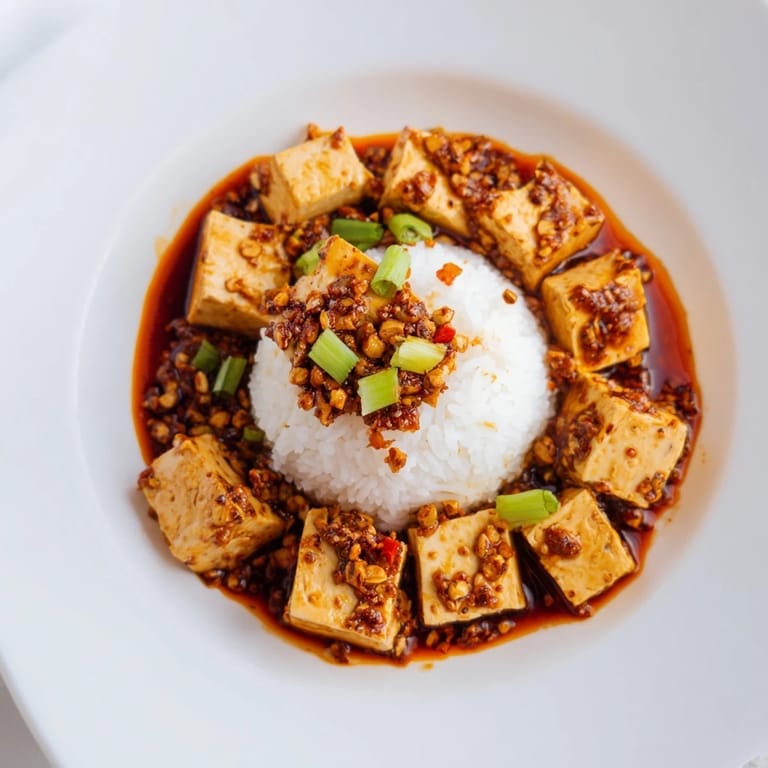
- Ladle everything over steaming jasmine rice, top with extra scallions and a drizzle of chili oil if you want to push it even further into spicy territory. Eat it while it's hot, because mapo tofu waits for no one.
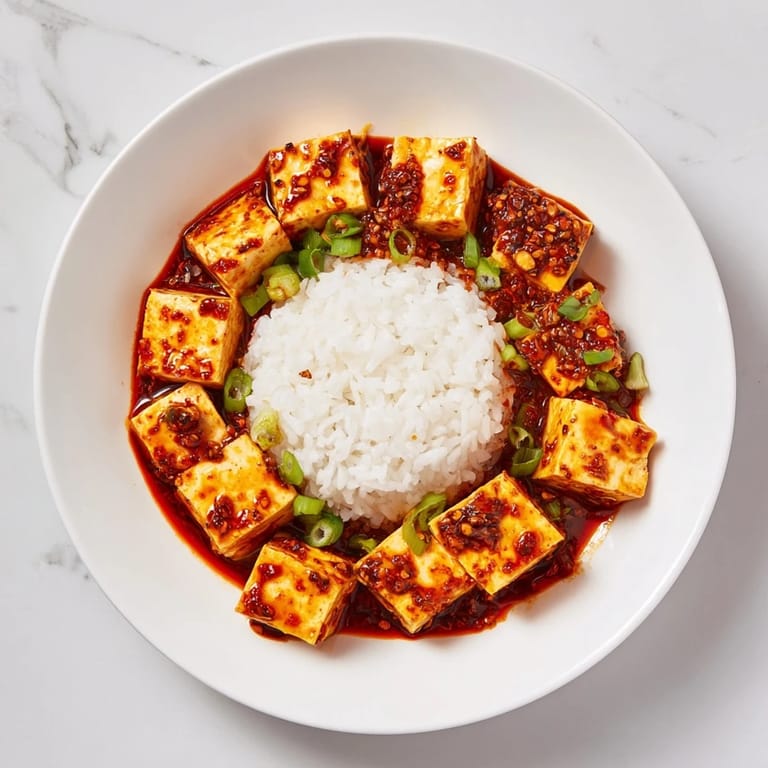 Save
Save There was one night when I made this for myself after a particularly difficult day, and I sat alone at my small kitchen table with a bowl of mapo tofu and rice, watching the steam rise and feeling the heat spread through my chest with each bite. It reminded me that food can be a small act of self-care, a moment of warmth when you need it most.
The Secret of the Sauce
The magic of mapo tofu lies entirely in the sauce, and the sauce is born from patience and layering. When you add the doubanjiang early, you're not just dumping it in—you're letting it cook in the oil until it becomes fragrant and releases all its fermented complexity. This is a lesson that applies to so much of Chinese cooking: the best flavors come from giving each ingredient a moment to shine before you add the next one. The cornstarch slurry at the end isn't just about thickening; it's about creating a silky emulsion that coats your mouth and makes every spoonful cling with flavor.
Heat and Flavor Balance
This dish is spicy, but it's not aggressive—it builds slowly and then tingles. The Sichuan peppercorns create what the Chinese call a 'numbing' sensation, which is completely different from the burning heat of regular chili peppers. The two work together in mapo tofu to create a symphony of sensation that's addictive rather than punishing. If you're sensitive to heat, start with less doubanjiang and fewer dried chilies, remembering that you can always add more but you can never take it out once it's in the pan.
Making It Your Own
The beauty of mapo tofu is that it's flexible enough to bend to your preferences and what you have on hand. Some families add a touch of sesame oil at the end, others use beef instead of pork, and many vegetarian cooks have perfected versions without any meat at all. The core stays the same—silky tofu, numbing heat, complex sauce—but everything else is open to interpretation.
- If you can't find Sichuan peppercorns, you'll lose the numbing element, but the dish will still be delicious and warming.
- A splash of sesame oil stirred in at the very end adds nutty depth and richness.
- Make this vegetarian by using vegetarian doubanjiang and vegetable broth, and it loses nothing in translation.
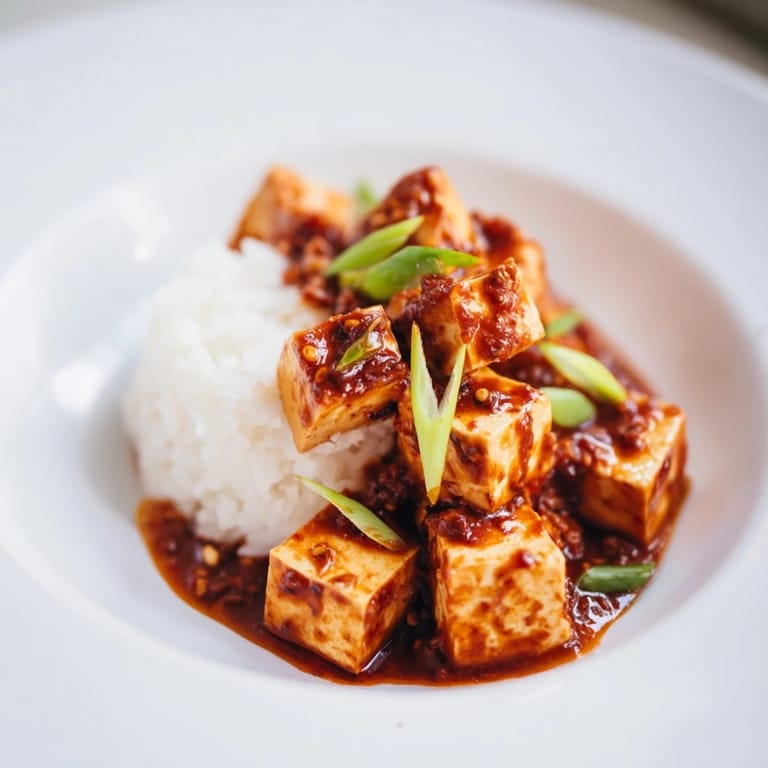 Save
Save Mapo tofu has a way of becoming a bridge between cultures and people, a dish that tastes like home to some and an adventure to others. Make it tonight, and I promise you'll understand why it's been beloved in Sichuan kitchens for generations.
Recipe FAQs
- → Can I make this dish vegetarian?
Yes, omit the ground meat and use vegetarian chili bean paste and vegetable broth to keep it flavorful and vegetarian.
- → What type of tofu works best?
Silken or soft tofu provides a silky texture, while firm tofu holds its shape better during cooking. Choose based on your preference.
- → How spicy is this dish?
The spice level can be adjusted by varying the amount of chili bean paste and dried chilies according to your heat tolerance.
- → What are key aromatics used?
Garlic, ginger, scallions, and toasted Sichuan peppercorns create the distinctive fragrant foundation for the sauce.
- → What is the recommended way to serve?
Serve hot over steamed jasmine rice, garnished with extra scallions and optionally a drizzle of chili oil for an enhanced flavor impact.
- → Can Shaoxing wine be substituted?
Yes, dry sherry or reducing it from the recipe is possible, but it adds a subtle depth to the sauce.