 Save
Save There's something about strawberry shortcake that makes people pause mid-conversation and actually listen when you mention you're making it. My aunt showed me her trick years ago—she'd macerate the berries while the biscuits cooled, so by the time everything came together, the juices had pooled into this sweet, jammy bottom layer that soaked right into the warm biscuit. The first time I got the timing right, watching someone's face light up when they bit through that buttery-crumbly-fruity-creamy combination felt like actual kitchen magic.
I made this for a summer potluck once and learned the hard way that people will fight over the last slice—not metaphorically, but actually strategically position themselves near the dessert table. Someone's kid asked for seconds before finishing the first one, and their parent just shrugged like, yeah, that's just how this dessert works. That moment taught me the recipe was really doing something right.
Ingredients
- All-purpose flour: Use a light touch here; you're not making bread, so don't compress it when measuring or your biscuits will turn dense and tough.
- Cold unsalted butter: Cut it into cubes and keep it chilled right up until you're ready to work it in—the little pockets of cold butter create those tender layers.
- Buttermilk: This adds tang and helps the biscuits rise evenly; don't substitute milk unless you absolutely have to.
- Fresh strawberries: Pick ones that smell sweet at the stem, and hull them gently so you don't bruise the delicate flesh.
- Heavy whipping cream: Make sure it's actually cold before you start beating, or you'll be chasing soft peaks forever.
- Powdered sugar: Whisk it through the cream gently to avoid overbeating; you want fluffy clouds, not butter.
Tired of Takeout? 🥡
Get 10 meals you can make faster than delivery arrives. Seriously.
One email. No spam. Unsubscribe anytime.
Instructions
- Set the stage:
- Preheat your oven to 425°F and line a baking sheet with parchment paper so your biscuits don't stick and brown unevenly on the bottom.
- Build the dry foundation:
- Whisk together flour, sugar, baking powder, baking soda, and salt in a large bowl, making sure the leavening agents are evenly distributed so your biscuits rise uniformly.
- Cut in the butter:
- Add cold cubed butter and work it in with a pastry cutter or your fingertips until the mixture looks like coarse breadcrumbs with some pea-sized pieces still visible. This is what creates those delicate, flaky layers.
- Bring it together gently:
- Stir in the buttermilk and vanilla just until the dough barely comes together—resist the urge to knead or mix more, or you'll develop gluten and end up with tough biscuits.
- Shape without stress:
- Turn the dough out onto a floured surface and pat it into a 1-inch rectangle with your hands, being gentle and not pressing too hard. The lighter you touch it, the more tender it'll be.
- Cut and arrange:
- Use a 2 1/2-inch round cutter to cut out biscuits in one smooth downward motion without twisting, which seals the edges and prevents them from rising evenly. Place them on your prepared sheet and gather scraps to cut more.
- The finishing brush:
- Brush the tops lightly with buttermilk for golden-brown color and a slight sheen. Bake for 15–18 minutes until they're a beautiful warm brown and a toothpick inserted in the center comes out clean.
- Macerate the berries:
- While the biscuits bake, combine sliced strawberries with sugar and lemon juice in a bowl and let them sit for at least 20 minutes, tossing gently once or twice. You'll see the berries release their juice and create that jammy, syrupy mixture that makes everything special.
- Whip the cream:
- Beat chilled heavy cream with powdered sugar and vanilla until soft peaks form—they should barely hold their shape when you lift the beaters. Stop here; another 30 seconds and you'll have butter.
- Assemble with intention:
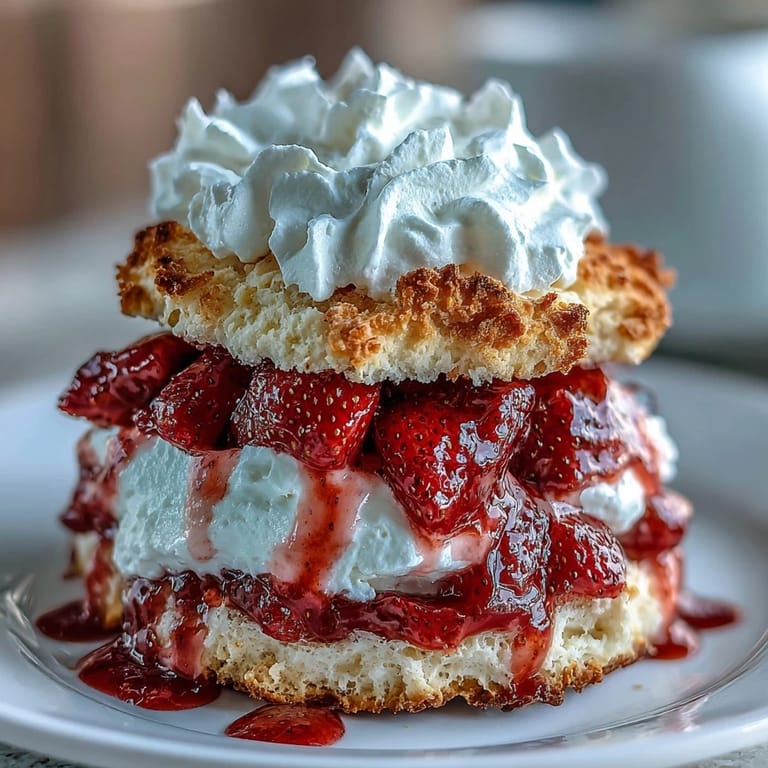
- Once the biscuits are cool enough to handle, carefully split each one in half horizontally. Layer the bottom half with some macerated strawberries and their juices, then a generous dollop of whipped cream, then the biscuit top, then more berries and another cream dollop.
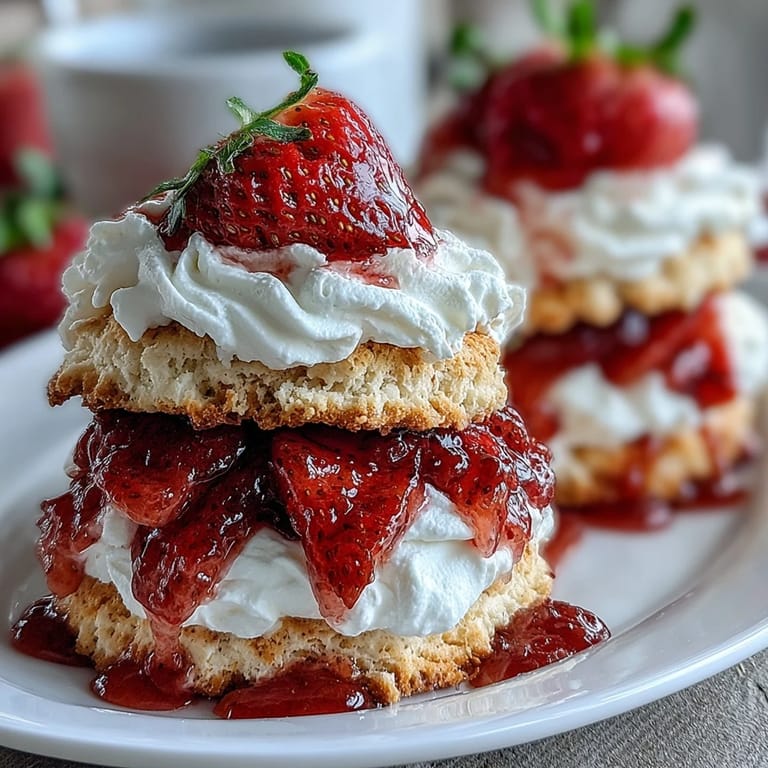 Save
Save The magic moment is always right when someone takes that first bite and their eyes go soft, like they've just remembered something important about summer or childhood or what dessert is supposed to feel like. That's the whole reason I keep making it.
The Biscuit Science
Biscuits are really just controlled chaos—you're creating tiny pockets of butter surrounded by flour that steam when they hit the oven, which puffs everything up into those airy layers. The trick is keeping everything cold so the butter stays separate from the flour until heat does the work. Once I understood that, I stopped overthinking it and started getting consistent results.
Why Maceration Changes Everything
Letting those strawberries sit with sugar and lemon juice isn't just about marinating them—it's about osmosis breaking down the cell walls and releasing the fruit's own juice into a concentrated syrup. You're essentially creating a light jammy layer that clings to every crumb and adds moisture and flavor simultaneously. I used to think you needed some elaborate sauce, but this method is actually more elegant and tastes fresher.
Playing with Flavors and Variations
Once you nail the basic formula, you can start experimenting without breaking the foundation. I've added a splash of orange liqueur to the strawberries on nights when I wanted something a little more sophisticated, and it threads through the whole dessert in the most subtle, lovely way. Another time I swapped half the cream for Greek yogurt and got this tangy-rich thing that actually made the strawberries taste even brighter and more themselves.
- A pinch of cardamom in the whipped cream opens up the whole flavor profile in an unexpected direction.
- If you're serving this to a crowd, you can split and layer the biscuits a few hours ahead, then add the whipped cream and final berries just before serving.
- Make sure every component is as cold as possible when you assemble—warm cream melts into the warm biscuit and everything gets soggy.
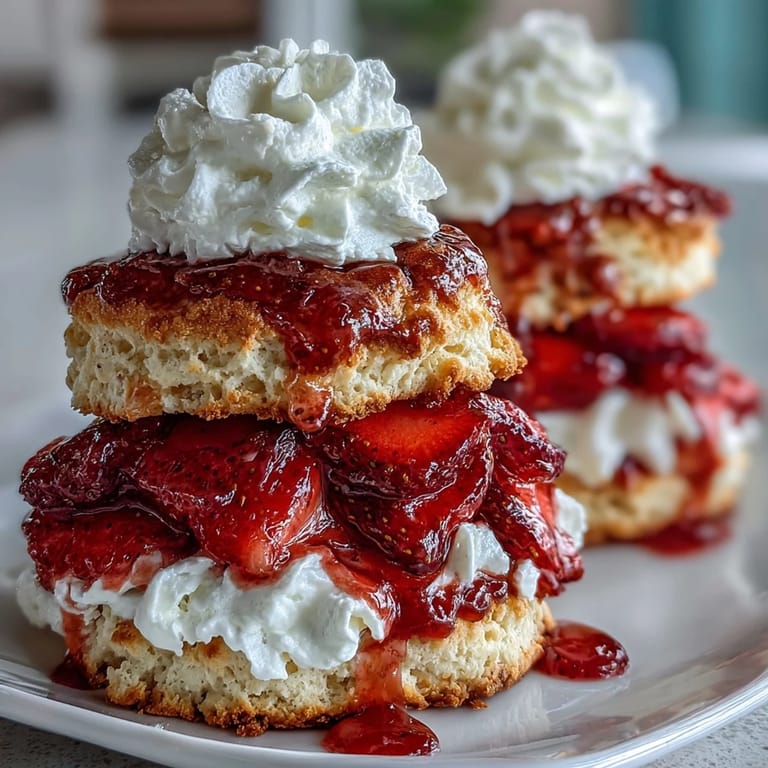 Save
Save This is the kind of dessert that makes you feel capable in the kitchen and makes everyone at your table feel cared for at the same time. That's worth the 43 minutes every single time.
Recipe FAQs
- → How do I make the biscuits flaky?
Use cold butter and cut it into the dry ingredients quickly to create coarse crumbs, which melts during baking to form flaky layers.
- → What’s the purpose of macerating strawberries?
Macerating softens the fruit and enhances sweetness by mixing strawberries with sugar and lemon juice, releasing their juices.
- → Can I prepare the biscuit dough ahead?
You can prepare and chill the dough before baking to save time, but bake the biscuits fresh for best texture.
- → How do I achieve the perfect whipped cream texture?
Chill the cream and beat it with powdered sugar and vanilla until soft peaks form for a light, airy consistency.
- → Are there variations to the basic biscuit layers?
Yes, you can add a splash of orange liqueur to the strawberries or substitute Greek yogurt for some cream for a tangy twist.