 Save
Save The first time I attempted a King Cake Cinnamon Babka Loaf, I was standing in my kitchen on a gray January afternoon, scrolling through photos of Mardi Gras celebrations I'd never attended. Something about the combination of Eastern European babka's architectural swirls and the playful tradition of hiding a treasure inside a King Cake felt like the perfect culinary mashup. I wanted to create something that would make people pause mid-bite, surprised by those layers of cream cheese and cinnamon working in harmony. What started as a curious experiment became the bread I now make whenever I need to turn an ordinary day into something worth celebrating.
I'll never forget the moment my neighbor smelled this baking and literally knocked on my door mid-rise. She stood in my kitchen with flour on her hands from her own projects, watching the twisted loaf puff up in the pan, and asked if I could teach her. That afternoon turned into an impromptu baking session where we made two loaves, decorated them differently, and laughed when we realized neither of us had remembered to buy the plastic King Cake baby. We used a whole almond instead, wrapped it in foil, and it became our inside joke for the rest of the season.
Ingredients
- All-purpose flour: The foundation that holds these layers together, and it's worth using something you trust because the dough really does transform differently depending on the protein content.
- Instant yeast: Room temperature ingredients matter more than people realize, so let your milk and eggs sit out while you prep everything else.
- Whole milk and eggs: These create that soft, brioche-like crumb that makes this loaf feel luxurious rather than dense.
- Unsalted butter: Use softened butter for the dough and filling—cold butter will fight you every step of the way.
- Light brown sugar and cinnamon: The pairing that makes your kitchen smell like autumn no matter what season it actually is.
- Cream cheese and vanilla: This filling adds a subtle tang that prevents the bread from tasting one-dimensionally sweet.
- Powdered sugar and milk: The glaze should be thick enough to cling to the bread without sliding off, so add milk gradually and taste as you go.
- Sanding sugars in purple, green, and gold: These aren't just decoration—they catch the light and make the whole loaf look intentional and festive.
Tired of Takeout? 🥡
Get 10 meals you can make faster than delivery arrives. Seriously.
One email. No spam. Unsubscribe anytime.
Instructions
- Mix your dough foundation:
- Combine flour, sugar, yeast, and salt in a large bowl, then whisk together your lukewarm milk, eggs, and vanilla in a separate vessel. The milk temperature is surprisingly important—too hot kills the yeast, too cold and it won't activate.
- Build the dough's structure:
- Add the wet ingredients to the dry, then beat in softened butter until the dough becomes smooth and elastic, about 8 to 10 minutes. You'll feel the transformation happen—it goes from shaggy to silky, and that's when you know it's ready.
- Let it rise with patience:
- Place the dough in a greased bowl, cover it loosely, and find a warm spot—I use the top of my fridge or a kitchen cupboard away from drafts. You want it to roughly double in size, which typically takes 1 to 1.5 hours depending on your kitchen's temperature.
- Prepare both fillings:
- While the dough rises, mix brown sugar, cinnamon, and softened butter until it looks like damp sand, then beat cream cheese with sugar and vanilla until completely smooth. Having both ready means you won't scramble when it's time to assemble.
- Shape with intention:
- Punch down the risen dough and roll it into a 16-by-12-inch rectangle on a floured surface. Spread cream cheese filling across the interior, leaving a half-inch border, then layer the cinnamon filling on top—this order matters because the cream cheese acts as a barrier that keeps the cinnamon from drying out the dough.
- Create the signature twist:
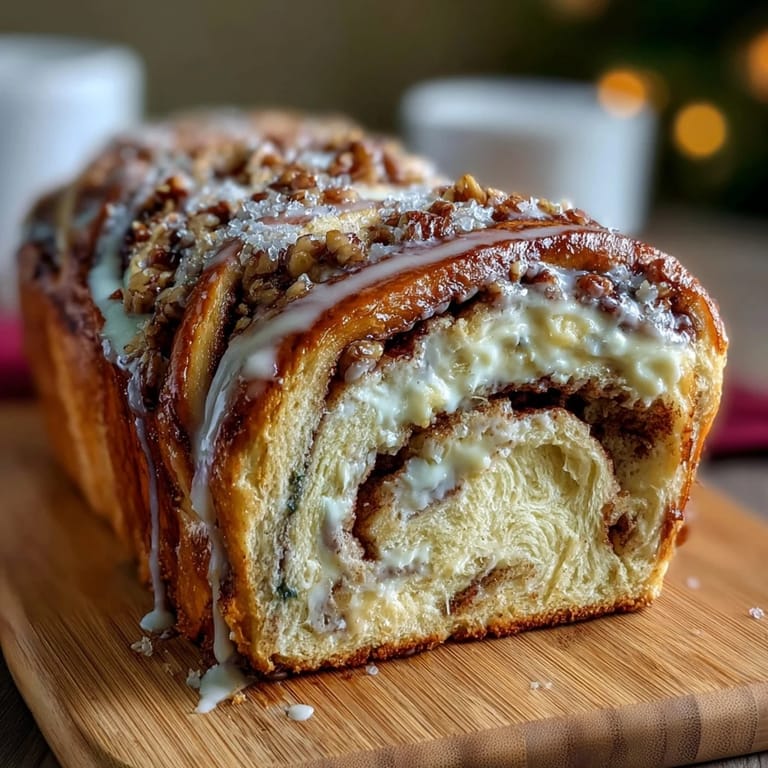
- Roll the dough tightly from the long side into a log, then slice it lengthwise in half without cutting all the way through—you want two strands still connected at one end. Twist them together, keeping the cut sides facing up so those beautiful layers show, then coil into a loaf shape and nestle it into your greased 9-by-5-inch pan.
- Second rise and baking:
- Cover the shaped loaf and let it puff up for about 45 minutes until it looks puffy and proud. Bake at 350 degrees Fahrenheit for 35 to 40 minutes until the top is golden brown and a toothpick inserted in the center comes out clean—if it's browning too quickly, just tent it with foil.
- Finish with flair:
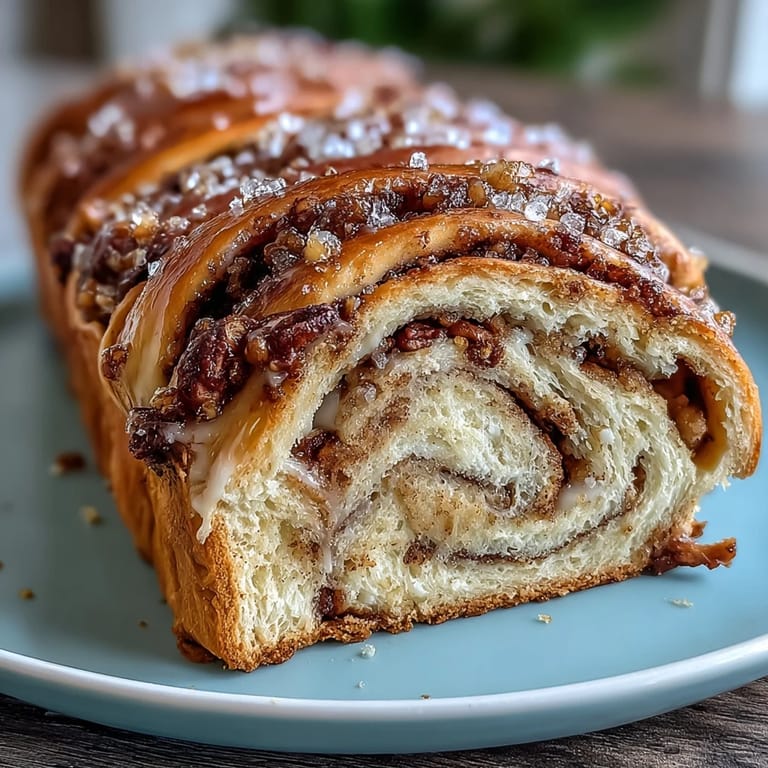
- Cool the loaf in the pan for 15 minutes, then turn it out onto a rack. Whisk powdered sugar with milk to create a thick glaze, drizzle it over the cooled loaf, and immediately sprinkle on your purple, green, and gold sanding sugars so they stick.
 Save
Save There's something almost ceremonial about inserting that plastic baby or almond right before serving—it transforms the bread from something delicious into something that feels like it belongs at a celebration. Even when I'm making it alone, I do it anyway, because it reminds me why I started combining these two traditions in the first place.
The Magic of Layered Doughs
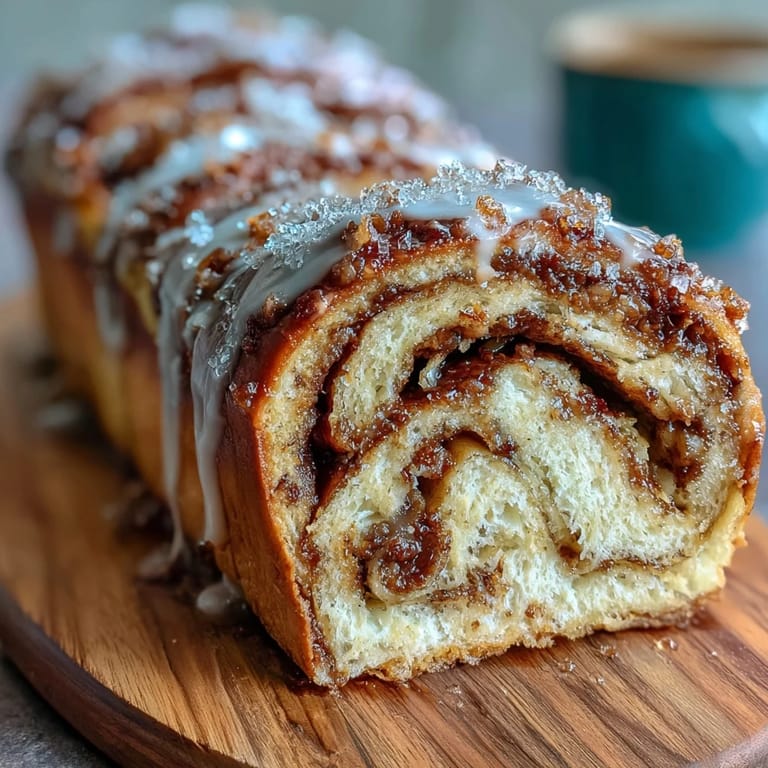
Babka's appeal lies in those visible spiral layers, and pairing it with cream cheese adds dimension that plain cinnamon sugar never could. The first time I bit into a properly made slice and saw those distinct stripes of filling, I understood why this technique has been beloved for generations. It's not just about taste—it's about creating something beautiful enough to photograph but humble enough to share.
Timing and Temperature Considerations
Yeast dough is forgiving but not careless—it responds to warmth, moisture, and patience. I've learned that a slightly longer rise at room temperature produces better flavor than rushing it in an artificially warm space. Temperature also affects how quickly your butter incorporates into the dough, so if your kitchen is cold, take an extra minute or two during the mixing phase and don't worry about overshooting the time.
Making It Your Own
This recipe is flexible enough to adapt to your preferences without losing its soul. Orange zest in the dough creates brightness, mascarpone can replace cream cheese for tanginess, and you can experiment with the spice blend if cardamom calls to you. The sanding sugars are purely for festive appeal, so swap them for whatever colors match your celebration.
- Add finely grated orange or lemon zest to the dough if you want each bite to feel a little lighter and more complex.
- Don't skip cooling the loaf completely before glazing, or you'll end up with glaze that melts right off instead of setting.
- Store leftovers wrapped in parchment paper inside an airtight container so they stay soft for up to three days.
 Save
Save This King Cake Cinnamon Babka Loaf has become my answer to the question of what to make when I want to feel fancy without actually being complicated. Every time I pull it from the oven, that smell alone is enough to remind me why I fell in love with baking in the first place.
Recipe FAQs
- → What makes the dough rise properly?
The combination of instant yeast, lukewarm milk, and a warm resting spot helps the dough double in size, creating a light texture.
- → How are the cinnamon and cream cheese fillings prepared?
The cinnamon filling blends brown sugar, cinnamon, and butter, while the cream cheese filling is softened cream cheese mixed with sugar and vanilla for smoothness.
- → Why is the dough rolled and twisted?
Rolling and twisting the dough reveals the layered fillings inside, creating a striking spiral pattern and layering flavors throughout the loaf.
- → How should the loaf be decorated for a festive look?
After baking and glazing, sprinkle purple, green, and gold sanding sugars on top to mimic traditional festive colors.
- → Can the loaf be stored after baking?
Yes, store leftovers in an airtight container for up to three days to maintain freshness.