 Save
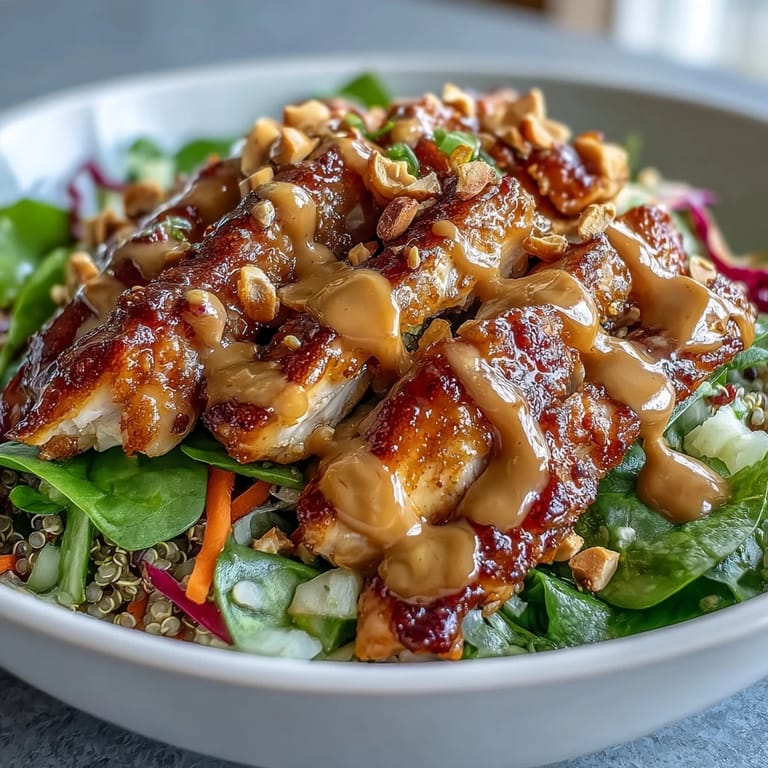
Save There's something about assembling a peanut chicken power bowl that feels less like cooking and more like creating edible art on a plate. I discovered this recipe during a particularly hectic Tuesday when I needed something that tasted like I'd spent hours in the kitchen but could actually be ready in under an hour. The combination of warm, tender chicken, nutty sauce, and crisp vegetables hit differently that day—it felt nourishing in a way that made the whole week feel more manageable.
I'll never forget watching my usually picky neighbor take a bite and immediately ask for the recipe, sauce dripping slightly from the corner of her mouth in the most genuine way possible. She came back the next week with her own version, adding avocado and telling me she'd made it three times already. That's when I knew this bowl had crossed from just being dinner into something that actually brought people together.
Ingredients
- Chicken breasts or thighs: Use whichever you prefer, though thighs tend to stay juicier if you're new to this—500 g gives you enough protein without overwhelming the other flavors.
- Smoked paprika: This is the secret whisper that makes people ask what spice you used; it adds depth without heat.
- Brown rice or quinoa: Brown rice is earthier and chewier, while quinoa is lighter and technically a complete protein—pick based on your mood.
- Fresh vegetables: The crunch of raw carrots, peppers, and cucumber against warm grains creates the textural contrast that makes every bite interesting.
- Creamy peanut butter: Use natural or conventional depending on what you have, but avoid the chunky kind unless you specifically want extra texture.
- Soy sauce: The umami backbone that ties the whole sauce together; tamari works beautifully if you're avoiding gluten.
- Rice vinegar or lime juice: This brings brightness and cuts through the richness so the sauce doesn't feel heavy.
- Roasted peanuts for garnish: A final crunch that reminds you this dish is all about layers of satisfaction.
Tired of Takeout? 🥡
Get 10 meals you can make faster than delivery arrives. Seriously.
One email. No spam. Unsubscribe anytime.
Instructions
- Season and prep your chicken:
- Toss your chicken pieces with olive oil and all those warm spices until they're evenly coated. Don't skip this step—the coating should look almost bronzed before it hits the oven.
- Bake until golden:
- Arrange on parchment paper and bake at 400°F for 20 to 25 minutes until the internal temperature hits 165°F. Let it rest for five minutes so the juices redistribute, making every slice tender instead of stringy.
- Cook your grains while chicken rests:
- Rinse your rice or quinoa, then simmer in broth or water—brown rice takes about 25 minutes while quinoa is done in 15. The aroma filling your kitchen while this happens is honestly part of the appeal.
- Prepare all your vegetables:
- This is where you can get creative with your knife skills or just slice things roughly—consistency matters less than having everything ready when you need it. Thinly slice the bell pepper and cucumber, julienne or grate the carrot, shred the cabbage, and chop the spring onions.
- Make the peanut sauce:
- Whisk together peanut butter, soy sauce, vinegar or lime juice, honey, and optional sriracha, then add warm water a tablespoon at a time until it reaches a pourable consistency. Taste and adjust—it should be nutty but not thick.
- Assemble your bowls:
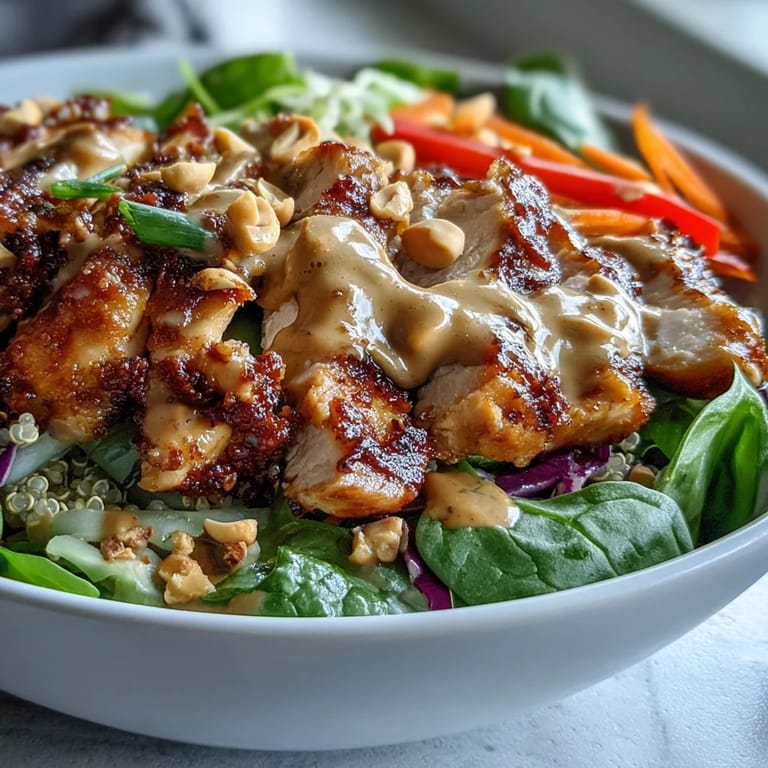
- Start with grains as your base, then arrange chicken and vegetables on top. This method keeps everything separate and lets each component shine instead of getting mushy.
- Drizzle and garnish:
- Generously pour that peanut sauce over everything, then scatter chopped peanuts and fresh cilantro on top. Squeeze lime wedges over the whole thing right before eating.
 Save
Save This bowl became my answer to the question I kept asking myself about how to eat better without sacrificing satisfaction or turning cooking into a chore. It's genuinely one of those meals that tastes like a celebration but feels like self-care.
The Sauce Is Everything
I learned early on that peanut sauce can make or break this dish, and spending an extra two minutes to balance the flavors properly transforms the whole bowl from good to genuinely memorable. The best version I've made came from tasting as I whisked, adjusting the sweetness with honey and the tang with lime juice until it felt perfectly alive on my tongue. If you're hesitant about the sriracha, add just a pinch at first—heat builds as you go and you want this sauce to enhance rather than overpower.
Mix and Match Your Vegetables
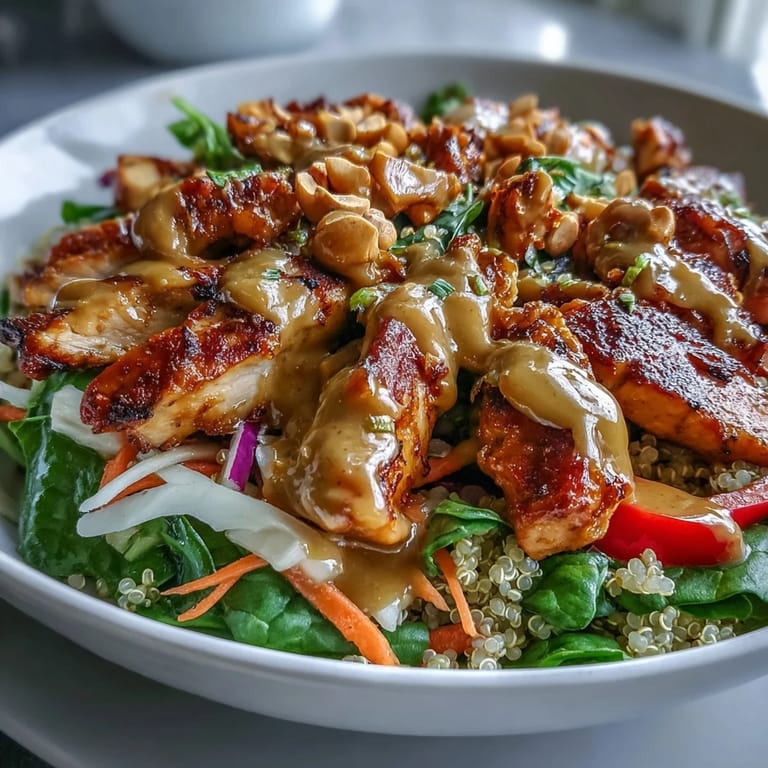
The beauty of this bowl is that it adapts beautifully to whatever's in your crisper drawer at any given moment. I've made versions with shredded beets, roasted broccoli, thinly sliced radishes, and even thin strips of jicama, and they all worked because you're working with the fundamental logic of balancing warm grain, protein, cool vegetables, and rich sauce. Think of the vegetable list as a starting point rather than a mandate—the goal is texture and color contrast, so as long as you're mixing raw crunch with wilted greens, you're on track.
Making It Your Own
Once you've made this bowl a few times, you'll start seeing it as a template for building meals rather than a rigid recipe to follow. Some mornings I add a soft-boiled egg for extra richness, other times I top it with crispy tofu for a vegetarian spin. The peanut sauce works equally well with chickpeas, tempeh, or even roasted cauliflower if you want to switch things up. Here are my favorite variations that have become regulars in my kitchen:
- Substitute chicken with baked tofu or crispy chickpeas for a vegetarian protein that's just as satisfying.
- Add avocado slices or edamame to bump up the healthy fats and make the bowl feel even more complete.
- Swirl in a spoonful of tahini to the sauce if you want it creamier and less intensely peanutty.
 Save
Save This peanut chicken power bowl has become my go-to when I need to feel like I'm taking care of myself without any fuss. Make it once and I promise you'll be reaching for it again and again.
Recipe FAQs
- → Can I make this bowl vegetarian?
Absolutely. Substitute the baked chicken with firm tofu or tempeh, seasoned and baked the same way. The peanut sauce and vegetable base work perfectly with plant-based proteins.
- → How long does the peanut sauce keep?
The peanut sauce stores well in an airtight container in the refrigerator for up to one week. It may thicken when chilled—simply whisk in a splash of warm water to reach the desired consistency again.
- → What grains work best in this bowl?
Brown rice and quinoa are excellent choices, but you can also use farro, bulgur, or cauliflower rice for a lighter option. Cook according to package instructions and adjust the broth or water accordingly.
- → Can I prepare the components ahead of time?
Yes. Cook the grains and chicken up to 3 days in advance. Store them separately in the refrigerator. Chop the vegetables and store them in a sealed container. The peanut sauce can be made ahead and kept refrigerated. Assemble when ready to serve.
- → Is this bowl freezer-friendly?
The cooked grains and chicken freeze well for up to 2 months. However, fresh vegetables are best added after reheating. Store the peanut sauce separately and drizzle over the bowl just before serving for the best texture and flavor.
- → How can I adjust the spice level?
The sriracha in the peanut sauce adds gentle heat. Increase or omit it based on your preference. For more spice, add fresh chili slices or a drizzle of chili oil over the finished bowl.