 Save
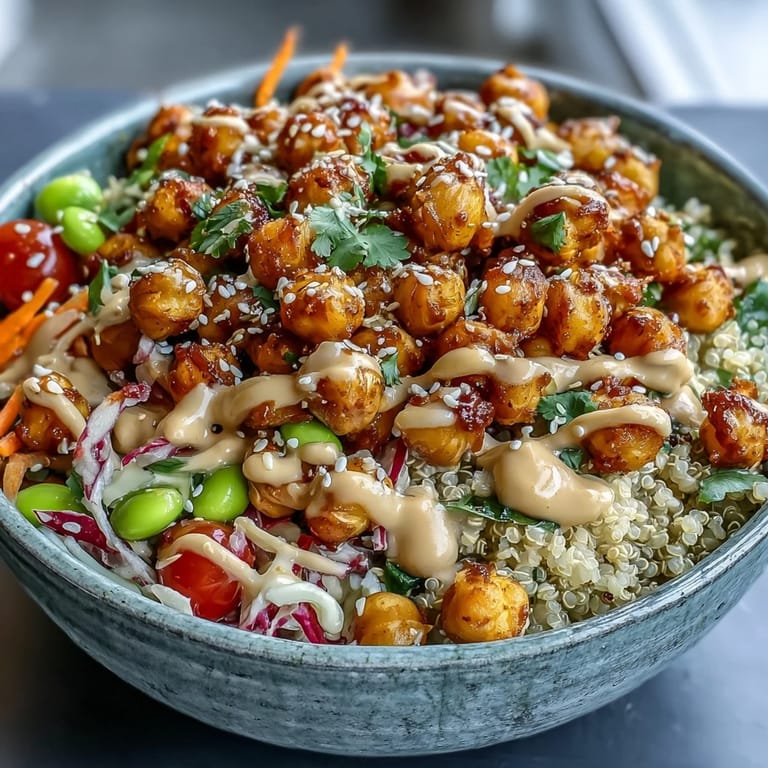
Save There's something about the sizzle of chickpeas hitting a hot oven that makes you feel like you're actually doing something good for yourself. I discovered this bowl on a Tuesday afternoon when I was tired of the same sad desk lunches, and honestly, it changed my whole relationship with meal prep. The combination of that smoky, crispy chickpea crunch against cool vegetables and silky peanut sauce felt like an accident I'd been waiting to stumble into. Now it's the bowl I make when I want to feel nourished without the fuss, and somehow it always tastes better than I remember.
I made this for my friend Maya on a Saturday when she'd just started her plant-based challenge, and she kept asking me to write down every step because she wanted to make it again that week. Watching her face light up when she tasted the peanut sauce—the way her eyes went wide—I realized this bowl had that rare quality of feeling indulgent and virtuous at the same time. That's when I knew I'd stumbled onto something worth keeping in regular rotation.
Ingredients
- Chickpeas (2 cans, drained and rinsed): These are your protein anchor—draining and rinsing them removes excess sodium and helps them crisp up beautifully in the oven instead of steaming.
- Olive oil (1 tbsp): Just enough to coat the chickpeas for even roasting; too much and they'll stay soft, too little and they'll be tough.
- Smoked paprika (1 tsp): This is the secret that makes people ask what's different about your roasted chickpeas—it adds warmth without heat.
- Ground cumin (1/2 tsp): Complements the smokiness and adds an earthy depth that ties the whole bowl together.
- Garlic powder, salt, pepper (1/2 tsp, 1/2 tsp, 1/4 tsp): The holy trinity of savory seasoning—measure carefully because these can overpower quickly.
- Brown rice or quinoa (2 cups cooked): Use whatever your body prefers; I swap between them depending on what's in the pantry, though quinoa stays fluffier if you make it ahead.
- Red cabbage (1 cup shredded): The raw crunch is essential—it prevents the bowl from becoming mushy, plus the color is stunning.
- Carrots (1 cup julienned): Cut them as thin as you can manage; thin carrots feel silky in your mouth rather than woody.
- Cucumber (1 cup sliced): Add this right before eating if you're prepping ahead, otherwise it releases water and gets sad.
- Cherry tomatoes (1 cup halved): Cherry tomatoes are sweeter than regular, which balances the savory sauce beautifully.
- Edamame (1/2 cup cooked and shelled): Frozen edamame is your friend here—thaw them and they're ready to go, no cooking required.
- Fresh cilantro (1/4 cup chopped): If cilantro tastes like soap to you, swap it for fresh mint or just skip it entirely—no judgment.
- Creamy peanut butter (1/3 cup): Use the good stuff without added sugar; cheaper peanut butters can break when you thin them.
- Soy sauce or tamari (2 tbsp): Soy sauce is deeper and more complex, but tamari is genuinely worth it if you're gluten-free and don't want to compromise on flavor.
- Maple syrup or honey (1 tbsp): This balances the salty-sour elements and makes the sauce taste intentional rather than acidic.
- Rice vinegar (1 tbsp): Milder than other vinegars, it won't overwhelm the peanut butter—don't substitute without thinking first.
- Sriracha or chili sauce (1 tsp, optional): I learned the hard way that starting small with heat is always the move; you can add more but you can't take it back.
- Garlic (1 clove finely minced): Fresh garlic makes all the difference—powdered garlic in the sauce tastes flat and dusty.
- Warm water (2–4 tbsp): Add gradually to reach your desired consistency; too thick and it coats your tongue, too thin and it slides right off.
- Roasted peanuts (2 tbsp chopped): The final textural contrast—don't skip this even if you're stretching the budget.
- Lime wedges: A squeeze right before eating lifts everything and makes your palate feel awake.
- Sesame seeds (1 tbsp optional): These add nuttiness and a pretty finish, though the bowl is complete without them.
Tired of Takeout? 🥡
Get 10 meals you can make faster than delivery arrives. Seriously.
One email. No spam. Unsubscribe anytime.
Instructions
- Set your oven and prep your pan:
- Preheat to 425°F and line a baking sheet with parchment paper while you're thinking about it. This step takes two seconds but prevents scrambling later.
- Season and roast the chickpeas:
- Toss drained chickpeas with olive oil and all the spices in a bowl, then spread them in a single layer on your sheet. Roast for 20–25 minutes, shaking the pan halfway through—you'll know they're ready when they're golden and make a hollow sound when you tap one. They'll crisp up more as they cool, so don't worry if they still feel slightly soft at 25 minutes.
- Make the peanut sauce while chickpeas roast:
- Whisk peanut butter with soy sauce, maple syrup, rice vinegar, sriracha, and minced garlic until combined. Slowly add warm water a tablespoon at a time while whisking—the sauce will go from chunky to silky, and you'll feel it transform under your whisk. Stop when it reaches pourable consistency; it should coat a spoon but still drip.
- Prepare your grains and vegetables:
- If your rice or quinoa isn't already cooked, start it now—it should be done around the time your chickpeas are coming out of the oven. While that happens, slice, shred, and chop all your vegetables, then arrange them in small piles on your cutting board.
- Assemble each bowl with intention:
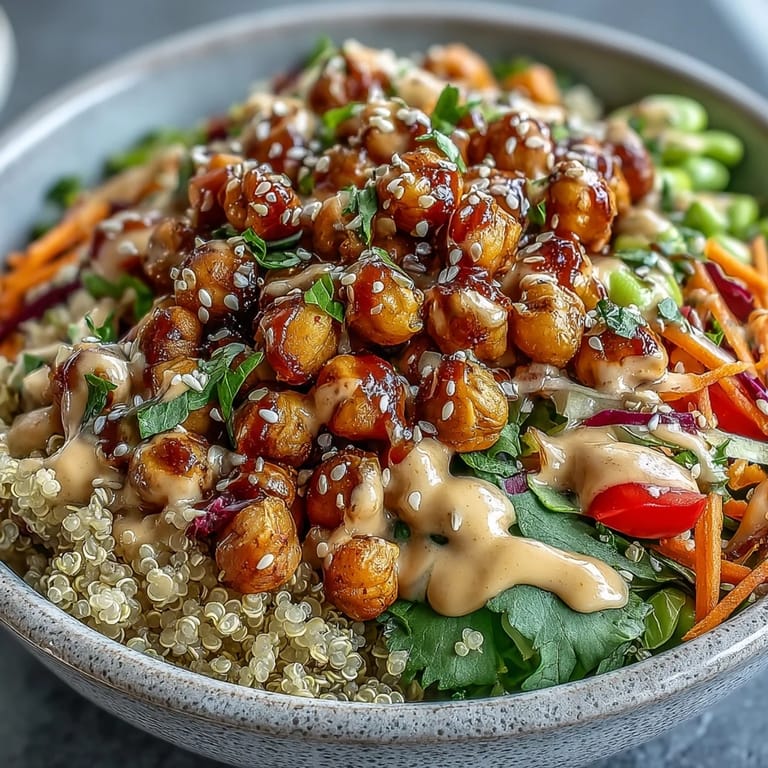
- Start with a base of warm or room-temperature grain, then layer on the roasted chickpeas, then all the raw vegetables in whatever arrangement makes you happy. Drizzle generously with peanut sauce—don't be shy, this is where all the flavor lives.
- Finish and serve immediately:
- Top with chopped peanuts and sesame seeds, then squeeze lime over everything. Serve right away while the chickpeas are still warm and the vegetables are still crisp.
 Save
Save This bowl became my answer when my mom asked what I eat that's both healthy and actually tasty. She made it once following my rambling phone instructions, and now it's her go-to when she wants to prove to herself that eating well doesn't have to be boring. That's when I realized this wasn't just a bowl—it was proof that simple ingredients, when treated with a little intention, become something memorable.
Why the Chickpeas Matter Most
The chickpeas are honestly the whole point of this bowl—they're where the protein lives and where the texture comes from. When they're roasted right, they become this addictive little vehicle for spice, and people who claim they don't like chickpeas usually haven't had them this way. I've converted skeptics with these crispy rounds more times than I can count.
Building Your Perfect Sauce
The peanut sauce is forgiving in theory but unforgiving if you skip steps, which I've definitely done before. The key is whisking slowly and tasting constantly—every palate wants something different, and there's no universal ratio. I've had friends add ginger, others add lime juice instead of the vinegar, and honestly, all those versions were better because they felt personal.
Make-Ahead Magic and Final Thoughts
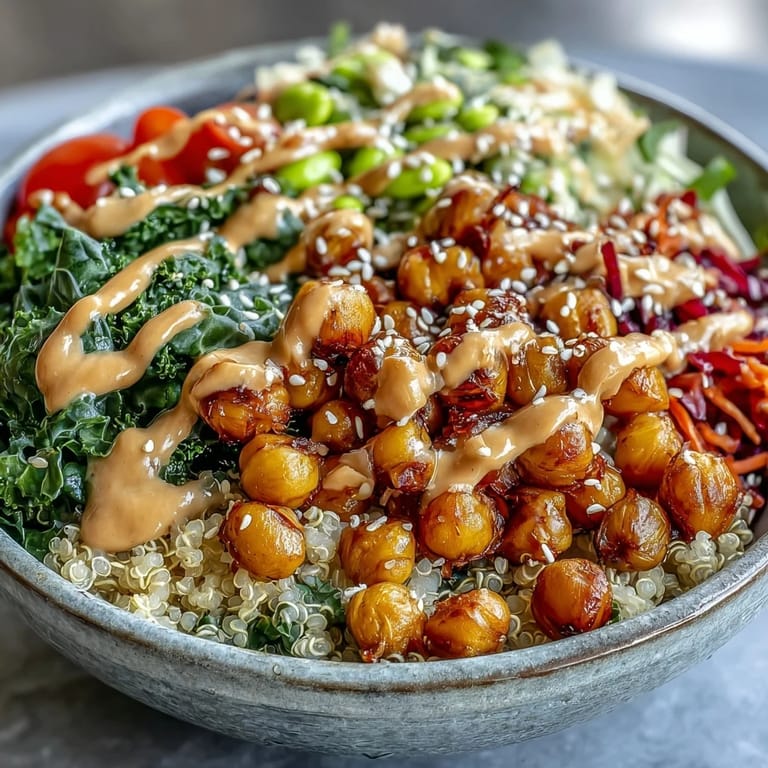
This bowl thrives when prepped ahead, which is the whole point for most of us living actual lives. Cook your grain the night before, roast your chickpeas in the morning, and store everything in separate containers so nothing gets soggy or weird. The sauce actually tastes better the next day as flavors meld, and the chickpeas stay crispy for days.
- Keep the sauce separate from everything until right before eating if you're prepping more than a few hours ahead.
- Leftover chickpeas make an incredible snack on their own or thrown into salads for instant crunch.
- This bowl is endlessly customizable—add whatever vegetables look good that week and you'll never get bored.
 Save
Save This bowl has become my answer to so many different moments—busy weeknights, meal prep Sundays, proving to myself that vegetarian eating is actually delicious. It's the kind of recipe that sticks around because it works.
Recipe FAQs
- → Can I make the chickpeas ahead of time?
Yes, roast the chickpeas up to 3 days in advance and store them in an airtight container at room temperature. They'll stay crisp and ready to assemble.
- → Is the peanut sauce gluten-free?
The sauce becomes gluten-free when you use tamari instead of regular soy sauce. All other ingredients are naturally gluten-free.
- → What can I substitute for peanut butter?
Almond butter, cashew butter, or sunflower seed butter work well as alternatives. Each brings a slightly different flavor profile while maintaining creamy texture.
- → How do I store leftovers?
Store components separately in airtight containers for up to 4 days. Keep the sauce in a jar and add fresh when serving to maintain crisp textures.
- → Can I use dried chickpeas instead of canned?
Absolutely. Cook 1 cup dried chickpeas until tender, then drain thoroughly before roasting. You may need to extend roasting time by 5-10 minutes to achieve desired crispiness.
- → Is this bowl high in protein?
Each serving delivers 17 grams of protein from chickpeas, edamame, peanut butter, and whole grains—making it a substantial choice for plant-based meals.