 Save
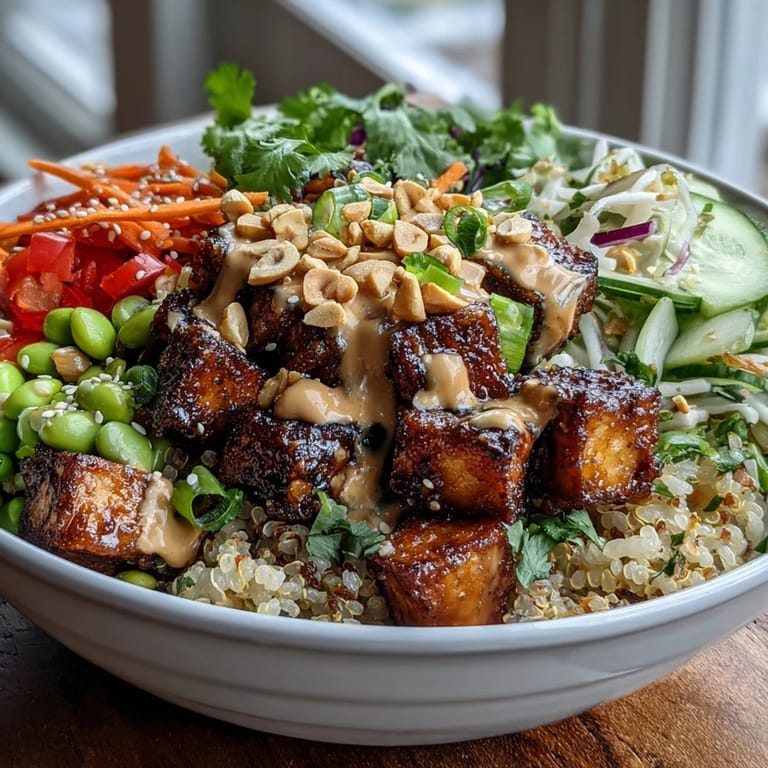
Save My roommate showed up one Tuesday with a meal prep container of these vibrant bowls, and I immediately asked where she'd gotten them because the colors alone made me hungry. She laughed and admitted she'd spent the afternoon in our tiny kitchen perfecting a peanut sauce, and suddenly we were both chopping vegetables at breakneck speed. That's when I realized how satisfying it is to build something this beautiful with your own hands, layer by layer, watching the bowl come together like edible art. The crispy tofu was the revelation though, golden and almost meaty in texture, nothing like the soft blocks I'd tried years before. Now I make these bowls on days when I need something grounding, something that tastes indulgent but leaves me feeling light.
I brought these bowls to a potluck at my partner's family gathering, nervous because everyone seemed to eat meat and very little else. By the end of the evening, three people had asked for the recipe, and their dad said something like, 'I didn't expect plant-based food to actually taste like this.' It was one of those small moments where food became a quiet bridge between different ways of eating, no judgment, just genuine curiosity and satisfaction.
Ingredients
- Extra-firm tofu: The key to crispy, golden cubes instead of mushy insides—pressing it removes excess moisture so the cornstarch coating sticks and crisps beautifully.
- Brown rice or quinoa: Choose based on your mood: rice is warm and familiar, quinoa brings a nutty protein boost and fluffier texture.
- Cornstarch: This is what transforms tofu into something crispy and restaurant-worthy, creating a delicate crust that shatters slightly when you bite.
- Creamy peanut butter: Use natural or conventional, but make sure it's not the natural kind that separates wildly, unless you enjoy whisking oil back in.
- Fresh ginger and garlic: Minced fresh versions wake up the sauce in a way that bottled simply cannot match, adding brightness and depth.
- Sesame oil: A small amount goes far, toasted sesame oil especially, lending a nutty complexity that makes people ask 'what is that flavor?'
- Colorful vegetables: The purple cabbage, red pepper, and orange carrots aren't just beautiful—they provide different textures, from crisp to tender, and varying subtle sweetnesses.
Tired of Takeout? 🥡
Get 10 meals you can make faster than delivery arrives. Seriously.
One email. No spam. Unsubscribe anytime.
Instructions
- Start your grains:
- Get your rice or quinoa cooking first since this takes the longest and you can forget about it while handling everything else. Use vegetable broth instead of water if you have it—it adds a quiet savory depth that makes a difference.
- Press and prep the tofu:
- Wrap your tofu block in a clean kitchen towel and set something heavy on top—a cast iron skillet, a stack of books, whatever—for at least 10 minutes. This removes water so your coating actually crisps instead of steaming.
- Coat and cook the tofu:
- Toss your pressed, cubed tofu in cornstarch and salt until every piece is evenly dusted, then drizzle with oil. Whether you bake or pan-fry, aim for golden-brown edges that feel slightly crispy when you press them—flip halfway through baking so all sides get equal heat.
- Build your peanut sauce:
- Whisk peanut butter with soy sauce, maple syrup, and rice vinegar first, then add the sesame oil, garlic, and ginger—this order helps everything emulsify smoothly. Thin it with warm water until it reaches a drizzle consistency, not too thick or it'll clump on the vegetables.
- Slice and arrange your vegetables:
- While tofu cooks, julienne your carrots, slice your pepper and cucumber, and shred your cabbage—the thinner and more uniform, the faster they soften slightly from the warm sauce. Have everything prepped before you start assembling so the whole process feels calm and controlled.
- Assemble with intention:
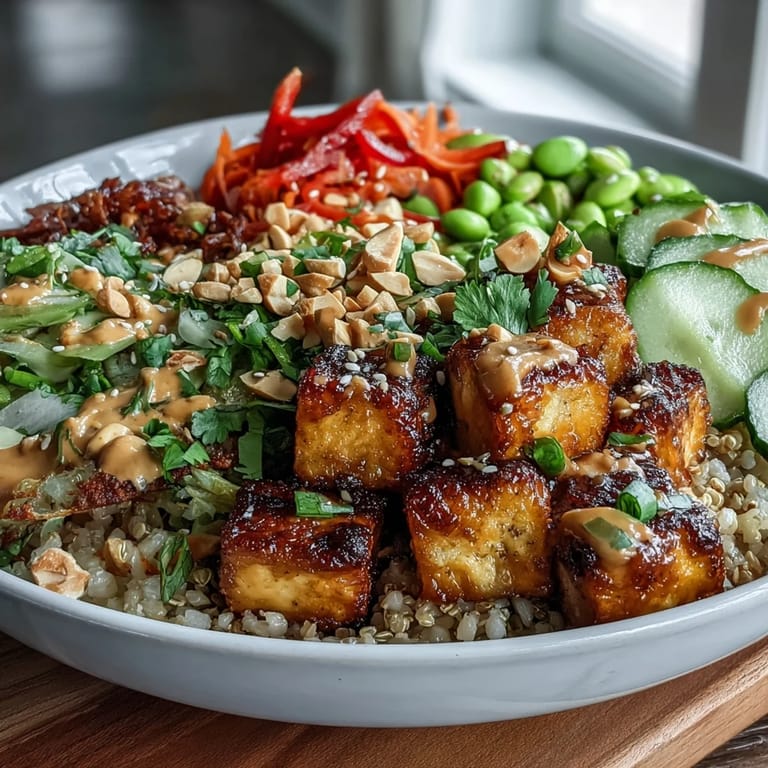
- Divide your warm grain base among bowls, then arrange tofu and vegetables in clusters or organized sections—this makes eating a visual pleasure and ensures you get everything in each bite. Drizzle the peanut sauce generously but save a bit to pass at the table because everyone wants extra.
 Save
Save There's something almost meditative about the act of building these bowls, how you slow down and notice small things—the sesame seeds catching the light, the exact shade of each vegetable, the way the sauce pools slightly in the center. It's the kind of meal that reminds you eating can be both nourishing and joyful, requiring only your attention and a sharp knife.
The Secret to Crispy Tofu Every Time
The most common mistake I see is either skipping the pressing step or using soft tofu and wondering why it doesn't crisp. Extra-firm is non-negotiable, and even then, you need to press it properly—I've learned this the hard way through several batches of disappointing, soggy cubes. The cornstarch coating is what creates that delicate, shattering exterior that makes people actually enjoy tofu, not just tolerate it as a vegetable protein placeholder.
Why This Sauce Works on Almost Everything
I started making extra peanut sauce and discovered it's incredible on grilled vegetables, stirred into noodles, drizzled over roasted broccoli, or even used as a dipping sauce for spring rolls. The balance of salty, sweet, nutty, and tangy is forgiving enough to accommodate slightly different ratios depending on your taste, but structured enough that it never falls apart. A jar of this in your refrigerator becomes your secret weapon against boring meals.
Building Your Bowl Philosophy
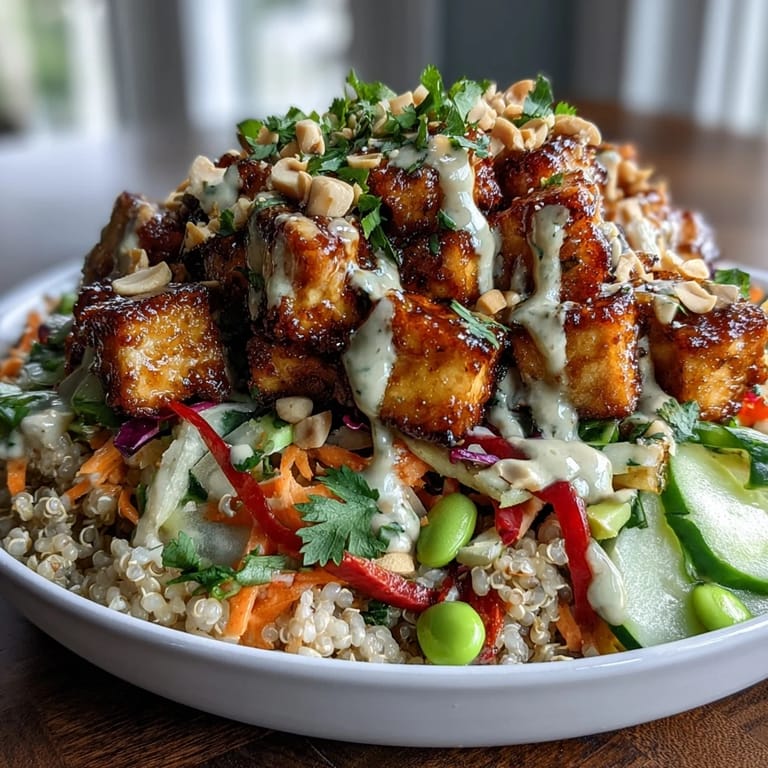
The beauty of this recipe is how adaptable it is to whatever you have in your kitchen or what you're craving on any given day. Some weeks I add roasted sweet potato or avocado for extra richness, other times I pile in raw spinach that wilts slightly from the warm grain and sauce. The structure stays the same—a base, a protein, fresh elements, and sauce—but the details shift.
- Roasted sweet potato brings earthy sweetness that plays beautifully against the peanut sauce's savory notes.
- Avocado or tahini drizzle adds creaminess if you want to make the bowl feel indulgent without heaviness.
- Sriracha stirred into the sauce creates heat that wakes up your palate and lingers pleasantly on your lips.
 Save
Save This bowl has become one of my default meals because it satisfies every part of me—the part that wants nutrition, the part that wants beauty, the part that appreciates efficiency. Make one and you'll understand why.
Recipe FAQs
- → How do I get the tofu really crispy?
Press your tofu for at least 15 minutes to remove excess moisture, then coat evenly in cornstarch. Bake at 200°C (400°F) for 20–25 minutes, flipping halfway, or pan-fry in batches for golden-brown edges on all sides.
- → Can I make the peanut sauce ahead of time?
Absolutely. The sauce keeps in the refrigerator for up to a week. It may thicken when cold—simply whisk in a teaspoon of warm water at a time until you reach the desired consistency.
- → What vegetables work best in this bowl?
Any crunchy raw or lightly steamed vegetables shine here. Try thinly sliced radishes, shredded kale, snap peas, or roasted sweet potato cubes. The key is variety in color and texture.
- → Is this bowl gluten-free?
Yes, if you use tamari instead of soy sauce and verify your grains are certified gluten-free. The peanut sauce, tofu, and vegetables are naturally gluten-free friendly.
- → How can I add more protein?
Increase the tofu quantity, add shelled edamame, sprinkle roasted chickpeas, or serve with a side of lentils. Hemp seeds or roasted cashews also provide protein-rich crunch.
- → Can I use a different nut butter?
Almond butter, cashew butter, or sunflower seed butter all work well. The flavor profile will shift slightly, but the creamy, savory-sweet balance remains delicious.