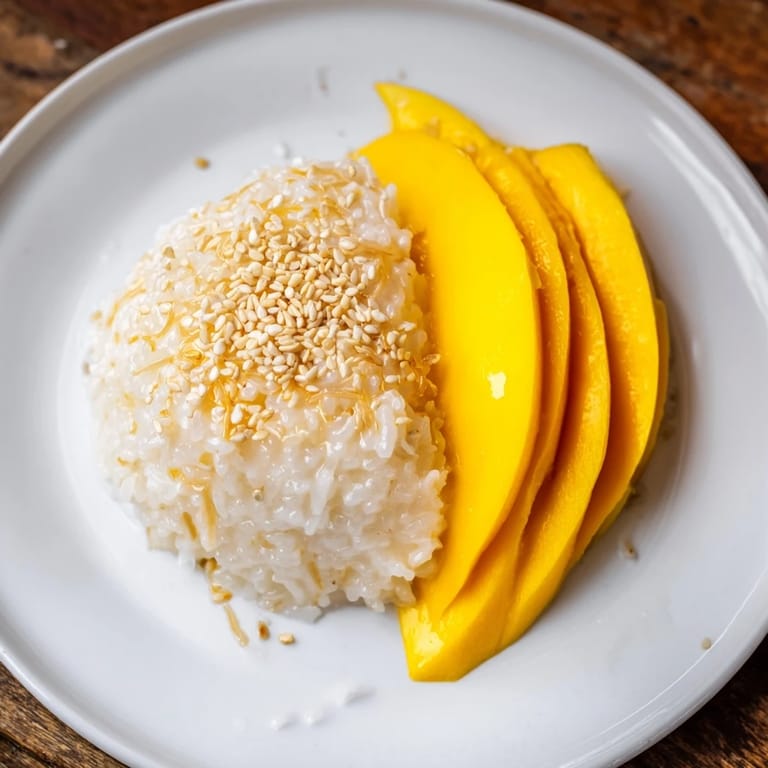
 Save
Save I discovered this dish on a humid Bangkok evening, sitting under a string of lights in a small night market. A vendor handed me a wooden plate—sticky rice still warm, mango so perfectly ripe it seemed to glow amber under the vendor's stand light. I took one bite and everything clicked: the way the coconut cream clung to each grain, how the fruit's sweetness wasn't saccharine but balanced, almost musical. Years later, I still chase that exact moment when I make it at home.
The first time I made this for a dinner party, I panicked halfway through because my steamer started rattling like it might explode. A guest came into the kitchen, took one look at my face, and started humming—which somehow made the whole thing funny instead of stressful. By the time we plated it, everyone's shoulders had dropped. That's when I realized this dessert does something beyond nourish: it creates room for lightness and laughter.
Ingredients
- Glutinous (sweet) rice, 1 cup: This isn't regular rice—the grain is shorter, stickier, and almost creamy when cooked. It's the whole foundation, so don't skip the soaking step; it helps the rice cook evenly and absorb the coconut flavor like a sponge.
- Coconut milk (full fat), 1 cup: The full-fat version matters because the cream is what makes each grain luxurious and glossy. Anything lighter and you lose the soul of the dish.
- Granulated sugar, 1/4 cup: This sweetens the coconut sauce without overpowering it; you want to taste the coconut first, the sweetness second.
- Salt, 1/4 tsp: A small pinch that brings everything into focus, like turning up the volume just slightly on a quiet song.
- Large ripe mangoes, 2: This is where color and flavor matter most—look for mangoes that yield slightly to pressure and smell fragrant at the stem. Underripe mangoes taste thin and sour the whole dessert.
- Coconut cream (optional), 2 tbsp: The thicker, richer sibling to coconut milk; drizzle it on top for a whisper of extra indulgence.
- Toasted sesame seeds or mung beans (optional): A textural surprise that adds a subtle crunch and nuttiness, though the dish shines without them too.
Tired of Takeout? 🥡
Get 10 meals you can make faster than delivery arrives. Seriously.
One email. No spam. Unsubscribe anytime.
Instructions
- Soak and rinse the rice:
- Run the glutinous rice under cold water, stirring gently with your fingers until the water runs clear—this removes excess starch that would make the rice gluey rather than creamy. Soak it in fresh water for at least 4 hours, ideally overnight; the grains will plump up and cook more evenly.
- Steam the rice gently:
- Drain the rice and transfer it to a cheesecloth-lined steamer basket, spreading it in an even layer so steam can reach every grain. Steam for 25–30 minutes until the rice is tender and translucent; you'll see the grains have softened but still hold their shape.
- Warm the coconut sauce:
- While the rice steams, combine coconut milk, sugar, and salt in a saucepan and heat gently over medium heat, stirring until the sugar dissolves completely. The sauce should be warm and silky, never boiling—boiling can break down the coconut and make it taste thin.
- Marry the rice and sauce:
- Transfer the hot rice to a mixing bowl and pour in about three-quarters of the coconut sauce, folding gently with a spatula to coat every grain evenly. Cover the bowl and let it rest for 10–15 minutes so the rice drinks in the coconut flavor and becomes creamy.
- Prepare and arrange the mango:
- While the rice rests, peel and slice your mangoes into clean, even pieces—aim for a thickness that feels substantial in your mouth, not paper-thin. To serve, mound the sticky rice on each plate and arrange the mango slices alongside it, then drizzle the reserved coconut sauce over the top.
- Finish with garnish:
- If you're using coconut cream and seeds, add them as the final touch—a small drizzle of cream on top and a light scatter of sesame seeds or mung beans for texture and visual warmth.
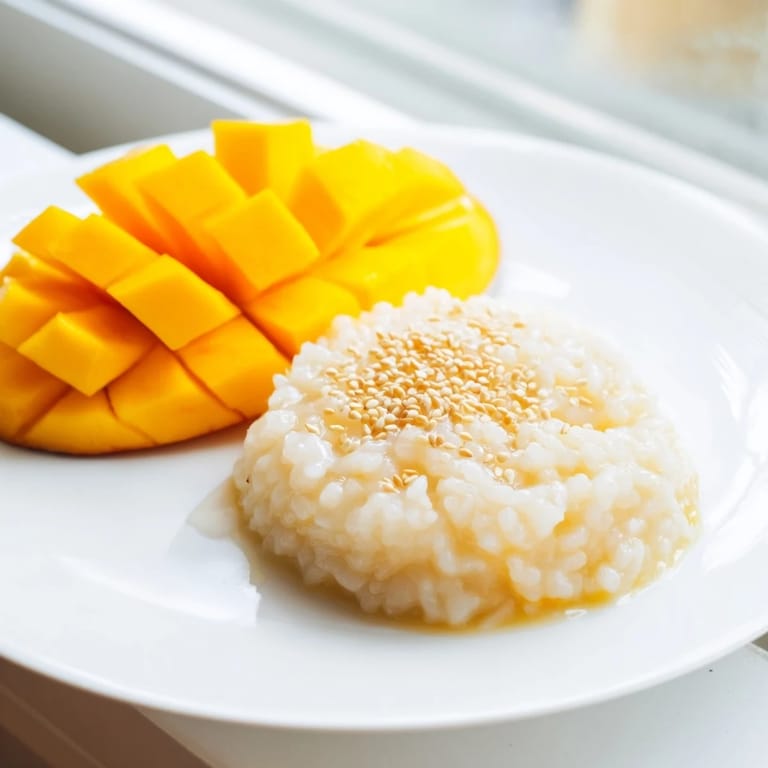 Save
Save My grandmother used to say that sticky rice was proof that simple ingredients could become something profound if you respected each step. I didn't understand until I made it myself and tasted how the warmth of the rice, the coolness of the mango, and the richness of the coconut created something that felt like an embrace on a plate.
Choosing Your Mango Wisely
The mango makes or breaks this dessert, and it's worth being picky about it. A ripe mango should smell fragrant at the stem end—not overwhelmingly sweet, but undeniably present. Press gently near the top; it should yield slightly without feeling mushy. Color varies by variety, so don't rely on that alone. If you get a mango that's underripe, it will taste sharp and bitter against the sweetness of the sauce, creating an unpleasant clash.
The Magic of the Soak
Soaking glutinous rice overnight isn't just about hydration—it's about transformation. The grain begins to soften, which means it cooks more evenly and absorbs liquid more completely. I used to rush this step, and the rice would come out with hard centers and mushy edges. The first time I waited overnight, I understood why the technique existed: patience is an ingredient too.
Serving and Storage Secrets
This dessert is most beautiful within an hour of assembly, when the rice is still warm and creamy and the mango is cool and fresh. The texture contrast is part of the appeal. If you're making it for guests, prepare the rice and sauce ahead, but slice the mango and assemble plates just before serving for maximum impact.
- Leftover sticky rice can be wrapped and refrigerated, then gently reheated with a splash of coconut milk to restore creaminess.
- The coconut sauce keeps for up to 3 days in the fridge and can be made a day or two ahead without any loss of flavor.
- Fresh mango tastes best the day it's cut, so buy them ripe and close to serving time.
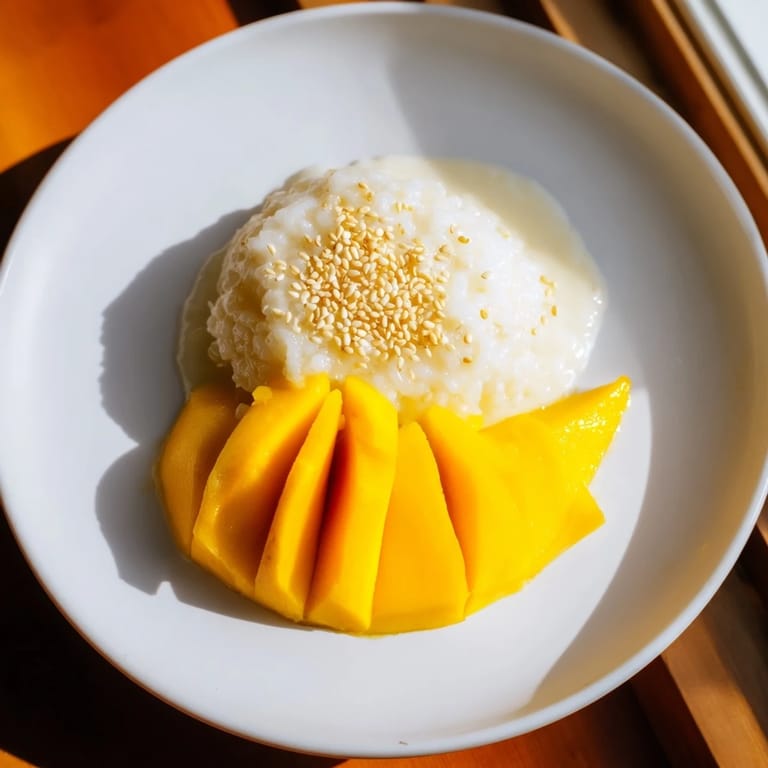 Save
Save Make this when you want to remind yourself—or someone you love—that the simplest foods, made with care, can feel like a celebration. It's that good.
Recipe FAQs
- → How do you achieve the perfect sticky rice texture?
Soak the glutinous rice for several hours or overnight, then steam it gently until tender but still sticky, ensuring it holds moisture without becoming mushy.
- → What is the role of coconut milk in this dish?
Coconut milk adds creaminess and mild sweetness, infusing the sticky rice with rich tropical flavor that balances the mango's natural freshness.
- → Can I prepare this dish ahead of time?
It's best enjoyed fresh, as refrigerated sticky rice tends to harden and loses its soft, moist texture.
- → Are there any ingredient substitutions to enhance flavor?
Pandan leaves can be added while steaming for extra fragrance; palm sugar can replace granulated sugar for a deeper sweetness.
- → What garnishes complement the mango and sticky rice pairing?
Coconut cream drizzle and toasted sesame seeds or mung beans add texture contrast and enhance the tropical flavor profile.