 Save
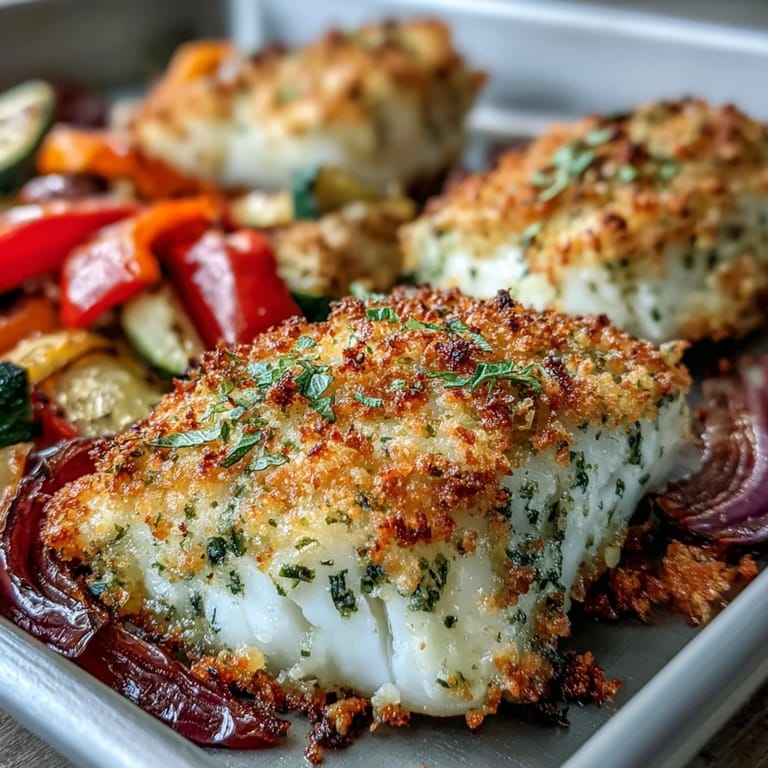
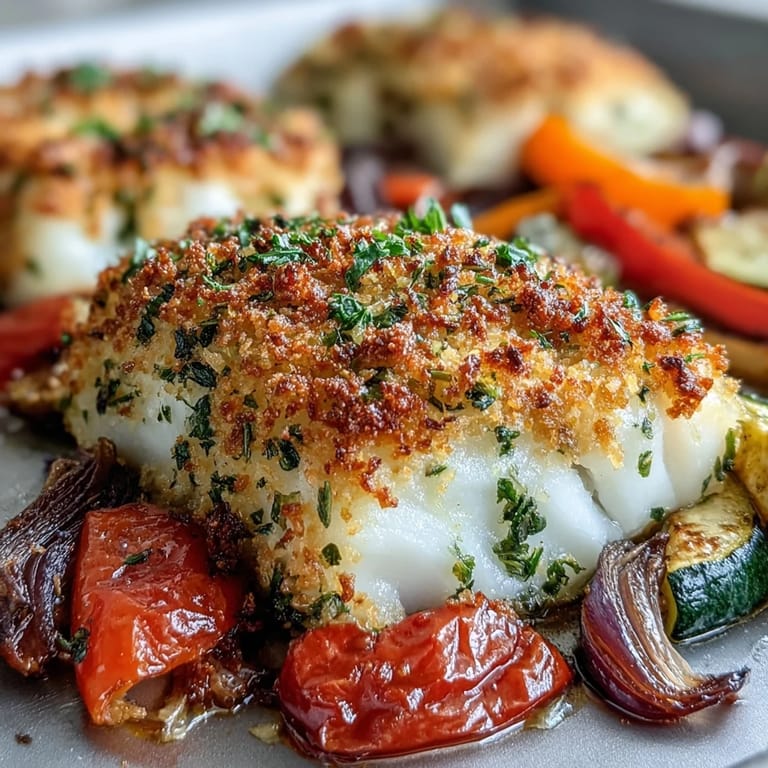
Save There's something almost magical about opening the oven to find a sheet pan where everything has cooked together in harmony—the fish golden and flaky, the vegetables blistered and sweet. My neighbor knocked on the door one Tuesday evening, drawn by the aroma wafting from my kitchen, and that's when I realized this one-pan dinner had become my go-to move for impressing people without fussing. The Asiago-Parmesan crust catches the heat just right, creating this satisfying crunch that contrasts perfectly with the tender cod beneath. It's the kind of meal that feels restaurant-quality but takes barely any time to pull together.
I made this for my daughter's first dinner at home after she moved back from college, and watching her face light up when she bit into that crunchy crust was worth every minute. She asked for the recipe immediately, which rarely happens—usually she's polishing her plate before I've even sat down. That moment told me this wasn't just easy weeknight cooking; it was the kind of dish that stays in someone's memory.
Ingredients
- Cod filets (4, about 5-6 oz each): Choose filets that are roughly the same thickness so they cook evenly; if they're thin on one end, you can gently fold that part under to level things out.
- Panko breadcrumbs: The larger flakes give you that satisfying crunch that regular breadcrumbs just can't match, and they brown beautifully in the oven's dry heat.
- Asiago and Parmesan cheese (1/4 cup each, grated): Asiago brings a nutty depth while Parmesan adds that salty punch; together they create a crust that tastes genuinely luxurious.
- Fresh parsley (2 tbsp, chopped): This isn't just garnish—it's in the crust itself, adding a brightness that keeps the richness from feeling heavy.
- Garlic powder (1 tsp): Don't skip this or substitute fresh garlic, which would add moisture and prevent a proper crust from forming.
- Olive oil (4 tbsp total): Use good olive oil here; it's not hidden in a sauce, so quality matters more than you might think.
- Egg (1 large): This is your adhesive, binding the cheese crust to the fish so it stays put during roasting.
- Bell peppers, red onion, cherry tomatoes, zucchini: The colors aren't just pretty—each vegetable brings a different sweetness level that balances beautifully when roasted together.
- Dried oregano (1/2 tsp): A little oregano on the vegetables ties everything together without overpowering the delicate fish.
Tired of Takeout? 🥡
Get 10 meals you can make faster than delivery arrives. Seriously.
One email. No spam. Unsubscribe anytime.
Instructions
- Set your stage:
- Preheat your oven to 425°F and line a large sheet pan with parchment or foil—this step prevents sticking and makes cleanup genuinely painless. Getting this ready first means you're not scrambling once your fish is coated.
- Build the crust:
- In a medium bowl, mix panko, both cheeses, parsley, garlic powder, pepper, and salt, then stir in the olive oil until the mixture looks like damp sand. You're looking for every breadcrumb to be lightly coated, not clumpy or dry.
- Coat the fish:
- Beat an egg in a shallow bowl, dip each cod filet to coat both sides, then press firmly into your cheese mixture so the crust adheres properly. Work gently but deliberately—the pressure matters more than speed.
- Arrange your pan:
- Place coated filets on one side of the sheet pan, leaving room for vegetables on the other half. In a separate bowl, toss your peppers, onion, tomatoes, and zucchini with olive oil, oregano, salt, and pepper, then spread them on the empty side.
- The final touch:
- Drizzle the fish lightly with a bit more olive oil to help the crust brown evenly. Slide everything into the oven and set a timer for 20–25 minutes.
- Finish strong:
- About halfway through, give those vegetables a gentle stir so they brown on all sides. The fish is done when it flakes easily with a fork and the crust is golden—don't overcook or it turns tough.
 Save
Save I learned the hard way that patience with roasting is everything—the year I kept opening the oven to check on things, my vegetables stayed pale and watery instead of developing that golden, sweet char. Now I set a timer and trust the process, which feels like a small meditation in a busy day. That shift in mindset made me a better cook than any technique ever did.
Why This Works as a One-Pan Dinner
Sheet pan meals aren't just about convenience; they're about flavor building through proximity. The vegetables release their moisture and natural sugars as they roast, and any oil or seasoning that escapes from the fish side mingles with the vegetables, creating this subtle depth that feels intentional. You're essentially creating a mini ecosystem on one piece of parchment, where everything influences everything else in the best way.
Swaps and Variations That Actually Work
Haddock is the obvious swap for cod—same texture, same cook time, slightly sweeter flavor if that appeals to you. Tilapia is thinner and more delicate, so watch your timing closely to avoid overcooking. You can also play with the crust: try adding lemon zest for brightness, swap panko for crushed almonds if you need gluten-free, or stir in a touch of Dijon mustard for a subtle kick. The vegetables are genuinely flexible too—roasted carrots and potatoes are heartier if you want a more filling meal, or add green beans for something lighter.
Finishing Touches and Serving Ideas
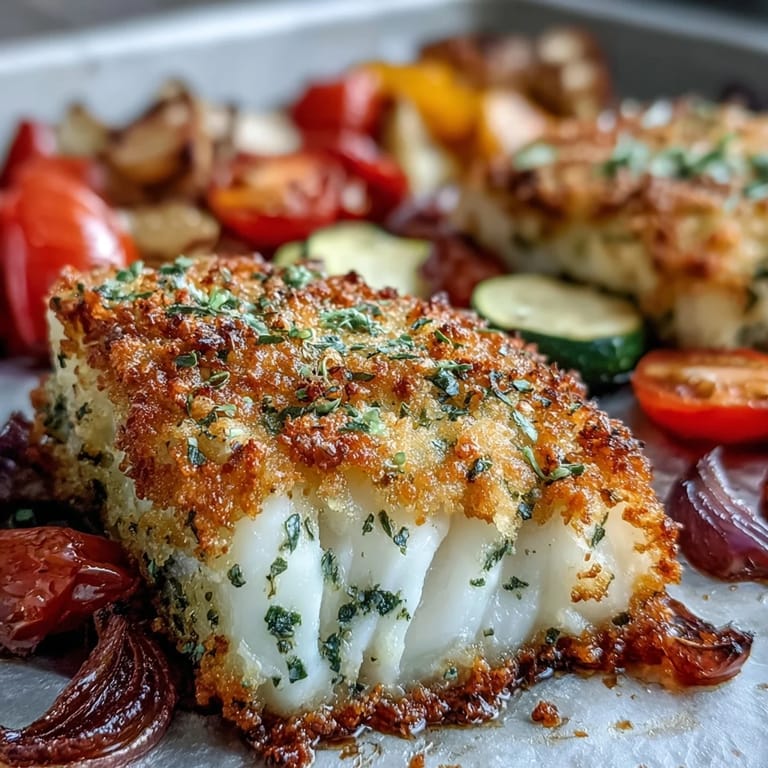
Serve this straight from the oven while the crust is still crackling and the vegetables are steaming. A squeeze of fresh lemon juice just before eating brightens everything beautifully, and fresh parsley scattered on top isn't just pretty—it adds a peppery freshness that completes the experience. Pair this with a crisp white wine like Sauvignon Blanc, and you've got dinner that feels celebratory without any real effort.
- If you want extra crunch, broil the fish for the last 2 minutes—watch it closely so the crust doesn't char.
- Fresh herbs like dill or tarragon can be chopped and sprinkled over the finished dish for brightness.
- Leftover fish is surprisingly good cold the next day, shredded into a salad or nestled into a sandwich.
 Save
Save This meal has become my answer to the question "what's for dinner tonight?" because it delivers restaurant-quality results without restaurant-level stress. Every time I make it, I'm grateful for how well it brings people together around something this simple and satisfying.
Recipe FAQs
- → What type of fish works best for this dish?
Firm white fish like cod, haddock, tilapia, or halibut work beautifully. They hold up well during baking and provide a mild flavor that pairs perfectly with the cheesy crust.
- → Can I make the coating ahead of time?
Yes, mix the panko, cheeses, and seasonings up to a day ahead and store in an airtight container. Keep it refrigerated until you're ready to coat the fish.
- → How do I know when the fish is done?
The fish is ready when it flakes easily with a fork and the crust is golden brown. The internal temperature should reach 145°F (63°C) for safe consumption.
- → Can I use different vegetables?
Absolutely. Try adding baby potatoes, carrots, broccoli, or asparagus. Just adjust cooking time accordingly—denser vegetables may need a few extra minutes.
- → How can I make this gluten-free?
Use gluten-free breadcrumbs or crushed gluten-free crackers instead of panko. Ensure all other ingredients, including seasonings, are certified gluten-free.
- → What should I serve with this meal?
This dish is complete on its own with the vegetables, but you can add a side of rice, quinoa, or crusty bread. A crisp white wine like Sauvignon Blanc pairs wonderfully.